The Jakarta Post
Please Update your browser
Your browser is out of date, and may not be compatible with our website. A list of the most popular web browsers can be found below.
Just click on the icons to get to the download page.


Popular Reads
Top Results
No results found. Please check your search term and try again
Can't find what you're looking for?
View all search results
Popular Reads
Top Results
No results found. Please check your search term and try again
Can't find what you're looking for?
View all search resultsThe new Indonesian rebellion: Build, don’t just protest
While student protests expose deep-seated anxieties over economic mismanagement, Indonesia's ultimate survival relies on shifting its revolutionary spirit away from the streets and toward breaking the shackles of economic stagnation.
Change text size
Gift Premium Articles
to Anyone
Share the best of The Jakarta Post with friends, family, or colleagues. As a subscriber, you can gift 3 to 5 articles each month that anyone can read—no subscription needed!
 Set as preferred source
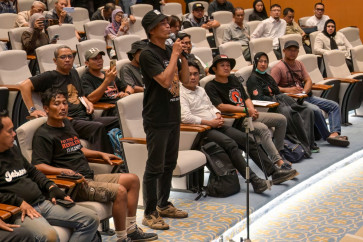
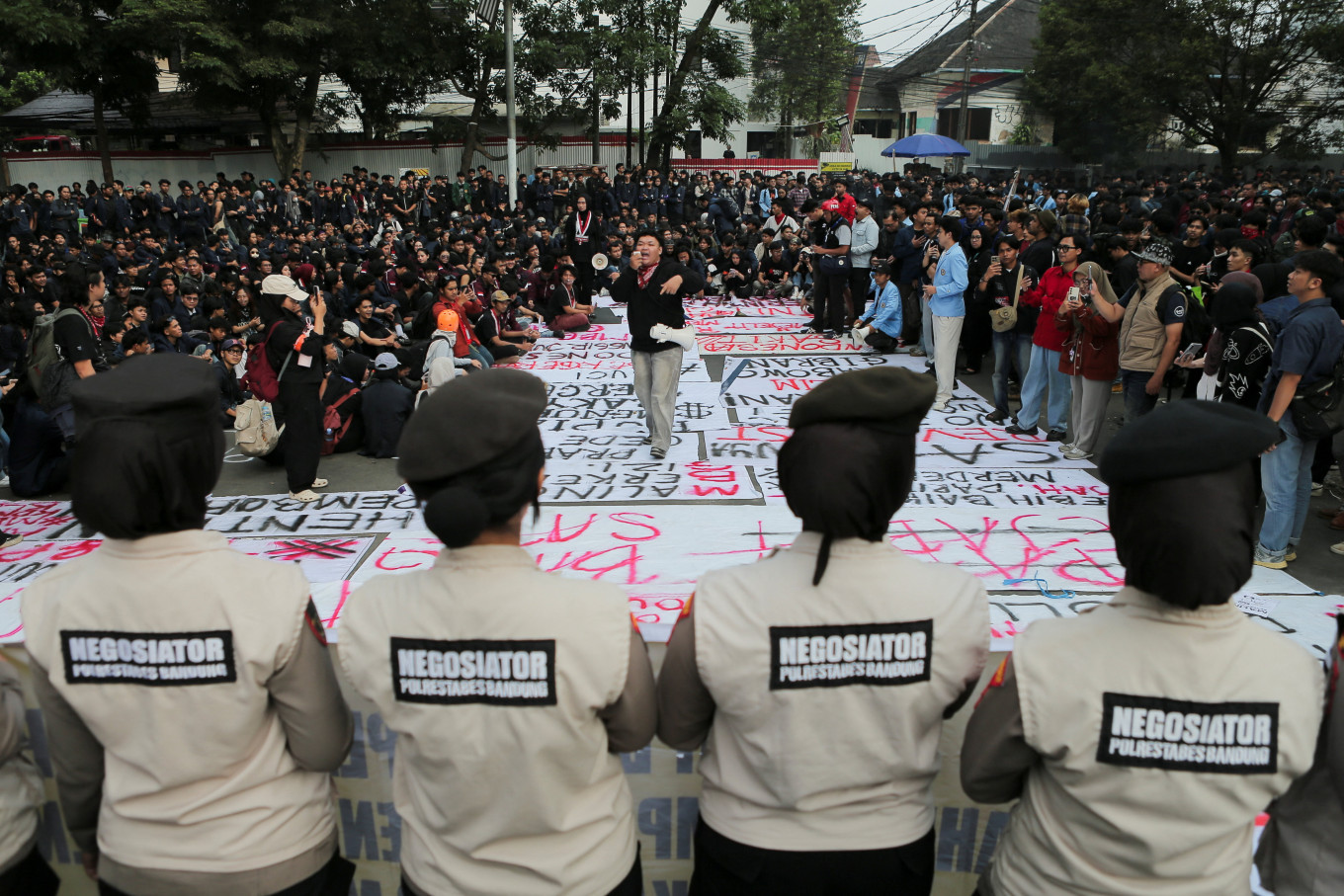 University students take part in a protest on Monday against government policies, including state budget spending, fuel price hikes, the free nutritious meal program and expanded military roles in civilian affairs, outside the West Java Regional Representative Council building in Bandung, West Java. (Reuters/Claudio Pramana)
T
he most recent student protests in Jakarta, marching under the banner “Heading to Bankrupt Indonesia,” should not be dismissed as mere youthful anger. Soaring fuel prices, tight budget considerations, the free nutritious meal program, the Red and White Rural Cooperatives program and anxiety about expanding military roles all served as straws in the wind.
As Reuters reported, the students directly attacked wasteful spending and fiscal mismanagement by President Prabowo Subianto’s administration. Behind the slogan, however, lies a deeper anxiety: Young Indonesians feel the Republic is asking them to shoulder the burden of state failure, while giving them very little hope of a future.
This nation was created by the spirit of rebellion. We salute those young Indonesians who fought against colonial rule, rebelled against authoritarianism and championed democracy. Without rebellion, Indonesia would never have become a free country.
However, eight decades since the declaration of independence, Indonesia remains entangled in an endless cycle: leaders exploit, citizens distrust them and youths resort to the streets because politics has failed to offer them a viable alternative. While we defeated colonialism, our political culture remains distinctly colonial.
Without the moral capital of the anti-colonial struggle itself, a free nation cannot endure. Independence should not be gauged by flags, ceremonies and speeches, but by capability. Are we going to build advanced industries? Can we develop our own technology? Can we produce engineers, scientists, coders, designers and founders in large numbers? Could we turn our population into a productive society, instead of simply a market for imported goods?
Indonesia is struggling with this. We have vast natural resources, a large domestic market and immense geopolitical clout. Yet, our economy relies too heavily on resource extraction and low- to medium-value activities.

Despite being one of the world's largest exporters, Indonesia ranked just 64th out of 130 countries on the global economic complexity chart in the 2024 Economic Complexity Index by the Observatory of Economic Complexity. A country may export a great deal, but it means little if it exports too little knowledge, design, technology and sophistication.