The Jakarta Post
Please Update your browser
Your browser is out of date, and may not be compatible with our website. A list of the most popular web browsers can be found below.
Just click on the icons to get to the download page.


Popular Reads
Top Results
No results found. Please check your search term and try again
Can't find what you're looking for?
View all search results
Popular Reads
Top Results
No results found. Please check your search term and try again
Can't find what you're looking for?
View all search resultssumatra

Economy 6 months ago
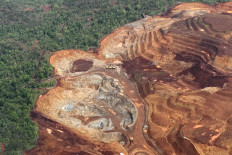
Indigenous knowledge helps save lives in flood-hit Malalo, Sumatra
Evidence shows that Indigenous, community-based mitigation systems are effective in saving lives during disasters. Therefore, legal recognition of Indigenous communities and customary forests is an urgent priority, alongside efforts to strengthen local knowledge systems and ensure their sustainability.

Academia 6 months ago
PREMIUM
Beyond the ritual, the power of Indonesia’s 'Lebaranomics' is real
In an economy still heavily skewed toward urban concentration, where capital accumulates disproportionately in Jakarta and major cities, the annual Idul Fitri migration serves as a release valve, channeling economic “lifeblood” back into rural capillaries.
Archipelago 6 months ago
PREMIUM
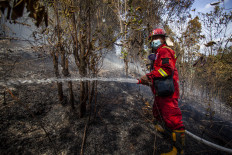
Indonesia braces for wildfire, drought ahead of longer dry season
Several wildfire-prone regions in Sumatra and Kalimantan have issued fire alerts as the weather agency predicts a longer dry season starting later this month that may lead to crop failures and increase the risk of severe drought.
Society 7 months ago
PREMIUM
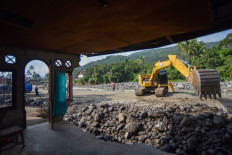
Humility in a time of disaster: Listening to the displaced
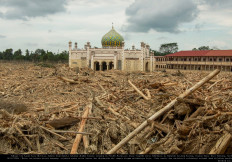
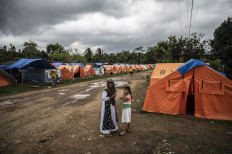
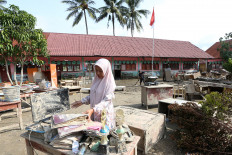
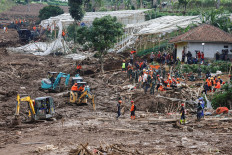
At a Jakarta Arts Council lecture, scholars challenged the state and the public to rewrite disaster history from the perspective of the displaced, as Sumatra struggles to recover from deadly floods and landslides.
Academia 7 months ago
PREMIUM
Mainstreaming ecological democracy: Challenges and opportunities
Eco-democracy seeks to create harmony between humanity and the environment, positioning ecological health as a core component of democratic rights and a vital alternative to the laissez-faire economic models.
Editor's Picks
Popular
- New islands appear after Anak Krakatau volcano erupts
- Prabowo resurrects advisory board
- A ministry restored
- Reshuffle shores up coalition support for 2029
- Whisky, big-screen TV seized from prison 'villas' in West Java
- Sugarcane farmers query House over sugar imports
- Philippines arrests 244 foreign workers in online scam crackdown
- Gibran’s fall, Prabowo’s power reconfiguration?
- Can young Indonesians still afford home?
- Indonesia pushes cooperation to outpace global scam networks


