The Jakarta Post
Please Update your browser
Your browser is out of date, and may not be compatible with our website. A list of the most popular web browsers can be found below.
Just click on the icons to get to the download page.


Popular Reads
Top Results
No results found. Please check your search term and try again
Can't find what you're looking for?
View all search results
Popular Reads
Top Results
No results found. Please check your search term and try again
Can't find what you're looking for?
View all search resultsDrones fall near Dubai airport, ships hit as Iran presses on with attacks
The oil-rich Gulf has borne the brunt of Iran's attacks in response to US-Israeli strikes that sparked the Middle East war, with Tehran targeting US assets but also civilian infrastructure.
Change text size
Gift Premium Articles
to Anyone
Share the best of The Jakarta Post with friends, family, or colleagues. As a subscriber, you can gift 3 to 5 articles each month that anyone can read—no subscription needed!
 Set as preferred source
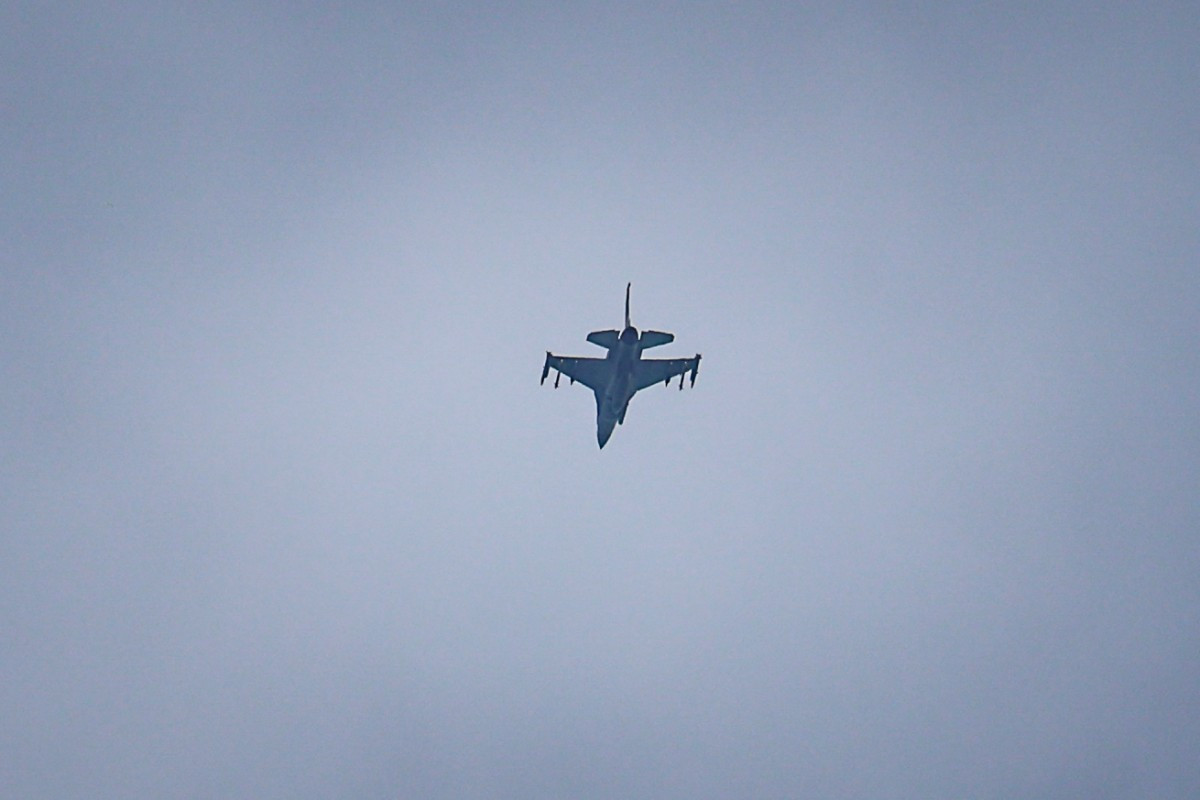 A United Arab Emirates Air Force F-16 fighter jet flies over Dubai on March 11, 2026. The Gulf countries have long been seen as islands of stability in the Middle East, but the war in the region could threaten their prosperity, analysts said, pointing to risks to their revenues and reputations as business havens. (AFP/-)
D
rones fell near Dubai airport, injuring four people, while ships were hit in or near the Strait of Hormuz on Wednesday as Iran kept up its campaign disrupting oil markets and air and maritime traffic.
The oil-rich Gulf has borne the brunt of Iran's attacks in response to US-Israeli strikes that sparked the Middle East war, with Tehran targeting US assets but also civilian infrastructure.
Iran has also targeted Gulf energy infrastructure and choked shipping in the Strait of Hormuz, which normally carries nearly 20 percent of global oil production, prompting wild swings in prices.
A container ship and a bulk carrier were hit off the coast of the UAE, one off Dubai and the other off the northern Emriate of Ras Al Khaimah by unknown projectiles, according to the United Kingdom Maritime Trade Operations (UKMTO).
A third ship was also hit by a projectile off Oman, in the Strait of Hormuz, which caused a fire that was later extinguished according to the UKMTO.
Saudi Arabia intercepted drones targeting the Shaybah field, crucial to its production, while explosions rang out over Qatar and the UAE reported fresh attacks.
Saudi Arabia also said it intercepted seven ballistic missiles targeting its eastern region and the Prince Sultan Air Base, where an American service member was fatally wounded on March 1.
Tehran appears to be attempting to knock major Gulf refineries offline while also tightening its chokehold on the strait in a quest to inflict maximum pain on the global economy.
In the past few days, Saudi Aramco's sprawling Ras Tanura facility, home to one of the Middle East's largest refineries, was targeted as well as the UAE's Ruwais refinery -- one of the largest in the world.
Iranian attacks have already forced state-owned QatarEnergy, one of the world's largest producers of liquefied natural gas, to halt production last week and declare force majeure.
Energy producers in Kuwait made similar declarations, which are a warning that events beyond their control may lead them to miss export targets.