The Jakarta Post
Please Update your browser
Your browser is out of date, and may not be compatible with our website. A list of the most popular web browsers can be found below.
Just click on the icons to get to the download page.


Popular Reads
Top Results
No results found. Please check your search term and try again
Can't find what you're looking for?
View all search results
Popular Reads
Top Results
No results found. Please check your search term and try again
Can't find what you're looking for?
View all search resultsEl Niño set to return as early as May, impacting global weather patterns
A clear shift has been observed in the Equatorial Pacific, with sea-surface temperatures rising rapidly, suggesting a high likelihood of El Niño conditions developing between May and July this year.
Change text size
Gift Premium Articles
to Anyone
Share the best of The Jakarta Post with friends, family, or colleagues. As a subscriber, you can gift 3 to 5 articles each month that anyone can read—no subscription needed!
 Set as preferred source
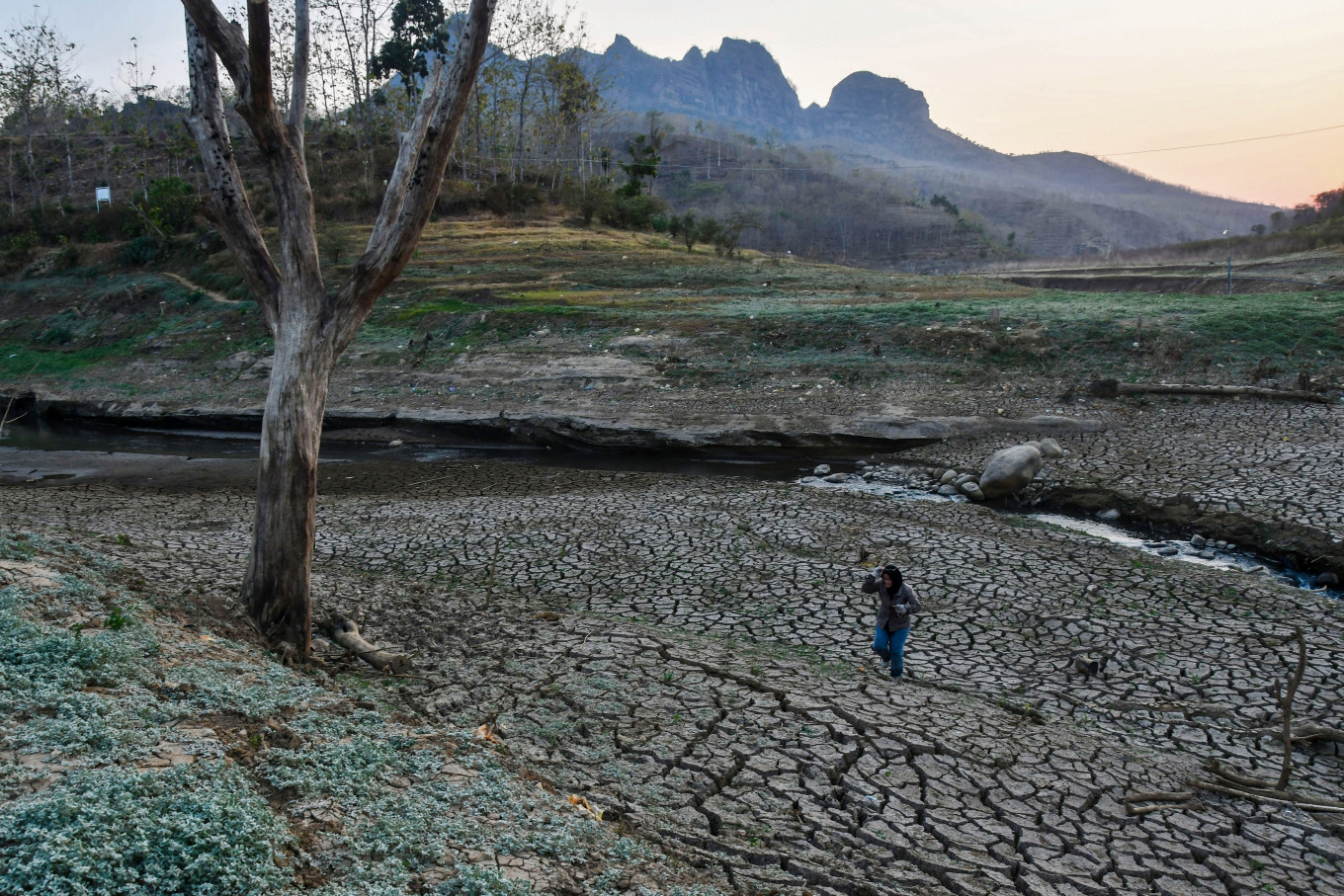 A woman walks on Sept. 20, 2024 across the dried-up bed of the Bendo Reservoir in Ponorogo, East Java, which has been hit by severe drought. (Antara/Siswowidodo)
T
he return of El Niño weather conditions are expected from as early as May this year, potentially affecting global temperatures and rainfall patterns, the World Meteorological Organization (WMO) said.
El Niño is a periodic warming of sea surface temperatures in the central and eastern Pacific Ocean, which typically lasts between nine to twelve months, according to the WMO.
A clear shift has been observed in the Equatorial Pacific, with sea-surface temperatures rising rapidly, suggesting a high likelihood of El Niño conditions developing between May and July this year, it said.
"After a period of neutral conditions at the start of the year, climate models are now strongly aligned, and there is high confidence in the onset of El Niño, followed by further intensification in the months that follow," said Wilfran Moufouma Okia, Chief of Climate Prediction at the WMO in a statement.
While models indicate a potential strong El Niño event this year, the WMO added that forecasts made during the spring are typically less reliable, and greater confidence in the predictions will be possible after April.
The weather pattern is known to disrupt regional climates, potentially bringing increased rainfall to southern South America, the southern United States, parts of the Horn of Africa, and central Asia, while causing drought in Australia, Indonesia, and sections of southern Asia. It can also have a warming effect on the global climate, the WMO said.