TheJakartaPost
Please Update your browser
Your browser is out of date, and may not be compatible with our website. A list of the most popular web browsers can be found below.
Just click on the icons to get to the download page.


Popular Reads
Top Results
No results found. Please check your search term and try again
Can't find what you're looking for?
View all search results
Popular Reads
Top Results
No results found. Please check your search term and try again
Can't find what you're looking for?
View all search resultsGermany, Poland poised for soaring temperatures as heatwave moves east
Britain, France and Switzerland have baked in record heat in June, and the system was expected to test more records as the heatwave crosses the Rhine River.
Change text size
Gift Premium Articles
to Anyone
Share the best of The Jakarta Post with friends, family, or colleagues. As a subscriber, you can gift 3 to 5 articles each month that anyone can read—no subscription needed!
 Set as preferred source
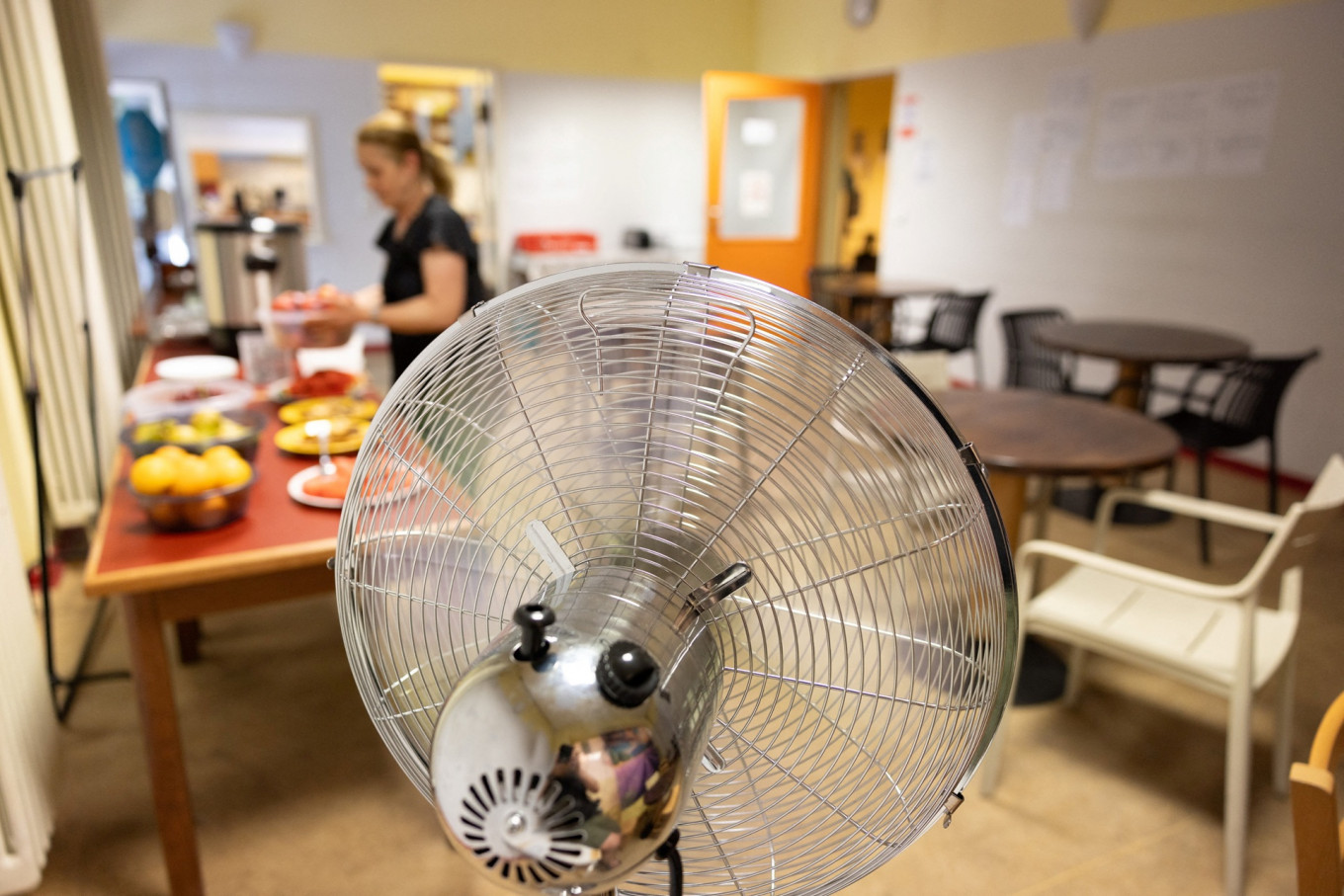 The heat relief service IB Berlin-Brandenburg provides a cold room with food and cold drinks to homeless people during the ongoing heatwave in Berlin, Germany, on June 26, 2026. (Reuters/Axel Schmidt)
G
ermans braced for sweltering conditions on Saturday as a heatwave linked to dozens of deaths in Western Europe was forecast to move east and bring temperatures approaching 40 degrees Celsius to Germany and Poland.
Britain, France and Switzerland have baked in record heat in June, and the system was expected to test more records as the heatwave crosses the Rhine River.
Public broadcaster ARD said a German record of over 41 degrees Celsius was reached on Friday near Saarbruecken on the border with France, according to preliminary official data.
In France, dozens of people including both young and old have died during the heatwave. Temperatures above 40 degrees Celsius have disrupted rail travel and power generation, sparked alcohol bans, suspended schools and postponed outdoor events.
"The heatwave is going to peak at the weekend, well over 40 degrees in some parts of Germany," said Karsten Brandt, a meteorologist at weather forecasting site Donnerwetter.de.
The Ironman European Championship long-distance triathlon taking place on Sunday in Frankfurt shortened the cycling and running courses due to the heat, organisers said.
Struggling with the prospect of damage to infrastructure like buckling roads and swelling train tracks, some major public service providers sought to reduce traffic.
German national rail operator Deutsche Bahn has given customers the option of cancelling long-distance travel bookings into early next week without charge due to the heatwave.
The company said its infrastructure is under particular strain because of sun exposure and additional risk to signals, tracks and overhead wires stemming from thunderstorms and wildfires.
Parts of Germany, mainly in the southwest, have already experienced a much hotter June than usual.
The most extreme heat is forecast to begin fading at the weekend, with heavy thunderstorms expected on Sunday.
Across Europe, cultural landmarks have had to close, farming has suffered and some hospitals have struggled to cope.
The heatwave has pushed temperatures up to 18 degrees Celsius above their seasonal average, according to the Reuters Climate Monitor, and is being driven by a phenomenon known as an Omega block. This weather pattern traps a bulging ball of hot air over regions for extended periods, with cooler air on its fringes.
Demand for electric fans has shot up, and Asian air conditioning makers reported a European sales boom.
Most of the housing stock in northern Europe is not built to temper heat but rather to keep it in.
The present heatwave will begin shifting by the end of the month, hitting Central Europe and the Balkans, the World Meteorological Organisation said.
Scientists said the heatwave would have been virtually impossible without manmade climate change, which has made this week's night-time temperatures 100 times more likely than they would have been even two decades ago.