The Jakarta Post
Please Update your browser
Your browser is out of date, and may not be compatible with our website. A list of the most popular web browsers can be found below.
Just click on the icons to get to the download page.


Popular Reads
Top Results
No results found. Please check your search term and try again
Can't find what you're looking for?
View all search results
Popular Reads
Top Results
No results found. Please check your search term and try again
Can't find what you're looking for?
View all search resultsIsrael says troops to stay 'indefinitely' in Lebanon, Syria, Gaza
"The IDF will remain in the security zones in Lebanon, Syria and Gaza indefinitely in order to protect our residents and communities from jihadist elements," Israel Katz said.
Change text size
Gift Premium Articles
to Anyone
Share the best of The Jakarta Post with friends, family, or colleagues. As a subscriber, you can gift 3 to 5 articles each month that anyone can read—no subscription needed!
 Set as preferred source
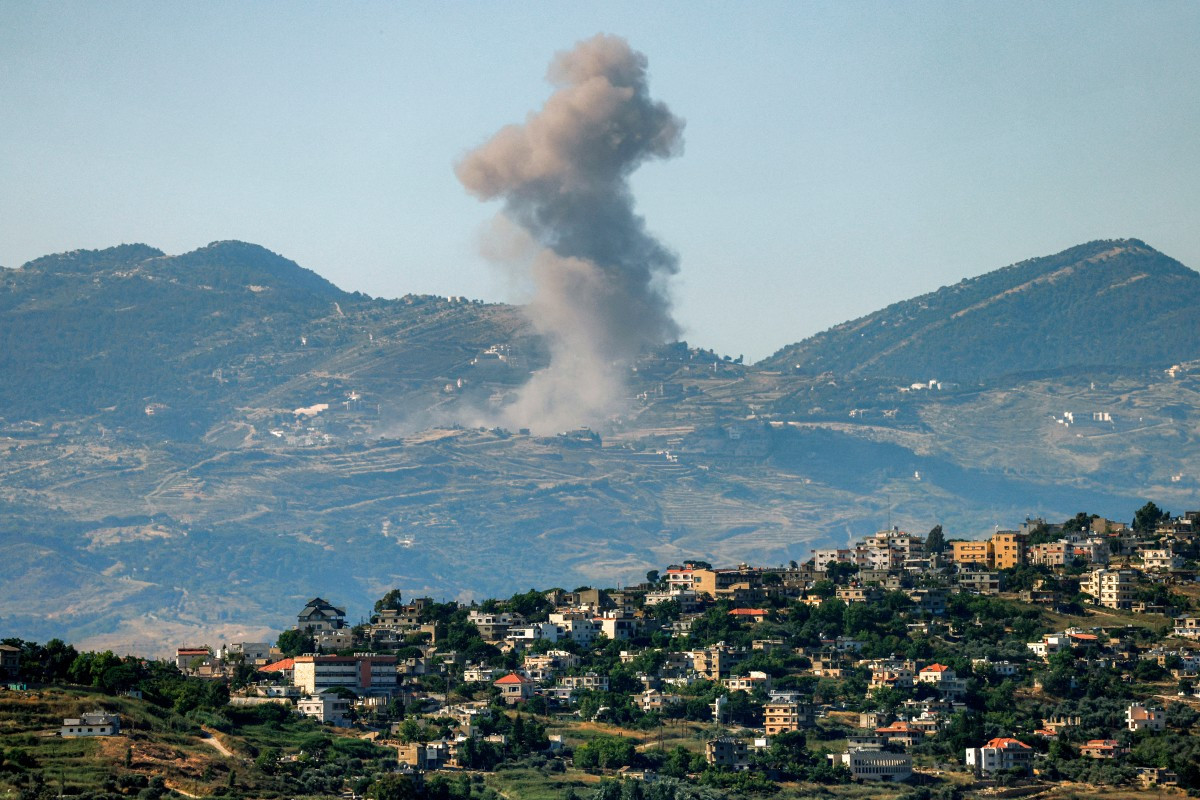 Smoke rises following Israeli bombardment in southern Lebanon as seen from a position across the border in the Upper Galilee in northern Israel on June 19, 2026. Mediators in the US-Iran conflict, including Pakistan, Saudi Arabia and Turkey, are due to gather for talks in the Egyptian city of Alamein on June 21, Cairo and Islamabad have confirmed. The agreement was meant to halt fighting in Lebanon as well, but clashes have since resumed between Israeli forces and Iran-backed Hezbollah fighters. (AFP/Jalaa Marey)
I
srael's defence minister said Wednesday that Israeli forces would remain in self-proclaimed "security zones" established in Lebanon, Syria and Gaza, without any timeline for withdrawal.
"The IDF will remain in the security zones in Lebanon, Syria and Gaza indefinitely in order to protect our residents and communities from jihadist elements," Israel Katz said.
"We will not withdraw from the security zones," Katz said at function held in honour of Israeli soldiers killed during the 2006 war in Lebanon.
Katz also reiterated an earlier warning to Iran, saying the Islamic republic would be struck with "full force" if it attacked Israel over its operations in Lebanon.
Israel and Lebanon signed a US-sponsored framework agreement under US sponsorship on Friday to pave the way for peace between the two countries and disarm Iran-backed militant group Hezbollah.
Israeli officials, including Prime Minister Benjamin Netanyahu, have repeatedly ruled out withdrawing troops from southern Lebanon, where Israeli forces continue to clash with Hezbollah fighters.
They maintain that any troop withdrawal would happen only after Hezbollah has been disarmed across Lebanon.
On Tuesday, Netanyahu visited Lebanese territory occupied by the Israeli military, telling soldiers that Israel would not withdraw from the country's south as long as Hezbollah continued to pose a threat.
It was the first visit by Netanyahu to occupied Lebanese territory since the Israeli and Lebanese governments reached a security agreement last Friday mediated by the United States under which Israel will hand over two areas to Lebanon's army.
Hezbollah drew Lebanon into the Middle East war in early March with rocket fire aimed at Israel to avenge the killing of Iran's supreme leader in US-Israeli strikes.
Israel responded with massive airstrikes and a ground invasion of southern Lebanon.
According to Lebanon's health ministry, nearly 4,300 people have been killed in Israeli attacks since the war erupted.
The Israeli military says it has lost 38 soldiers and one civilian contractor in Lebanon since fighting began in early March.
Israel has also carried out repeated incursions and bombings in Syria since the overthrow of longtime ruler Bashar al-Assad, saying it seeks to establish a demilitarised zone in the country's south.
In Gaza, Israeli forces occupy nearly 70 percent of the territory.
Both the Palestinian Islamist movement Hamas and the Israeli military accuse each other of violating the ceasefire, which has been in effect since October last year.