The Jakarta Post
Please Update your browser
Your browser is out of date, and may not be compatible with our website. A list of the most popular web browsers can be found below.
Just click on the icons to get to the download page.


Popular Reads
Top Results
No results found. Please check your search term and try again
Can't find what you're looking for?
View all search results
Popular Reads
Top Results
No results found. Please check your search term and try again
Can't find what you're looking for?
View all search resultsMalaysia starts cloud seeding to help clear toxic haze
The operation, which also aims to bolster water reserves in anticipation of dry weather, targets three hydroelectric dams and 13 water catchment areas, Sarawak's Disaster Management Committee said.
Change text size
Gift Premium Articles
to Anyone
Share the best of The Jakarta Post with friends, family, or colleagues. As a subscriber, you can gift 3 to 5 articles each month that anyone can read—no subscription needed!
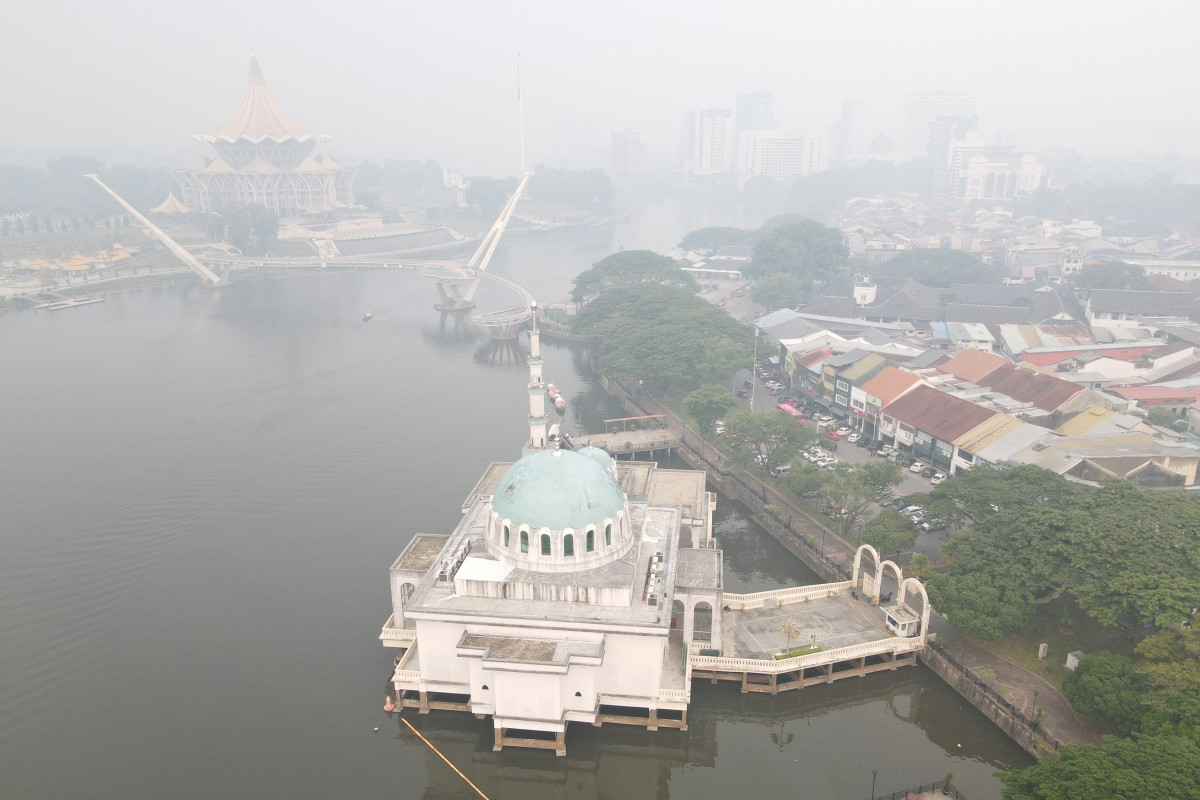 An aerial view shows haze shrouding the area around the Sarawak Legislative Assembly building (top) in Kuching, the capital city of Sarawak state, Malaysia on September 1, 2026. (AFP/AFP)
M
alaysia launched a three-day cloud-seeding operation on Thursday in a bid to ease hazardous haze choking Sarawak state, as smoke from Indonesian forest fires pushed air quality to dangerous levels.
The operation, which also aims to bolster water reserves in anticipation of dry weather, targets three hydroelectric dams and 13 water catchment areas, Sarawak's Disaster Management Committee said.
Residents of the state on Borneo island have endured heavy haze for days as smoke from Indonesia's Kalimantan blankets the area, driving up respiratory complaints.
Rainfall resulting from cloud seeding "has the potential to reduce the concentration of airborne pollutants, thereby supporting efforts to address air quality deterioration and the impact of haze", the Disaster Management Committee said.
Committee chair Douglas Uggah Embas said the operation -- which involves the air force, the National Disaster Management Agency and the Malaysian Meteorological Department -- also aims to replenish water supplies ahead of expected hotter, drier weather.
"October might be hotter and drier. We want to increase the water levels as much as possible while we still can," Uggah told reporters at the air force's Kuching base, where a C-130 aircraft prepared for a seeding flight.
The aircraft was due to release a saline solution into clouds at altitudes of 5,000 to 7,000 feet over target areas.
Uggah said that cloud seeding "can only be carried out when suitable cloud formations and atmospheric conditions are present -- it cannot create rain in the absence of suitable clouds."
"Cloud development and rainfall are subsequently monitored continuously to assess atmospheric conditions and the operation's outcome," the committee said.
Air quality in Sarawak deteriorated sharply again on Thursday, with seven locations recording hazardous Air Pollutant Index (API) readings above 300.
The town of Serian, about 60 kilometres (37 miles) southeast of Kuching, was worst hit with an API of 475.
Under national guidelines, API levels above 300 are classified as hazardous, while readings beyond 500 could trigger consideration of a local emergency.
A prolonged dry spell has strained water infrastructure, prompting state welfare agencies to distribute more than 450,000 boxes of drinking water to over 225,000 residents since January.
Firefighting and civil defence teams remain deployed to contain local fires, while health authorities have advised the public to limit outdoor activity and wear haze-rated masks in affected areas.
In Indonesia, around 1.4 million students in six provinces have shifted to online learning due to poor air quality triggered by forest and land fires, an official said on Wednesday.
As of September 2, around 1.43 million students from 12,874 schools in six of the provinces hit hardest by forest and land fires have been studying remotely, Gogot Suharwoto, an education ministry official, told the media.
Indonesia has stepped up efforts to contain haze caused by wildfire in the six provinces, which include Riau, Jambi and South Sumatra on the island of Sumatra, as well as West Kalimantan, Central Kalimantan, and South Kalimantan.
Of the 1.43 million students, 1.1 million are in West Kalimantan, Gogot said, the province that has recorded the most extensive wildfires so far this year.