The Jakarta Post
Please Update your browser
Your browser is out of date, and may not be compatible with our website. A list of the most popular web browsers can be found below.
Just click on the icons to get to the download page.


Popular Reads
Top Results
No results found. Please check your search term and try again
Can't find what you're looking for?
View all search results
Popular Reads
Top Results
No results found. Please check your search term and try again
Can't find what you're looking for?
View all search resultsCoinfest Asia 2026 highlights Indonesia’s digital asset ambitions in finance, investment
Change text size
Gift Premium Articles
to Anyone
Share the best of The Jakarta Post with friends, family, or colleagues. As a subscriber, you can gift 3 to 5 articles each month that anyone can read—no subscription needed!
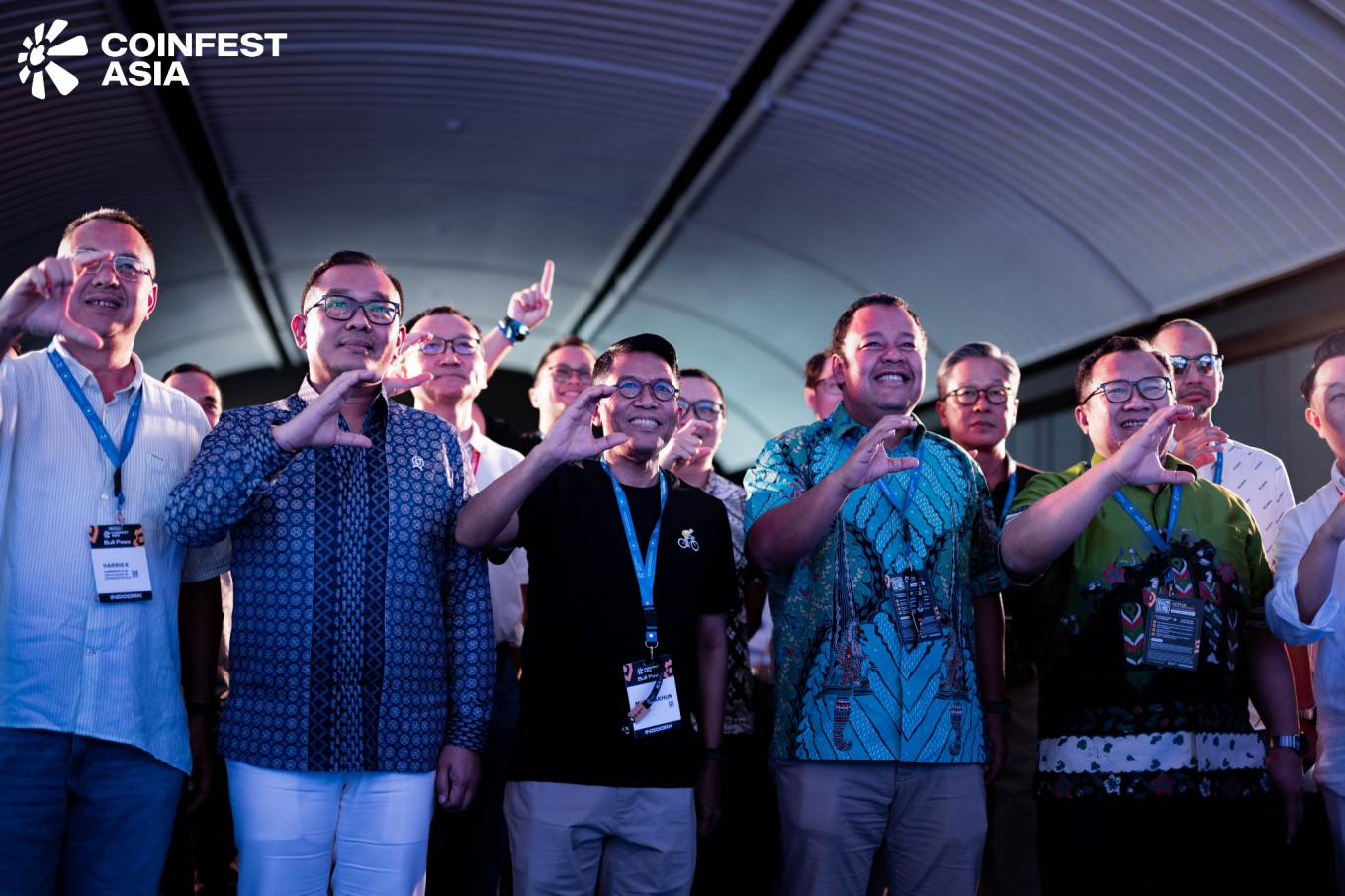 Indonesian policymakers and industry leaders gather at Coinfest Asia 2026 in Bali. (Courtesy of Coinfest Asia)
C
oinfest Asia 2026 convened policymakers, financial institutions, investors and global companies to examine how digital assets could fit into Indonesia’s broader financial and investment agenda.
Held from Aug. 20 to 21 in Bali, the crypto festival was attended by 10,000 participants from more than 90 countries, placing Indonesia’s policy direction in front of a broad cross-section of the global digital asset industry.
According to the Financial Services Authority (OJK), the country had 22.93 million digital asset accounts as of July 2026, giving policymakers a sizable domestic market as they explore how digital assets can play a wider role in the financial system.
OJK chief executive Adi Budiarso linked that development to Indonesia’s broader economic agenda, including the government’s target to achieve 8 percent growth by 2029 through stronger financial stability, market deepening and digital transformation.
The OJK is developing rules for stablecoins as transactional instruments rather than payment tools, while coordinating with Bank Indonesia on their regulatory treatment. The authority is also preparing a broader framework for real-world asset tokenization following sandbox testing involving rupiah-linked stablecoins, government securities, gold and property-related economic rights.
The potential economic impact extends beyond the digital asset market. According to Adi, tokenization could play “a pivotal role in unlocking access to capital for small and medium enterprises and democratizing financial access for everyone”.
The initiatives come as digital assets are increasingly incorporated into Indonesia’s wider financial architecture. Oversight of crypto assets began moving from the Commodity Futures Trading Regulatory Agency (Bappebti), where they had historically been classified as commodities, to the OJK in January 2025.
Mukhamad Misbakhun, chairman of House of Representatives Commission XI, which oversees monetary affairs and financial services, emphasized the need for regulation to keep pace with technology without constraining the industry’s development.
“Indonesia is highly adaptive, but oversight must not hinder innovation,” Misbakhun said.
The government is also looking at digital assets from an investment perspective.
Deputy Investment and Downstream Minister Todotua Pasaribu has noted the country would require approximately US$789 billion in investment between 2025 and 2029 to support the government’s economic growth target. He says Indonesia’s large crypto user base should provide a starting point for digital assets to play a broader economic role.
“Our ambition should go beyond adoption. We need to move from digital adoption to digital investment,” Todotua said.
Indonesia is also considering digital assets in connection with its plan to establish an international financial center, which is intended to address long-standing challenges in attracting international capital and deepen the country’s financial markets.
Pantro Pander Silitonga, executive director of the National Economic Council (DEN), highlighted the country’s capacity to absorb long-term capital into real-sector opportunities, including waste-to-energy, renewable energy and other productive investments, as a potential differentiator from more established financial hubs.
Taken together, Indonesia’s policy directions point to a broader economic role for digital assets. While regulatory and infrastructure challenges remain, the country’s market scale and evolving framework could support deeper financial markets, wider access to capital and new investment flows into the real economy.