The Jakarta Post
Please Update your browser
Your browser is out of date, and may not be compatible with our website. A list of the most popular web browsers can be found below.
Just click on the icons to get to the download page.


Popular Reads
Top Results
No results found. Please check your search term and try again
Can't find what you're looking for?
View all search results
Popular Reads
Top Results
No results found. Please check your search term and try again
Can't find what you're looking for?
View all search resultsIndonesia eyes reservoirs for 100GW solar expansion amid land shortages
Change text size
Gift Premium Articles
to Anyone
Share the best of The Jakarta Post with friends, family, or colleagues. As a subscriber, you can gift 3 to 5 articles each month that anyone can read—no subscription needed!
 (Image courtesy of Masdar)
F
acing severe land constraints on its most densely populated islands, Indonesia is turning to its lakes and reservoirs to meet a new target of installing 100 gigawatts (GW) of solar capacity over the next three years.
The target represents a massive overhaul of the country’s energy grid. Currently, the total national electricity generation capacity from all sources is approximately 88 GW, with solar accounting for just 1.5 GW.
Finding the physical space to build utility-scale solar farms has proven to be a primary bottleneck, particularly on Java, where industrial and residential power demand is highest but available land is scarce.
To bypass this hurdle, the government is mapping out floating solar projects. The Energy and Mineral Resources Ministry estimates that Indonesia has the potential to generate up to 90 GW of floating solar power across 250 inland water bodies.
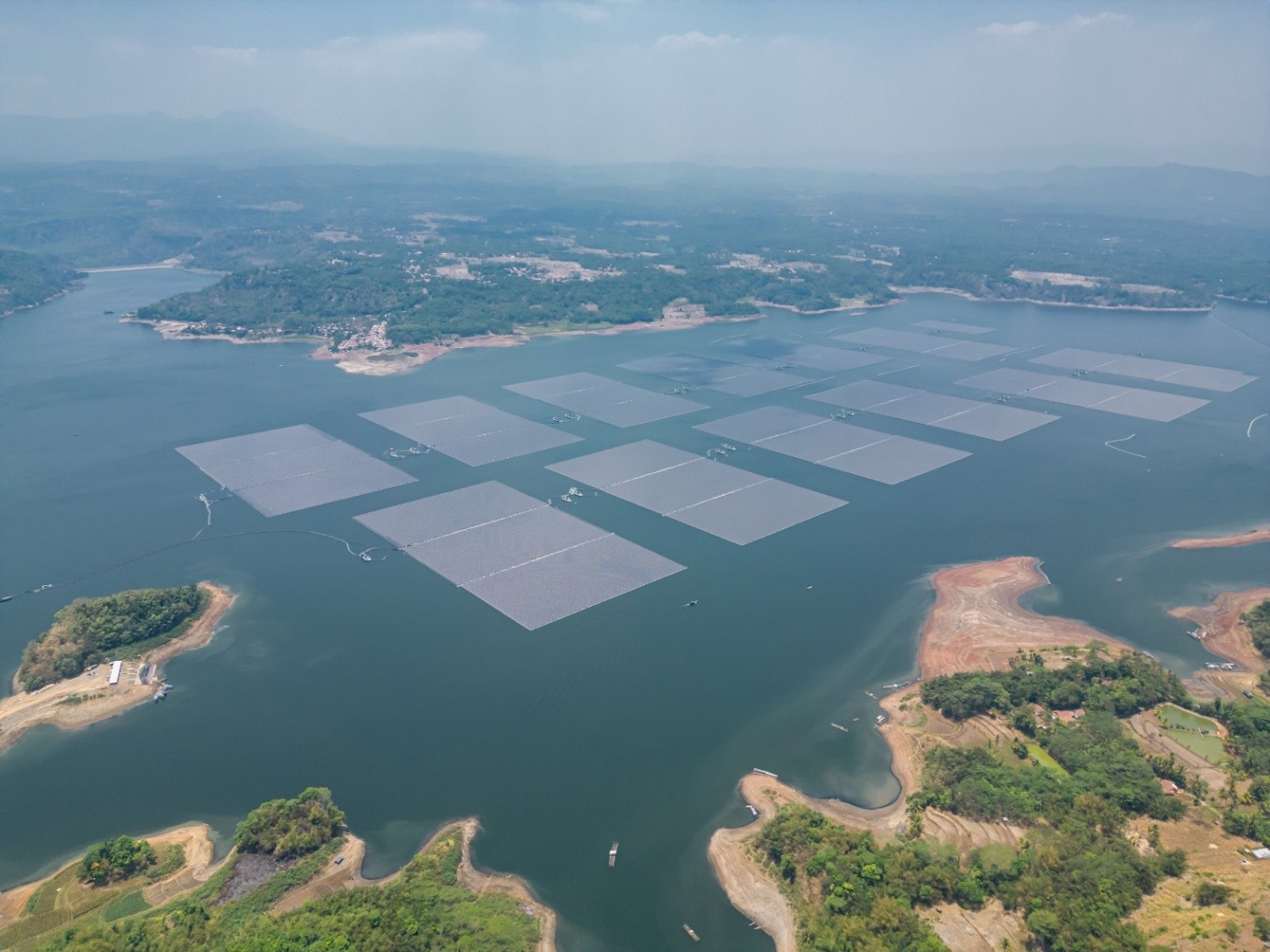
The viability of this strategy is currently being demonstrated at the Cirata reservoir in West Java, currently the largest floating solar plant in Southeast Asia. Built through a partnership between state-owned electricity company PLN and UAE-based developer Masdar, the facility has been operational since 2023, featuring 340,000 floating solar panels generating enough electricity for 50,000 homes.
Energy planners are specifically targeting existing hydroelectric dams for these floating arrays to reduce infrastructure costs, as reservoirs like Cirata already possess the necessary substations and transmission lines to route power to major cities. The hybrid model also allows grid operators to balance the power supply, relying on solar generation during peak daylight hours while conserving reservoir water to run hydroelectric turbines at night.
Beyond lowering emissions, the solar expansion is being driven by fiscal and energy security concerns, as Indonesia currently imports roughly 1 million barrels of oil per day. According to Energy and Mineral Resources Minister Bahlil Lahadalia, the national solar program could reduce reliance on fossil fuels for electricity generation, potentially saving the state up to Rp 73.9 trillion (US$4.1 billion) annually in energy subsidies.
To reach the 100 GW benchmark, the government is preparing to open new sites for commercial development. The Energy and Mineral Resources Ministry has identified reservoirs at Jatigede and Jatiluhur as the next immediate targets for floating solar auctions, signaling a shift toward inland waterways as the foundation of Indonesia's renewable energy strategy.