The Jakarta Post
Please Update your browser
Your browser is out of date, and may not be compatible with our website. A list of the most popular web browsers can be found below.
Just click on the icons to get to the download page.


Popular Reads
Top Results
No results found. Please check your search term and try again
Can't find what you're looking for?
View all search results
Popular Reads
Top Results
No results found. Please check your search term and try again
Can't find what you're looking for?
View all search resultsSoutheast Asia power market at a turning point, now more than ever
Even before the shock from the Iran war, regional electricity consumption surged by 24 percent between 2021 and 2025, but 70 to 80 percent of that new demand was met by coal and gas.
Change text size
Gift Premium Articles
to Anyone
Share the best of The Jakarta Post with friends, family, or colleagues. As a subscriber, you can gift 3 to 5 articles each month that anyone can read—no subscription needed!
 Set as preferred source
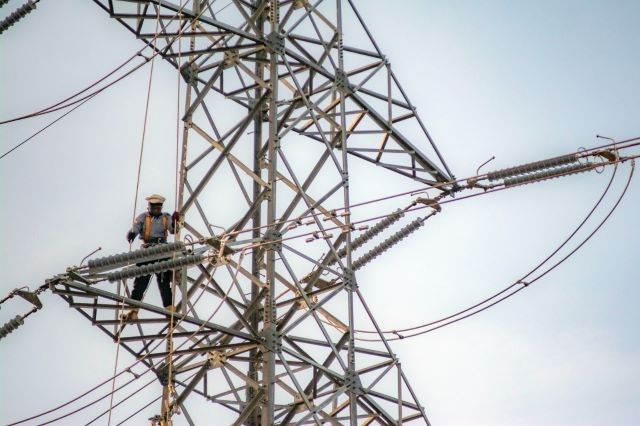 A technician from state electricity company PLN stands atop a transmission tower during regular maintenance work on Dec. 27, 2023, in Palu, Central Sulawesi.
(Antara/Basri Marzuki)
A technician from state electricity company PLN stands atop a transmission tower during regular maintenance work on Dec. 27, 2023, in Palu, Central Sulawesi.
(Antara/Basri Marzuki)
S
outheast Asia is entering a defining phase of its energy journey. Recent geopolitical events have made the stakes of this transition painfully clear.
The rising tensions around the Strait of Hormuz following the conflict in the Middle East sent Brent crude past US$100 a barrel and caused Asian LNG spot prices to double.
Indonesia is better positioned than many of its neighbors thanks to abundant domestic coal. But the country is far from insulated: a quarter of its crude oil imports and 30 percent of its LPG come from the Middle East, two Pertamina vessels remain stuck in the Strait and Jakarta has been working to redirect crude supply from the United States.
With fuel subsidies budgeted on the assumption of $70 per barrel oil, the fiscal pressure is mounting fast. What was once a long-term policy debate is now an urgent fiscal and energy security challenge.
Even before this shock, the numbers were troubling. Regional electricity consumption surged by 24 percent between 2021 and 2025, but 70 percent to 80 percent of that new demand was met by coal and gas.
Renewable technologies have become cheaper and more accessible, but they are not seizing a larger share. The reason lies not just in economics, but in market structure.

A legacy built on long-term contracts
Most Southeast Asian countries operate “single-buyer” power markets, where a vertically integrated national utility controls the grid and procurement. Private producers participate through long-term power purchase agreements (PPAs).
Indonesia offers the clearest example of this model, with PLN operating as the classic vertically integrated single buyer. This approach, adopted widely in the 1990s and 2000s, successfully achieved its primary goal, rapidly expanding generation capacity with the help of foreign investment.
This system is not without its challenges. The contracts that finance expansion can have the side-effect of slowing the uptake of greener alternatives.
Many PPAs include take-or-pay clauses that guarantee returns for coal and gas plants, which can incentivize system operators to dispatch fossil-fuel generation before renewables, even when wind or solar is cheaper. Meanwhile, regulated tariffs, designed with the worthy aim of keeping electricity affordable, can inadvertently dampen the price signals that would make renewable energy's cost advantage more visible.
The broader consequence is that power is still largely treated as a uniform product, with little reflection of when it is abundant or scarce.
For Indonesia specifically, while domestic coal provides a degree of energy security, the country's growing reliance on imported LNG for gas-fired generation means it remains exposed to the kind of global commodity shocks we are witnessing today. Renewables, by contrast, carry no fuel-price risk at all.
Steps have already been taken
Several countries in the region had begun to move toward power market reform well before the current energy shock, and Indonesia is among them.
PLN's latest long-term electricity supply business plan (RUPTL) 2025-2034, dubbed “Beyond the Greenest”, targets 42.6 gigawatts (GW) of new renewable capacity and 10.3 GW of energy storage over the next decade, with 73 percent of new capacity reserved for independent power producers.
The government also issued Energy and Mineral Resources Minister Regulation No. 5/2025, establishing clearer guidelines for renewable PPAs that improve legal certainty for developers and investors. And a 2025 memorandum of understanding (MoU) with Singapore on cross-border electricity trade signals growing ambition for regional grid integration.
These are encouraging steps, showing gradual progress is possible without a full-fledged transition to a free power market model.
Six levers for reform
These problems are not new and have been faced by other countries before. Learning from global lessons, there are six practical levers that can support this transition, without requiring a “leap” to full market liberalization.
First, strengthen institutions through unbundling. When the entity awarding contracts is also the one owning generation assets, conflicts of interest are inevitable. Separating these roles, as Malaysia has begun to do and Vietnam is considering, builds investor confidence and levels the playing field for renewables. Indonesia could explore similar functional separation within PLN's structure.
Second, pilot wholesale market mechanisms. Day-ahead or “one-sided” pool markets, where generators offer capacity into a central dispatch system, can be introduced alongside existing contracts. The Philippines' wholesale electricity spot market offers a useful precedent.
Third, make contracts more flexible. Regulators could renegotiate rigid take-or-pay clauses where possible and ensure new thermal PPAs are flexibility-ready, shorter in duration, with limited must-run obligations.
Fourth, integrate regional grids. Cross-border power trade can smooth out the intermittency of renewables and create a larger market that attracts investors. Indonesia's MoU with Singapore is a promising start, and the Lao-Thailand-Malaysia-Singapore (LTMS) pilot demonstrates what is possible.
Fifth, protect consumers during the transition. Targeted subsidies for vulnerable households, rather than blanket price suppression, allow wholesale prices to signal true costs while cushioning those least able to bear them. The current crisis underscores this point: Indonesia's broad fuel subsidies, while socially important, might be fiscally unsustainable when oil prices spike and could crowd out the very investments in renewables that would reduce import dependence.
Sixth, introduce carbon attributes. Standardized, government-endorsed systems of renewable energy certificates can create meaningful new revenue streams for green energy developers.
A window of opportunity
Thermal power will remain part of Southeast Asia's energy mix for years to come, and Indonesia's domestic coal will continue to play a role.
The goal is not to eliminate it overnight, but to reduce it and redesign its role, keeping some plants as reserve or peaking capacity rather than inflexible baseload, with contracts that value flexibility, not just energy volume.
The recent energy crisis has exposed the fragility of dependence on imported fossil fuels in a region where 80 percent of oil and LNG imports transit a single chokepoint.
Indonesia has the resources, the regulatory momentum, and the market scale to lead the region's energy transition. The imperative is clear, green growth is not just about emission reduction, it is also about energy security.
*****
Marko Lackovic is a managing director and partner, and Alexandre Salesse is a partner, at Boston Consulting Group in Singapore.