The Jakarta Post
Please Update your browser
Your browser is out of date, and may not be compatible with our website. A list of the most popular web browsers can be found below.
Just click on the icons to get to the download page.


Popular Reads
Top Results
No results found. Please check your search term and try again
Can't find what you're looking for?
View all search results
Popular Reads
Top Results
No results found. Please check your search term and try again
Can't find what you're looking for?
View all search resultsChinese investors scout alternatives as policy changes bite
Tsingshan Group is considering a major development in Madagascar, the country's mines ministry said, while Lygend Resources, opens new tab is looking at a project in Tanzania as well as restarting the Koniambo operation in New Caledonia, according to industry sources.
Change text size
Gift Premium Articles
to Anyone
Share the best of The Jakarta Post with friends, family, or colleagues. As a subscriber, you can gift 3 to 5 articles each month that anyone can read—no subscription needed!
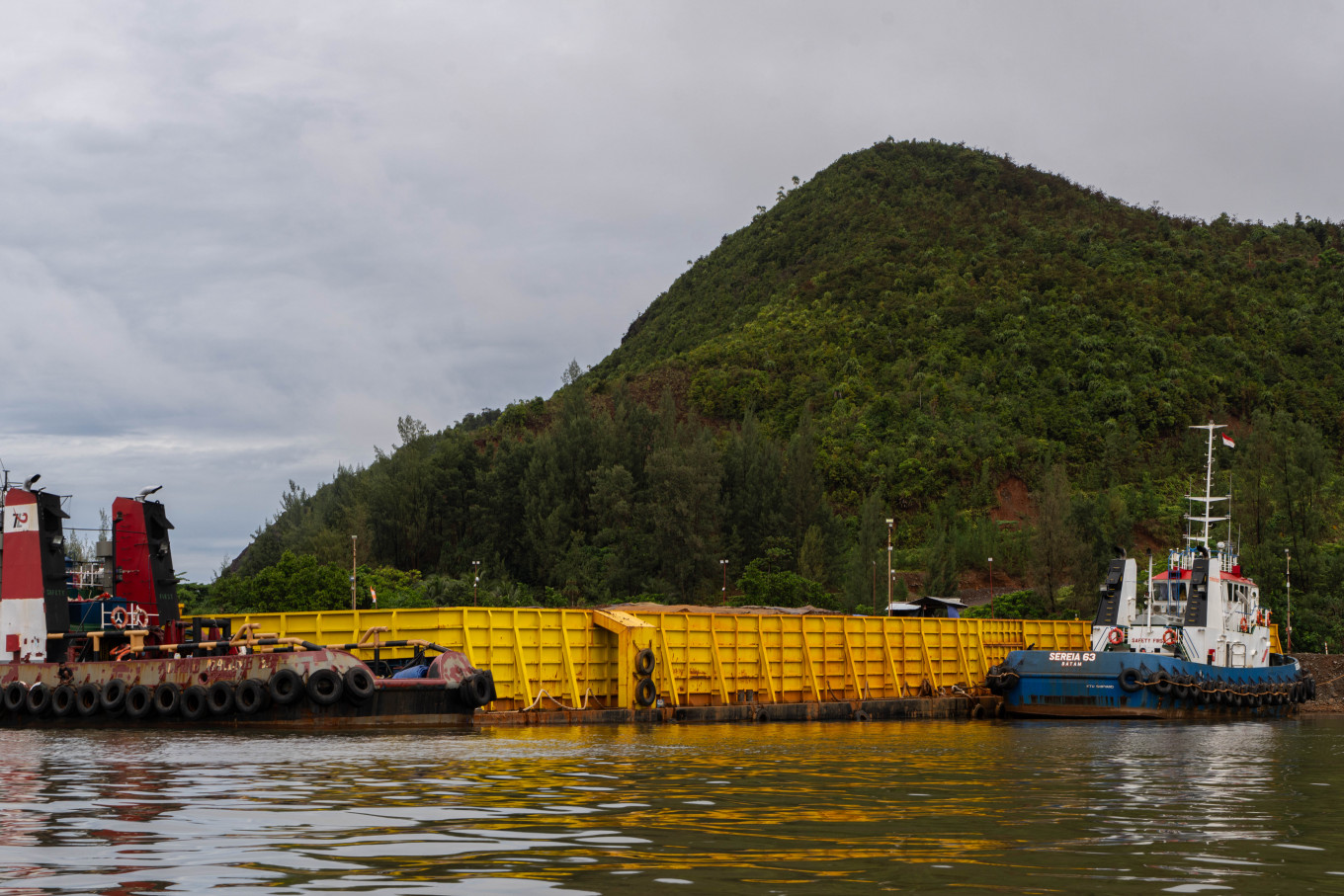 PT Gag Nikel’s barge and tug boats have been moored for weeks at the company’s port at Gag island on June 19, 2025.
(The Jakarta Post/Nikka Amandra Gunadharma)
PT Gag Nikel’s barge and tug boats have been moored for weeks at the company’s port at Gag island on June 19, 2025.
(The Jakarta Post/Nikka Amandra Gunadharma)
C
hinese companies that helped build Indonesia's nickel industry into the world's dominant producer are looking as far afield as Africa for longer-term alternatives as rising policy pressure tests the investment model that reshaped global supply.
Tsingshan Group is considering a major development in Madagascar, the country's mines ministry said, while Lygend Resources, opens new tab is looking at a project in Tanzania as well as restarting the Koniambo operation in New Caledonia, according to industry sources.
The Chinese companies were among those that developed the smelters and industrial parks that turned Indonesia into the center of global growth for the metal used in stainless steel and electric-vehicle batteries after Jakarta banned ore exports in 2020.
Indonesia's share of production surged to more than 60 percent of global mined nickel output in 2025, up from just over 30 percent in 2020, according to US Geological Survey data.
The low-cost Chinese-backed output pushed the nickel market into surplus, lowered prices and forced higher-cost producers elsewhere including Glencore, opens new tab, BHP, opens new tab and Sumitomo, opens new tab to close or suspend operations or seek buyers.
But since taking office in late 2024, Indonesian President Prabowo Subianto has focused on raising state revenue and spending, including a $20 billion free meal plan.

In late May, he outlined plans to bring exports of coal, palm oil and ferro-alloys under centralized state control. Nickel pig iron, the main nickel product by volume for Chinese producers, was later said to be excluded, but the proposal added to investor concerns over policy stability.
Even before that plan, tighter nickel ore mining quotas, proposed tax hikes and a sharp upward revision to Indonesia’s benchmark mineral price had unsettled investors and led the China Chamber of Commerce in Indonesia to write a strongly worded letter to Prabowo warning the measures could deter future investment.
“It’s definitely negative for the industry,” said Tim Hoff, a senior mining analyst at Canaccord in Perth. “If you have the government adding bureaucracy and controlling what you can sell your commodities for, then that will impact the scale of your investment.”
Foreign direct investment into Indonesia fell 6 percent in 2025, compared with 19 percent growth a year earlier. Investment in mining peaked in 2024, while new investment into base metals refining has also plateaued since then.
Overseas endeavors
Tsingshan, the world's biggest stainless steel producer, has submitted a proposal worth several billion dollars to build an industrial park covering a wide range of minerals including nickel to Madagascar's government, the country's mines ministry told Reuters.
Madagascar Mines Minister Karl Andriamparany said the proposal was inspired by Tsingshan's Morowali and Weda Bay nickel operations in Indonesia, but remained under review and no mining permits had been granted.
Tsingshan signed a cooperation memorandum with Madagascar in February, but the submission of its proposal had not been reported previously. The company did not respond to a request for comment.
Lygend, which helped pioneer high-pressure acid leach processing to produce raw materials for nickel-rich batteries in Indonesia, is also looking abroad.
Lygend is in talks to buy a stake in the undeveloped Kabanga nickel project in Tanzania from US-listed Lifezone Metals, opens new tab, according to two sources with knowledge of the matter.
They spoke on condition of anonymity about the talks, which are private and have not been reported previously. Lifezone and Lygend did not respond to requests for comment.
In the Pacific, Lygend recently made an offer to New Caledonia's publicly owned mining group SMSP for a stake in the idled Koniambo nickel project following site visits last October and November, SMSP told Reuters by email.
These prospective investments would be each Chinese company's first nickel forays outside Indonesia.
Challenging alternatives
Indonesia's policy changes have tightened nickel supply forecasts and lifted prices to the highest in two years, offering a potential lifeline to operations like Koniambo, which produced more than 28,000 metric tons of nickel at its peak in 2018.
Koniambo was shut in 2024 after prices plunged and Glencore, opens new tab decided to sell its 49 percent stake, in a process now being managed by SMSP.
Greenfield developments in Madagascar and Tanzania would bring a different level of risk and lack Indonesia's combination of scale, infrastructure and ore access.
Madagascar, where the military now rules in a transitional government after a coup last year, in January lifted a 16-year moratorium on new mining permits for most minerals.
Madagascar’s only nickel and cobalt operation, Ambatovy, has struggled for years and is set to be sold by Sumitomo at a loss to a consortium backed by an ex-Glencore trader.
Tanzania's Kabanga, discovered decades ago, is one of the world's largest undeveloped nickel sulfide deposits.
Lifezone estimates it would cost nearly $1 billion for the initial development and take six years, including construction, to ramp up to planned annual output of about 50,000 tons if a final investment decision is made this year.
Lifezone said in December it was in advanced-stage talks with strategic and financial investors, months after BHP sold its 17 percent stake in the project amid an uncertain nickel market outlook.