The Jakarta Post
Please Update your browser
Your browser is out of date, and may not be compatible with our website. A list of the most popular web browsers can be found below.
Just click on the icons to get to the download page.


Popular Reads
Top Results
No results found. Please check your search term and try again
Can't find what you're looking for?
View all search results
Popular Reads
Top Results
No results found. Please check your search term and try again
Can't find what you're looking for?
View all search resultsBI announces third rate hike in four weeks
The central bank lifted its key interest rate by 25 basis points to 5.75 percent, bringing the total increase to 1 percentage point over the past month.
Change text size
Gift Premium Articles
to Anyone
Share the best of The Jakarta Post with friends, family, or colleagues. As a subscriber, you can gift 3 to 5 articles each month that anyone can read—no subscription needed!
 Set as preferred source
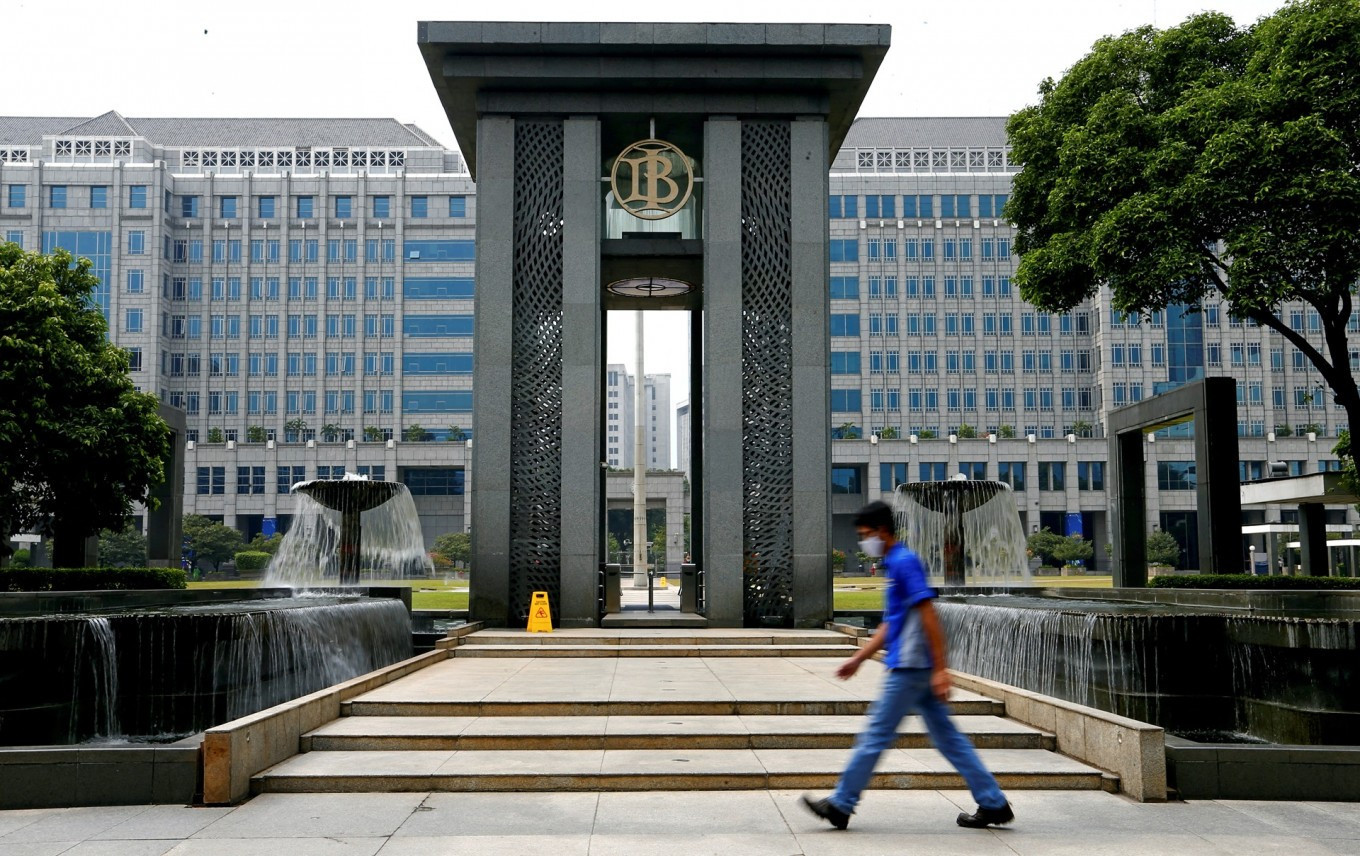 A man walks past the Bank Indonesia (BI) headquarters in Jakarta on Sept. 2, 2024. (Reuters/Ajeng Dinar Ulfiana)
B
ank Indonesia on Thursday hiked interest rates for the third time in four weeks as the country looks to bolster its currency, which has taken a battering from surging energy costs caused by the Middle East war.
It has been Asia's worst-performing currency, according to financial outlet Bloomberg News, shedding around seven percent.
BI lifted its key interest rate by 25 basis points to 5.75 percent, bringing the total increase to 1 percentage point over the past month.
The move came after it announced a surprise 50-basis-point hike on May 20 -- the first in two years -- and another of 25 points on Tuesday last week.
"This increase is a follow-up step to further strengthen the stability of the rupiah’s exchange rate amid persistently high global uncertainty," Perry Warjiyo, the central bank governor, told a news conference.
The rupiah tanked earlier this month to a record 18,209 per dollar before bouncing back after last week's rate increase. It is now sitting around 17,800.

Indonesia is a net oil importer, but the government has insisted on leaving heavily subsidized fuel prices unchanged despite struggling with high costs. Consumer prices rose 3.08 percent on-year in May.
The rupiah's plunge since the turn of the year has come as the Indonesian stock market has lost about a third of its value as the economy struggles.
Read also: Weakened rupiah disrupts business, education plans
The economic strain has triggered student protests across the country, demanding the government stop excessive spending, including the billion-dollar free-meals scheme.
They also hit out at the government's policy to raise the non-subsidized fuel by a third.
The Philippine central bank also raised rates by 25 basis points to 4.75 percent -- as expected -- on Thursday amid soaring inflation caused by the spike in fuel costs.
Consumer prices in the import-dependent archipelago surged 6.8 percent last month, slower than the previous month but well ahead of full-year targets. The bank said Thursday that the elevated cost of oil and fertilizer continued to drive high food and fuel prices.
"Inflationary pressures remain strong," it said in a statement.
"Today’s policy action will help keep inflation expectations anchored and mitigate the risk of second-round effects," it added.
Consultancy Capital Economics predicted a similar hike at the bank’s next meeting in August, adding it believed headline inflation would drop if the recently brokered US-Iran deal holds.