The Jakarta Post
Please Update your browser
Your browser is out of date, and may not be compatible with our website. A list of the most popular web browsers can be found below.
Just click on the icons to get to the download page.


Popular Reads
Top Results
No results found. Please check your search term and try again
Can't find what you're looking for?
View all search results
Popular Reads
Top Results
No results found. Please check your search term and try again
Can't find what you're looking for?
View all search resultsA tougher road ahead for the property sector
On the demand side, home sales fell by 25.7 percent year-on-year (yoy) in Q1, according to a Bank Indonesia survey.
Change text size
Gift Premium Articles
to Anyone
Share the best of The Jakarta Post with friends, family, or colleagues. As a subscriber, you can gift 3 to 5 articles each month that anyone can read—no subscription needed!
 Set as preferred source
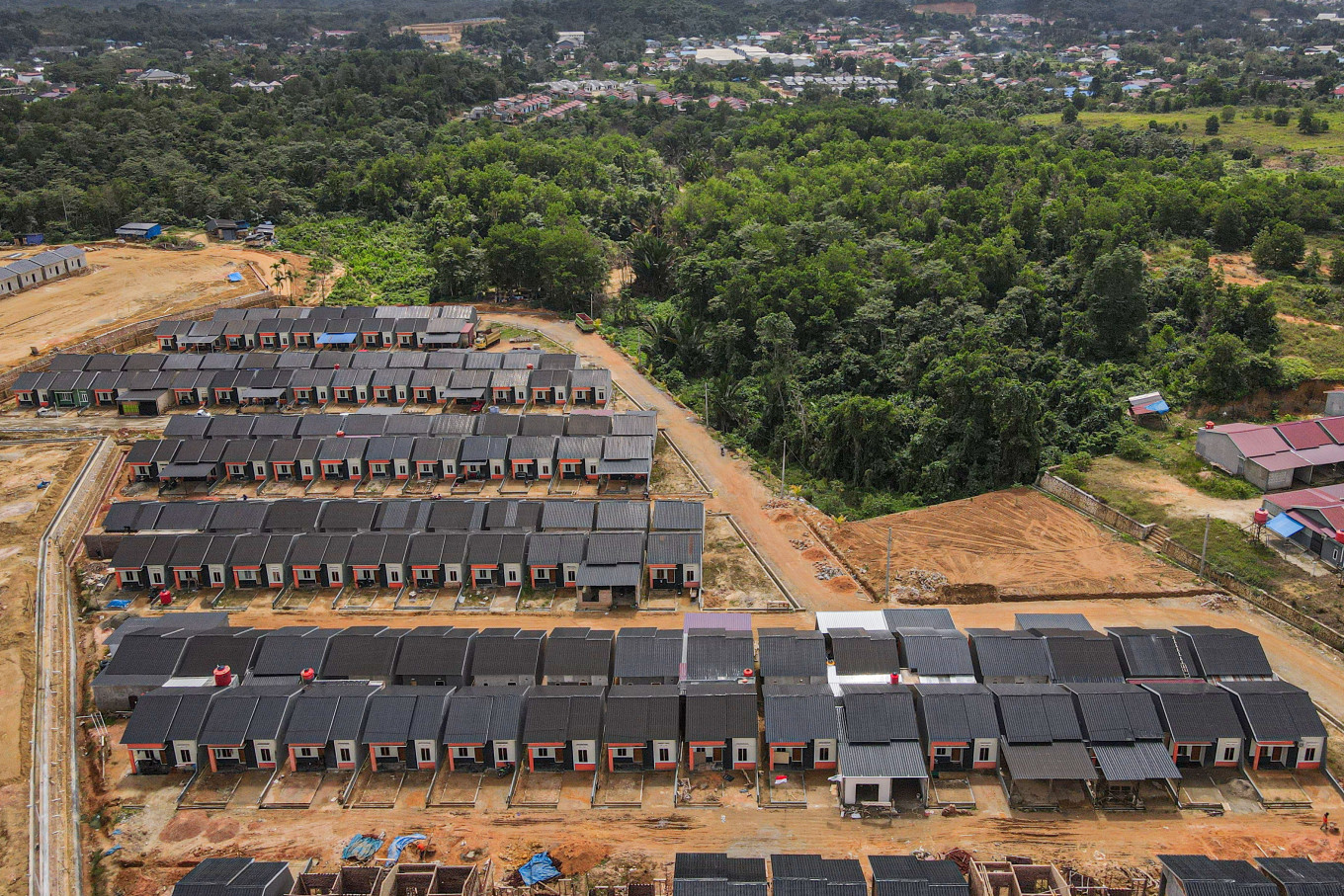 An aerial view of a subsidized housing complex at Puuwatu district in Kendari, Southeast Sulawesi, on Aug. 1, 2024. (Antara/Andry Denisah)
T
he property sector is entering an increasingly challenging phase in 2026. Amid slowing growth in mortgage lending and rising credit risk, a 100-basis-point (bps) increase in the Bank Indonesia (BI) rate adds further pressure that could delay the sector’s recovery. In this environment, the challenge facing the property sector is no longer simply to sustain sales, but also to preserve purchasing power, credit quality and market confidence in the face of rising borrowing costs.
Since the beginning of 2026, the property sector has faced several challenges on both the demand and supply sides. On the demand side, home sales fell by 25.7 percent year-on-year (yoy) in Q1, according to a BI survey. Economic uncertainty and weakening purchasing power were among the main drivers of this decline.
Yet the property sector's potential remains substantial, as reflected in the total housing backlog, households without homes, which amounted to 9.6 million households in 2025. The number of households able to afford monthly installments above Rp 2 million (US$112) is sizeable, at 2.3 million households.
This softening demand is also reflected in slowing mortgage growth accompanied by rising risk. During January and April, the growth of total home-ownership loans (KPR) slowed while the non-performing loan (NPL) ratio rose.
BI data show that mortgage growth stood at 5.1 percent yoy in April, lower than the 8.7 percent recorded in April 2025 and the 7 percent posted at the end of 2025. This slowdown was accompanied by higher credit risk, the mortgage bad loan ratio reached 3.2 percent in April 2026, up from 3 percent in April 2025 and 3.1 percent in December 2025.
On the supply side, the property sector is contending with rising construction and building-material costs. Higher oil prices and the depreciation of the rupiah have pushed up the prices of building materials, driving property construction costs higher.

This is reflected in the 8.1 percent yoy growth of the wholesale price index for property construction in April 2026, far above the 0.8 percent recorded in April 2025. These higher construction costs are believed to have not yet been fully passed on to home prices, as house prices rose by only 0.6 percent in Q1. Such conditions could erode the margins of property companies.
Against this backdrop, the 100-bps increase in the BI rate will place additional pressure on the sector. Rising interest rates are a particular challenge because mortgages are the primary source of financing for home purchases in Indonesia.
According to a BI survey, mortgage schemes remained the main source of financing for homebuyers, accounting for 69.9 percent of total purchases in Q1. For consumers, higher interest rates mean heavier loan installments, prompting many to postpone their property purchases. For developers, bank loans account for 13.7 percent of their total financing needs, so rising borrowing costs can strain cash flow and hamper expansion. Developers with strong balance sheets may still have room to weather the pressure, but highly leveraged developers will face greater cash-flow strain amid steep rate hikes.
The transmission of the BI rate increase to mortgage rates takes time. Based on our calculations, a 100-bps increase in the BI rate raises the prime lending rate for mortgages by 0.37 percent three months later. This rise in the mortgage prime rate will, in turn, affect the disbursement of non-subsidized housing loans, given that the interest rate on subsidized mortgages (FLPP) remains relatively fixed at 5 percent throughout the loan tenor. By our estimates, a 1 percent increase in the mortgage prime rate would slow mortgage growth by 2 percent.
The era of high interest rates requires developers to rethink their strategies. The main focus should shift from aggressive expansion toward more prudent, demand-driven project management. Developers need to be more selective about locations, adjust unit sizes and offer products priced in line with the market’s purchasing power. Operational efficiency is also becoming increasingly important. Developers should reassess project design, material supply chains, construction phasing and marketing strategies. Phased development can help preserve cash flow and reduce the risk of unsold inventory, while digital marketing can broaden consumer reach at lower cost.
The government also has an important role to play in ensuring that the pressure from high interest rates does not translate into an excessively deep slowdown in the property sector. This is because property has extensive linkages with other sectors of the economy, both backward and forward. The sector has a long supply chain, spanning building materials such as cement, steel, ceramics, glass, paint and furniture, as well as construction services, transportation and informal labor.
Government strategies that need to be pursued and strengthened can be grouped into three areas: demand, supply and financing.
First, on the demand side, housing stimulus should be sustained in a more targeted manner and installments kept affordable in order to support demand. Interest-subsidy support should be expanded beyond low-income households to include the middle class, particularly first-time homebuyers who do not qualify for the FLPP program yet cannot fully afford commercial installments. Policy design must balance the effectiveness of stimulating demand with the prudence of safeguarding fiscal space.
Second, the provision of affordable housing should be accelerated by improving the supply side. Housing problems lie not only in costly installments but also in land prices, limited land availability, permit processes and the availability of supporting infrastructure. Speeding up land provision and permitting can reduce developers’ costs in building housing, helping to make selling prices more affordable.
Third, collateral risk should be reduced to encourage banks to extend housing loans. Collateral issues, such as the legal status of land and buildings, often hinder banks from disbursing mortgages, making them more cautious in their lending. Legal certainty over collateral is therefore needed to lower collateral risk. A guarantee scheme covering collateral risk can make the cost of credit and collateral risk more controlled and measurable for banks, encouraging them to extend housing loans without compromising prudential principles.
In conclusion, rising interest rates make the road ahead tougher for the property sector, particularly amid weakening demand, rising credit risk and high construction costs. Nevertheless, the sector’s long-term outlook remains strong, as the need for housing is still substantial. With the right response, today’s pressures can become the opportunity for building a healthier, more affordable and more sustainable property sector.
*****
The writer is an industry and regional analyst at Bank Mandiri.