The Jakarta Post
Please Update your browser
Your browser is out of date, and may not be compatible with our website. A list of the most popular web browsers can be found below.
Just click on the icons to get to the download page.


Popular Reads
Top Results
No results found. Please check your search term and try again
Can't find what you're looking for?
View all search results
Popular Reads
Top Results
No results found. Please check your search term and try again
Can't find what you're looking for?
View all search resultsSouth Korean billionaire's risky bet pays off as SK Hynix debuts in New York
Under chairman Chey Tae-won, seeking an edge over Samsung, SK Hynix has spent more than a decade betting on high-bandwidth memory (HBM) chips, at the time a niche technology, with the wager eventually paid off as HBM became a critical component in Nvidia's AI accelerators.
Change text size
Gift Premium Articles
to Anyone
Share the best of The Jakarta Post with friends, family, or colleagues. As a subscriber, you can gift 3 to 5 articles each month that anyone can read—no subscription needed!
 Set as preferred source
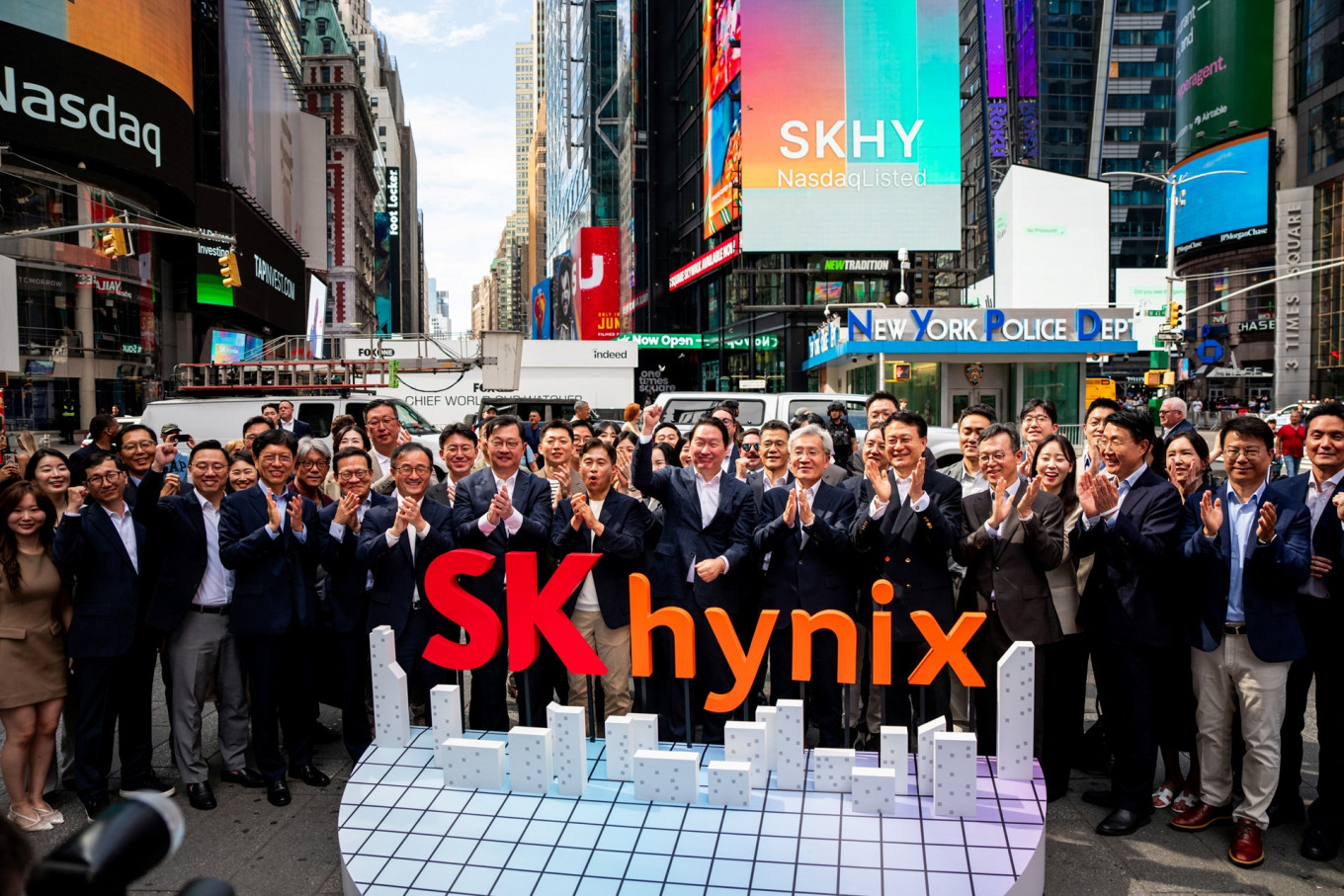 Employees of the semiconductor and memory chip company SK Hynix attend the company's opening bell ceremony at the Nasdaq market on the day of their IPO in New York City, the United States, on July 10, 2026. (Reuters/Angelina Katsanis)
W
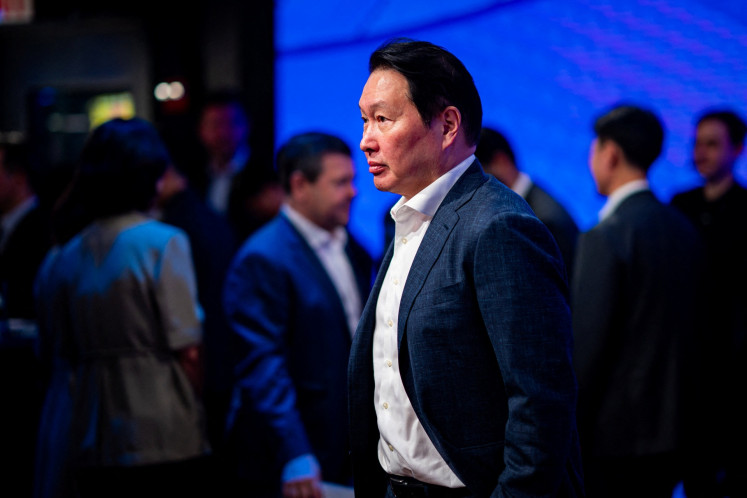
hen South Korean billionaire Chey Tae-won rang the Nasdaq's opening bell for SK Hynix's $26.5 billion listing on Friday, it marked the ultimate payoff of a bet many once considered risky: buying a loss-making chipmaker that has since become an artificial intelligence (AI) powerhouse.
SK Group's 2012 acquisition of Hynix was viewed as problematic even within the business conglomerate: Memory chips are cyclical and capital-intensive, and the company was losing money while trailing Samsung Electronics in market share and technology.
But under Chey, seeking an edge over Samsung, SK Hynix has spent more than a decade betting on high-bandwidth memory (HBM) chips, at the time a niche technology. The wager paid off as HBM became a critical component in Nvidia's AI accelerators, helping SK Hynix emerge as the world's biggest producer of the chip.
"This is a truly historical moment. We've been waiting for a long, long time," Chey said during an interview with CNBC on Friday. "It is a kind of dream and now it is a dream come true."
"SK is our largest memory partner. Without SK's partnership, today's AI industry would not have developed as wonderfully as it has," Nvidia CEO Jensen Huang told reporters in Seoul in June, with the 65-year-old Chey standing beside him.
Kim Dae-il, a former SK Hynix board member and economics professor at Seoul National University, said Chey promoted executives from within Hynix rather than bringing in managers from the SK Group. He credited Park Sung-wook, a longtime chip engineer, who was appointed as CEO in 2013, with refusing to give up on HBM even amid skepticism among board members.

"There was enormous investment behind SK Hynix's rise to that position. Ultimately, Chairman Chey's achievement was making the right bets and putting the right people in place," Kim said.
SK Hynix and SK Group did not immediately respond to Reuters' requests for comment.
Slower spending concerns
Yet even as SK Hynix rides the AI boom, Chey, who studied physics at Korea University and undertook postgraduate work in economics at the University of Chicago, faces growing concerns that demand may not keep pace with soaring memory prices.
"We are facing a shortage of memory supply, which in some ways is a welcome problem for me," Chey said in a speech in April. "People may say, 'Isn't it good because you're making a lot of money?' But this situation cannot last forever."
Last week, both SK Hynix and Samsung announced pledges to invest hundreds of billions of dollars in new South Korean chip plants to meet surging demand after President Lee Jae Myung called for measures to narrow regional economic divides.
But the expansion plans also raised concerns about potential oversupply in the highly cyclical memory industry.
Chey, chairman of SK Group, a sprawling conglomerate whose business ranges from telecom to refinery and construction, is not a direct shareholder of SK Hynix. But he is the largest shareholder of SK Inc, which holds a 32 percent stake in SK Hynix's top shareholder, SK Square. His wealth is estimated at $5.4 billion, according to Forbes.
Outlier
Chey's prominence reflects a style that sets him apart from many South Korean tycoons, who typically avoid public attention.
His career has repeatedly been marked by controversy and personal setbacks. Yet as SK Hynix takes centre stage in the AI boom, the legacy of the businessman once criticized for buying a struggling chipmaker is increasingly being defined by one of the most successful bets in South Korean corporate history.
In 2015, Chey sent a letter to a local newspaper in which he publicly admitted he had become estranged from his then-wife and had a child with another woman who gave him emotional comfort.
The letter, unusually candid for a Korean chaebol leader, divided public opinion in a society where extramarital relationships remain deeply stigmatized.
Chey is now locked in an acrimonious divorce settlement lawsuit, with hundreds of millions of dollars at stake in a case that could affect ownership of South Korea's second-largest conglomerate after Samsung Group.
His career has also not been without controversy. Chey spent more than two years in prison for embezzling corporate funds before receiving a presidential pardon in 2015. At the time, the government said the decision to free Chey and other business leaders was intended to give them a chance to help develop the country's economy.