The Jakarta Post
Please Update your browser
Your browser is out of date, and may not be compatible with our website. A list of the most popular web browsers can be found below.
Just click on the icons to get to the download page.


Popular Reads
Top Results
No results found. Please check your search term and try again
Can't find what you're looking for?
View all search results
Popular Reads
Top Results
No results found. Please check your search term and try again
Can't find what you're looking for?
View all search resultsSekolah Sawit Lestari nurtures future generations, one tree at a time
Students gain practical knowledge and valuable experience as schools implement oil palm education into their curriculum
Change text size
Gift Premium Articles
to Anyone
Share the best of The Jakarta Post with friends, family, or colleagues. As a subscriber, you can gift 3 to 5 articles each month that anyone can read—no subscription needed!
 Set as preferred source
 (Courtesy of Asian Agri)
W
ith a total production output of 56.5 million tonnes in 2025, Indonesia is the world’s top palm oil producer. The Indonesian Palm Oil Association (GAPKI) estimated that the country accounted for 59 percent of global palm oil output in 2024.
Beyond its contribution to the national economy, oil palm is also closely tied to livelihoods in rural communities. Around 42.3 percent of Indonesia’s oil palm plantation area, or approximately 6.7 million hectares, is managed by smallholders.
For Asian Agri, one of Indonesia’s leading palm oil producers, this connection with smallholder communities is already part of its long-term approach to the sector. In 2025, the company provided training to 1,971 plasma smallholders, while its flagship Smallholder Inclusion for Better Livelihood and Empowerment (SMILE) program involved 2,834 independent smallholders.
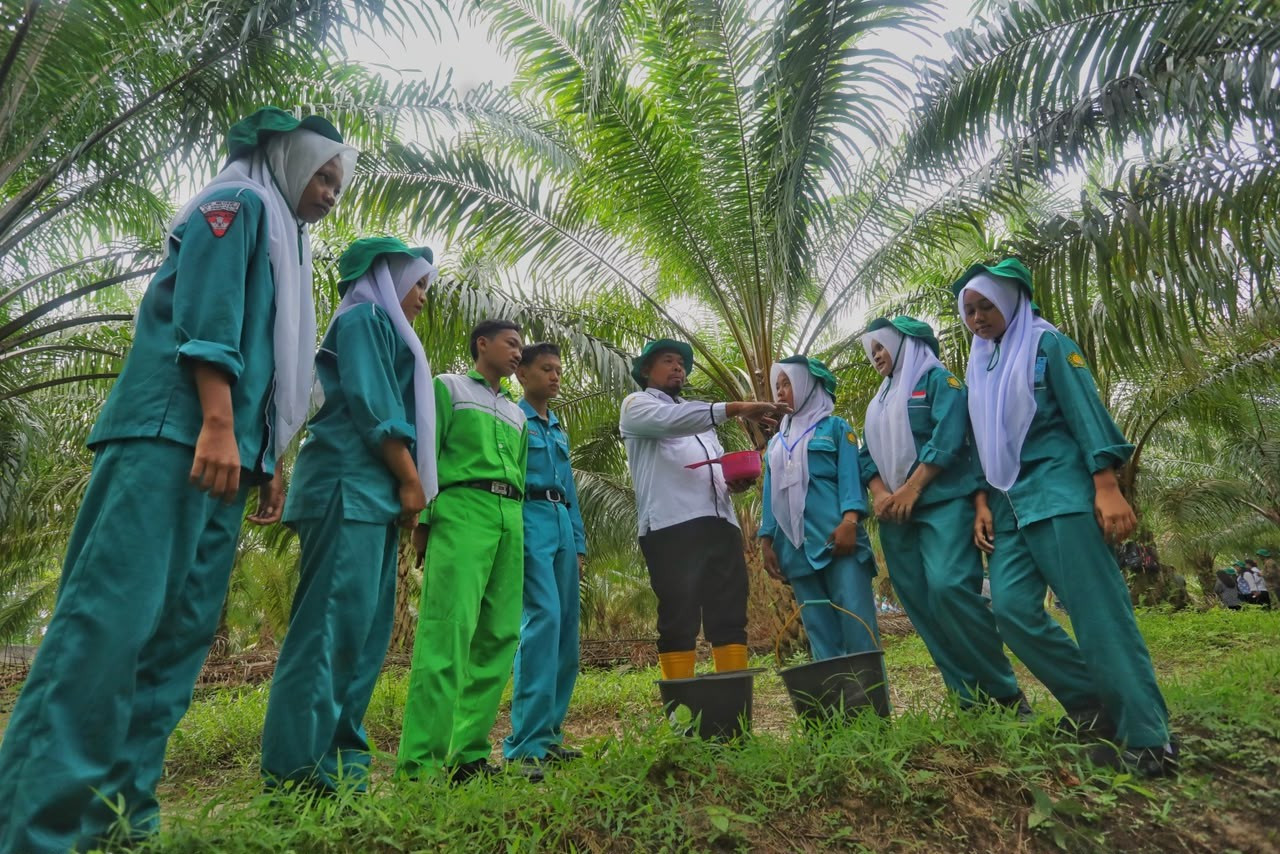
Building on that approach, Asian Agri developed Sekolah Sawit Lestari to bring the same knowledge closer to a younger generation growing up around oil palm.
Putu Grhyate Yonata Aksa, Asian Agri’s sustainability operations & CSR senior manager, said the program was designed to help students in communities around Asian Agri’s operations better understand the industry that is closely connected to their daily lives.
For many of these students, oil palm is already part of their surroundings and, in some cases, their family livelihoods. Sekolah Sawit Lestari therefore aims to help them understand not only how oil palm is cultivated, but also how plantations can be managed responsibly and sustainably.

The approach also reflects Asian Agri’s broader emphasis on building long-term capabilities within the communities connected to its operations. Through sustained technical guidance and practical knowledge-sharing, the company seeks to help communities strengthen their ability to manage oil palm more productively and responsibly over time.
“Students can see how a plantation is established and managed, while schools can use available land as a practical learning space. Over time, the plantation can also generate additional support for school activities. We also hope the knowledge students gain will be shared with their families and communities, so the benefits extend beyond the school itself,” he said.
Preparing future generations
In its pilot phase, Sekolah Sawit Lestari comprises a partnership between Asian Agri and schools around its operational areas in Jambi, North Sumatra and Riau. The company provides the schools with the technical knowledge and practical support behind the program, which can include preparing learning materials, holding classroom sessions, organizing field activities and visits and giving ongoing guidance on how the school plantation is managed.
Oil palm has become the main focus simply because it is part of everyday life in many of the communities surrounding these schools. Some students also come from farming families, making the subject closely connected to what they see at home and in their surroundings.
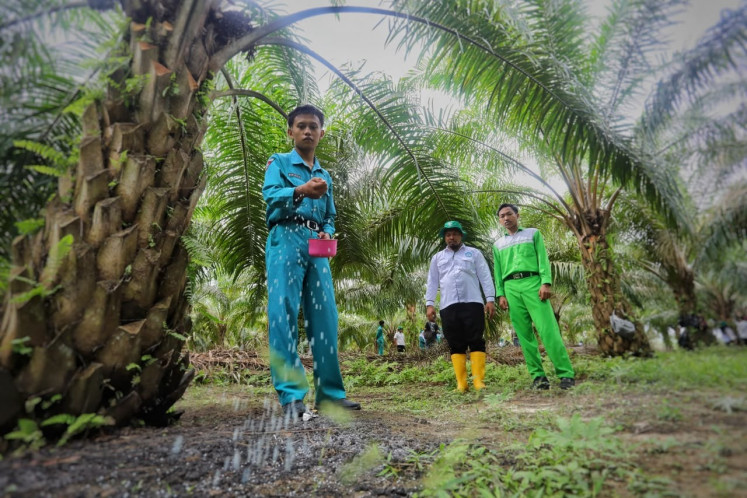
But the learning goes beyond theories inside the classroom. Students are introduced to practical topics such as preparing the land, selecting planting materials, planting and maintaining trees, managing pests and diseases, and harvesting. They also learn about environmental practices, including land management without burning.
At the same time, the delivery of the material can vary from one school to another. Some schools include it as local content, while vocational schools may connect the subject to agriculture or plantation studies.
According to Putu, there are no set of criteria for schools to be considered eligible, though the initial assessment looks at whether the school is located in or near an oil palm-producing community, whether there is suitable land that can be used for practical learning and whether the school is ready to take an active role in the program.
“We also consider how relevant the program would be for the students and the surrounding community. In some cases, schools with agriculture-related study programs may be a good fit, but this is not necessarily a requirement. What matters most is that the school sees value in the program and is willing to work closely with Asian Agri and other local stakeholders to make it sustainable.”
Creating real impact
By the end of 2025, Sekolah Sawit Lestari had reached six schools, with 560 oil palm trees planted across 4.25 ha.
At one of them, SMKN 1 Silangkitang state vocational school in Labuhanbatu Selatan regency, North Sumatra, the program has transformed a plot of unused land surrounding the school into a working learning space.
The plantation was developed in 2017, with Asian Agri and the school planting approximately 108 trees on less than 1 ha of land. Three have since been removed to make way for a compost processing building.
The plantation saw its first harvest in 2020, after which the school took over the day-to-day management as teachers and students had gained the practical knowledge and experience needed to manage the plantation independently.
Every 15 days, the plantation produces 500 to 600 kilograms of fresh fruit bunches (FFB). Hj. Dina Karyawati Saragih, the principal of SMKN 1 Silangkitang, said the income generated by the harvest was used to fund the students’ learning process, extracurricular activities and even kurban to benefit local communities.
“The harvest is quite limited as our land is not very big, but it has helped us immensely. That we receive any income at all from the school plantation is something we are very thankful for,” she said.
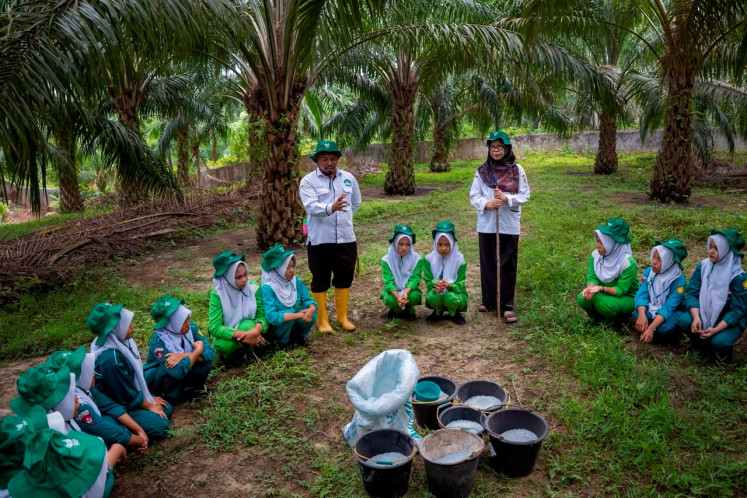
Even so, Putu reiterated that the plantation is first and foremost a learning facility, and any income generated from the harvest is an additional benefit. Thus, the plantation’s economic value helps strengthen its main purpose: providing students with practical knowledge and experience.
Following the handover, Asian Agri remains a partner to the school and can continue providing guidance or discussing further support when needed, allowing the school to build its own capabilities while maintaining access to Asian Agri’s technical experience.
The learning can also extend beyond the school grounds. SMKN 1 Silangkitang students have the opportunity to undertake a six-month internship with Asian Agri, where they receive training across various subjects.
For some students, that exposure has already opened a pathway into employment. To date, two students from the school have been hired as drone operators, while company representatives continue to visit the school to interview prospective recruits.
As Sekolah Sawit Lestari nurtures knowledge alongside the trees they grow, Putu expressed his hopes that the students will carry the schools’ lessons into their future studies, careers or family farms, sharing them with their respective communities.
And as each new group of students learns from the plantation, the impact of Sekolah Sawit Lestari could continue well beyond the trees first planted at the schools.
“In that sense, the legacy of SSL is not simply the trees planted through the program. It is the knowledge, skills, confidence, and sense of responsibility developed within the school community, as well as the opportunities the plantation may continue to create for future generations of students,” he said.