The Jakarta Post
Please Update your browser
Your browser is out of date, and may not be compatible with our website. A list of the most popular web browsers can be found below.
Just click on the icons to get to the download page.


Popular Reads
Top Results
No results found. Please check your search term and try again
Can't find what you're looking for?
View all search results
Popular Reads
Top Results
No results found. Please check your search term and try again
Can't find what you're looking for?
View all search resultsStudent-led Water Guardian initiative takes long-term approach to sanitation
Jakarta Intercultural School (JIS) ninth grader Darren Ismaya Karmaina’s Water Guardian initiative is testing a community sanitation and water-reuse model in Kemayoran, Central Jakarta, with plans to evaluate its performance before considering further development.
Change text size
Gift Premium Articles
to Anyone
Share the best of The Jakarta Post with friends, family, or colleagues. As a subscriber, you can gift 3 to 5 articles each month that anyone can read—no subscription needed!
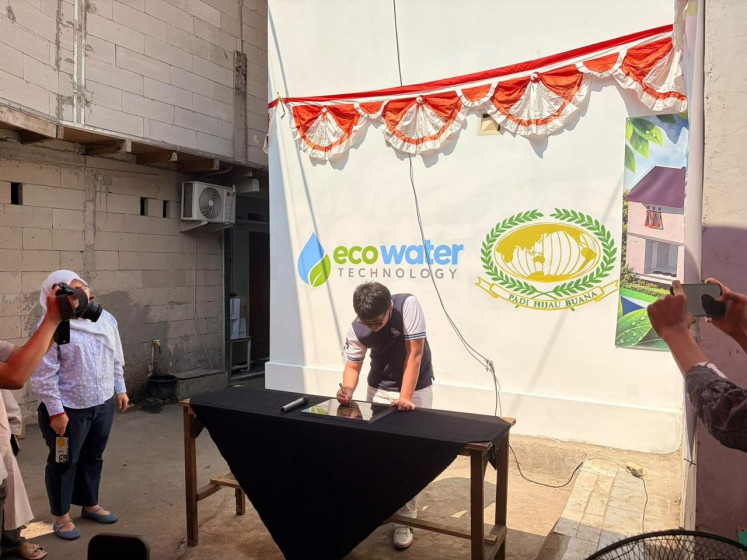
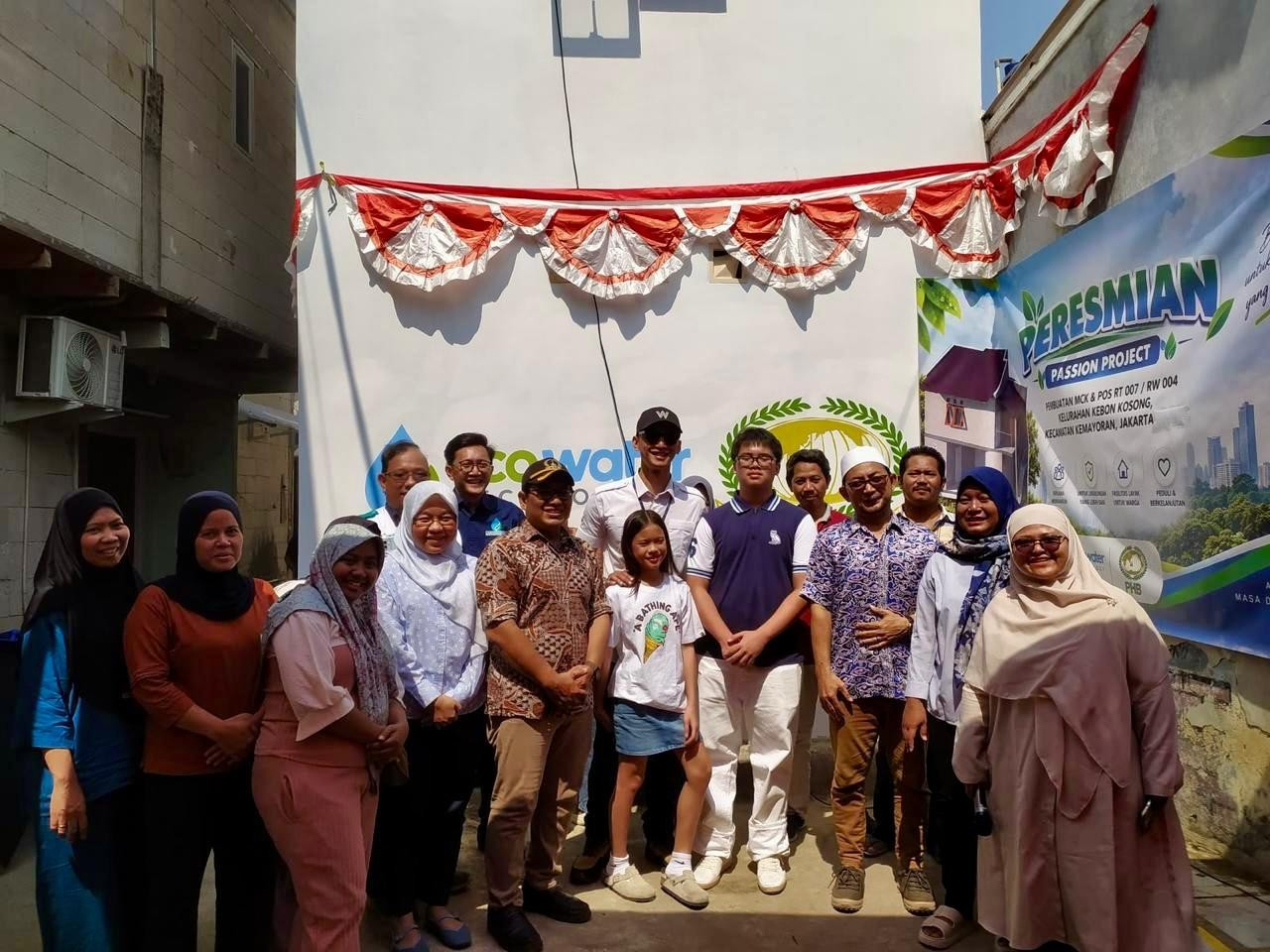 Darren Ismaya Karmaina collaborated with EcoWater Technology for the Water Guardian initiative, which focuses on issues related to clean water and sanitation. (Courtesy of EcoWater Technology)
O
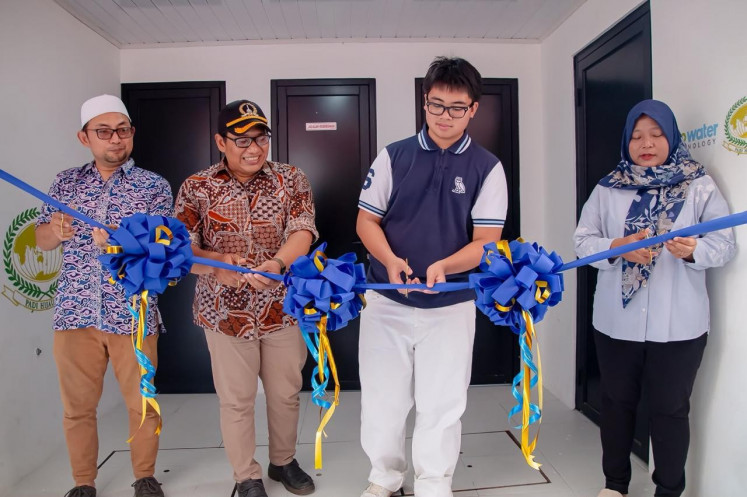
n a Saturday morning in September, residents of RT 007/RW 004 in Kebon Kosong subdistrict, Kemayoran, Central Jakarta, gathered for the inauguration of a new public MCK (bathing, washing and toilet) facility.
Located along a busy alley in the neighborhood, the facility includes four toilet stalls and a water recycling system designed by Darren Ismaya Karmaina, a ninth-grade student at Jakarta Intercultural School (JIS) in collaboration with Ecowater Technology.
The system is designed to recover approximately 70 percent of the water used at the facility. After treatment, the recycled water is intended for non-potable use, primarily to irrigate trees and plants in the surrounding area.
The facility is the first implementation site of Water Guardian, a student-led initiative founded by Darren to address issues related to clean water and sanitation.
Speaking to The Jakarta Post during the inauguration, Darren said the initiative grew from his interest in finding a practical way to address an issue he had first encountered at school.
He became interested in water and sanitation after joining a school club where he learned about the United Nations Sustainable Development Goals (SDGs).

Darren subsequently chose to focus Water Guardian on SDG 6, which calls for ensuring the availability and sustainable management of water and sanitation for all.
The decision to begin the project in Jakarta was deliberate, he said, reflecting his interest in disparities that can exist even within the center of a major city.
“As a city, some people could argue that Jakarta is already developed or that there are other areas that are underdeveloped. That’s something that felt really intriguing to me, especially this area Kemayoran which is located in Central Jakarta,” Darren said.
“There’s a big contrast between some other parts of Central Jakarta and this neighborhood, which is dense with lots of communities and villages.”
Looking beyond construction
The Kemayoran facility broke ground in June, with construction beginning shortly afterward ahead of its inauguration in September.
Following the inauguration, residents were able to begin using the facility.
RT 007 head Fitriyani said the facility could contribute to improving sanitation conditions in the neighborhood, while stressing the importance of residents taking responsibility for its upkeep.
“This facility is very useful and beneficial for the community, and hopefully our environment can become cleaner, healthier and more comfortable for us all,” she said.
“We also hope that every member of the community will do their part in taking care of this facility, as it belongs to us all.”
For Water Guardian, the completion of construction marks the beginning of a longer evaluation period.
Over the next six to 12 months, the initiative plans to collect data on the facility’s operation, including usage, functionality, maintenance, water quality, hygiene practices and feedback from residents.
The monitoring period is intended to provide a clearer picture of how the facility performs under actual community use and whether the model can be maintained over time.
“Today’s inauguration is not the end, but a beginning,” Darren said.
“For the long term, we don’t want it to become just a site for three years and it all goes down. We want to maintain a consistent area for the future, not just for a short period of time.”
Testing a water-reuse model
The water recycling system is another component that Water Guardian intends to evaluate as operational data becomes available.
Designed by Darren and Ecowater Technology, the current system is intended to recover approximately 70 percent of the water used at the MCK and treat it for irrigation purposes.
Rather than discharging all used water after a single use, part of the treated water can therefore be returned to the community for watering trees and plants.
The 70 percent figure represents the system’s design target. Actual recovery rates and performance can be assessed as Water Guardian collects operating data from the facility.
The data will also inform a possible second phase of the water-treatment system.
After evaluating usage and system performance, Darren plans to explore upgrading the facility with reverse osmosis (RO) technology to provide a higher level of treatment.
Under the proposed next phase, wastewater would undergo additional treatment with the aim of producing water suitable for non-potable domestic uses such as showering and washing, subject to water-quality testing and applicable standards.
The phased approach allows Water Guardian to evaluate the existing system before introducing more advanced treatment technology.
It also means that decisions on future upgrades can be based on actual water consumption, recovery rates, maintenance requirements and water-quality data from the Kemayoran site.
Should the model demonstrate sustainable results, Water Guardian may consider adapting the approach for other communities. Darren said, however, that the immediate priority is to assess the first site rather than move quickly to expansion.
A learning process
Beyond the facility itself, Darren said the project has required him to work in an environment different from his usual experience as a student.
“The process for me has been a really new experience, especially doing such a big project at a young age,” he said.
“It’s taught me how to interact more with the locals and take on this leadership role of helping out the community with creating such a big thing.”
Working directly with residents has also required Darren to move outside his usual comfort zone.
“Honestly, socializing with the locals is outside of my comfort zone,” he said. “I think that’s what I really like about this project, it gets me out of the comfort zone, and gets me to do things that I usually wouldn’t do in my daily routine.”
Darren said he hoped the experience could encourage other students to look more closely at issues within their own communities rather than viewing their age as a barrier to becoming involved.
“As part of the younger generation myself, I want to show how kids my age or even younger could start creating different types of projects that could benefit the world,” he said.
For Water Guardian, the coming months will provide the first indication of whether the Kemayoran model can meet its objectives under day-to-day conditions.
The project’s next steps will depend not only on the infrastructure that has been built, but also on how consistently it is used and maintained, the performance of the water recycling system and the results of the planned monitoring.
Those findings will determine whether the existing system should be improved, whether the proposed RO treatment phase is feasible and, eventually, whether the model could be adapted for use elsewhere.