The Jakarta Post
Please Update your browser
Your browser is out of date, and may not be compatible with our website. A list of the most popular web browsers can be found below.
Just click on the icons to get to the download page.


Popular Reads
Top Results
No results found. Please check your search term and try again
Can't find what you're looking for?
View all search results
Popular Reads
Top Results
No results found. Please check your search term and try again
Can't find what you're looking for?
View all search resultsIndonesia’s bond market offers attractive yields, but risks remain
For Indonesia, a pause in US tightening could improve sentiment, but a sustained recovery would require confidence that inflation pressures and US interest rates are moving toward a more favorable path.
Change text size
Gift Premium Articles
to Anyone
Share the best of The Jakarta Post with friends, family, or colleagues. As a subscriber, you can gift 3 to 5 articles each month that anyone can read—no subscription needed!
 Set as preferred source
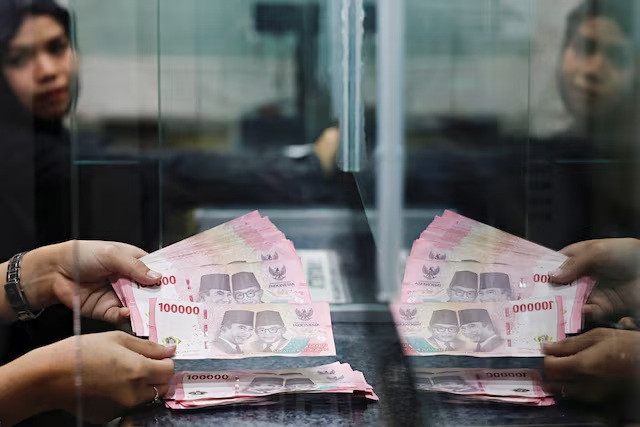
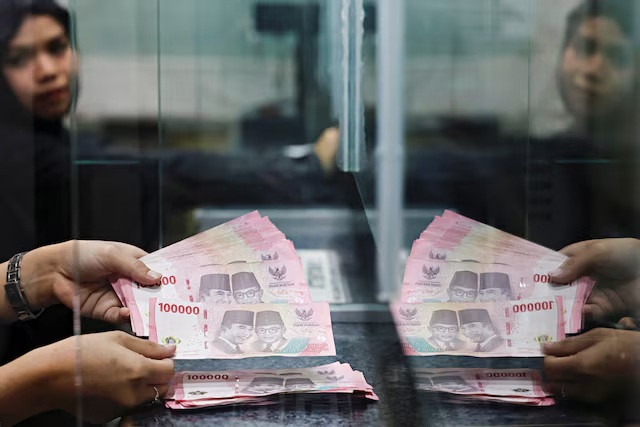 A teller counts rupiah bank notes on Jan. 20 at a money changer in Jakarta. (Reuters/Ajeng Dinar Ulfiana)
I
ndonesia’s bond market offers attractive income and room for recovery, but higher yields alone may not be enough to bring investors back. Competitive returns on US assets, persistent inflation and geopolitical uncertainty have increased the compensation investors require for taking emerging-market risk. The key question is whether Indonesian bonds offer sufficient returns after accounting for currency movements, hedging costs and potential price losses. A sustained recovery will therefore depend on a more supportive investment environment, as well as attractive valuations.
Domestic institutional investors remain an important source of demand, helping the government meet its financing needs despite external pressure. This provides a buffer against foreign outflows, but domestic absorption alone does not guarantee lower yields or stronger market liquidity.
A broader recovery would benefit from renewed foreign participation. To attract more durable inflows, Indonesia needs a steadier rupiah, confidence that inflation will remain manageable and a credible financing strategy that limits uncertainty over future bond supply.
Elevated US Treasury yields remain a major external constraint. At the end of September, the ten-year Treasury yield was around 5.23 percent during Asian trading, while Indonesia’s indicative ten-year government bond yield had reached approximately 7.22 percent a day earlier. Although these observations were not simultaneous, they suggest a yield premium of roughly two percentage points.
That premium provides additional income, but its appeal depends on whether it adequately compensates investors for exchange-rate volatility and other risks associated with holding rupiah-denominated debt.
The Federal Reserve’s policy outlook is central to this assessment. Following its September increase, the federal funds target range stood at 3.75-4.00 percent. US inflation of 3.4 percent in August was below expectations but remained above the Fed’s 2 percent target. The softer reading reduced pressure for another immediate increase, without providing a clear basis for near-term cuts.

For Indonesia, a pause in US tightening could improve sentiment, but a sustained recovery would require confidence that inflation pressures and US interest rates are moving towards a more favorable path.
Even if the Fed pauses, longer-term Treasury yields may remain elevated. Persistent inflation concerns, substantial US government borrowing and uncertainty over demand can increase the compensation investors require to hold longer-term debt. This means Indonesia remains exposed to US bond-market developments beyond the next Fed decision. Higher Treasury yields raise the return available on dollar assets and can lift the yield foreign investors demand from Indonesian bonds, making domestic borrowing costs harder to contain.
Geopolitical tensions add to this pressure through energy prices, shipping costs and disruptions to global trade. Higher oil prices can prolong inflation, reduce household purchasing power and squeeze corporate margins. They may also delay monetary easing if central banks become concerned about broader price increases.
For bond markets, the effect is twofold: inflation erodes the purchasing power of fixed income, while the prospect of higher interest rates increases the risk of capital losses.
Indonesia faces a mixed impact from higher commodity prices. Stronger export earnings can support foreign-currency receipts, but rising oil prices also increase the energy import bill. The balance matters more than commodity prices alone. If additional import costs exceed the gains from exports, demand for US dollars may strengthen and put pressure on the rupiah. Higher energy costs can also complicate fiscal management, particularly where subsidies or compensation payments limit the pass-through to domestic prices.
Currency stability is therefore critical to foreign demand for Indonesian bonds. Coupon payments may remain secure, yet a weaker rupiah can materially reduce returns when converted into US dollars.
USD/IDR moving above 18,000 on 29 September highlighted this exposure. Hedging can reduce currency risk, but its cost lowers net returns. Investors consequently assess the income available after hedging or the potential currency losses they are willing to absorb. The headline spread over US Treasuries captures only part of that decision.
Developments in Indonesia’s yield curve also support a more selective approach. Between August and 28 September, five-year yields rose by 23 basis points, while twenty-year yields increased by only six basis points. The spread narrowed from 29 to 12 basis points, indicating bear flattening across this segment. Investors now receive relatively little additional yield for extending maturity substantially. This reduces the income incentive to hold longer bonds, especially when their greater sensitivity to interest-rate changes can produce larger price swings.
The implications are particularly important for investors with short holding periods. As a first-order illustration, a bond with a modified duration of seven years could lose approximately 1.75 percent in price if its yield rises by 25 basis points, before allowing for convexity. That is broadly equivalent to three months of coupon income on a bond paying 7 percent annually. Attractive income can therefore be offset quickly by modest yield increases, making investment horizon and liquidity needs essential considerations.
Long-term investors may be better placed to tolerate temporary price declines, especially when maturities match future liabilities. However, the ability to hold a bond for longer does not eliminate the need to assess its valuation. Liquid short- to intermediate-term bonds can offer a useful balance between income and price sensitivity.
Selected five- to ten-year securities may also provide opportunities where yields adequately compensate for duration risk. At the longer end, limited additional income calls for greater discipline in choosing entry levels.
Bank Indonesia’s support remains important in maintaining orderly market conditions. Its policy rate of 5.75 percent, rupiah stabilization measures and reductions in the cost of selected hedging instruments can help contain uncertainty. Liquidity support and government bond purchases can cushion periods of weak demand. These measures are most effective when they encourage private investors to participate more confidently.
Lasting recovery also requires predictable government borrowing, transparent policy communication and confidence that inflation and fiscal pressures will remain manageable. Deeper repo markets and broader institutional participation would strengthen resilience further.
Our view is that Indonesian bonds continue to offer attractive income, while the scope for capital gains remains conditional on greater currency and external market stability. The near-term preference is liquid short- to intermediate-term securities, with selective five- to ten-year exposure where valuations and investment horizons justify additional duration.
A steadier rupiah, easing Treasury yields and stronger private demand would support a broader recovery. Until those conditions become clearer, disciplined duration management and stronger domestic market resilience will be essential to balancing opportunity against risk.
*****
The writer is a senior economist at Bank Mandiri.