The Jakarta Post
Please Update your browser
Your browser is out of date, and may not be compatible with our website. A list of the most popular web browsers can be found below.
Just click on the icons to get to the download page.


Popular Reads
Top Results
No results found. Please check your search term and try again
Can't find what you're looking for?
View all search results
Popular Reads
Top Results
No results found. Please check your search term and try again
Can't find what you're looking for?
View all search resultsBrent oil tops $116, highest since late April
Change text size
Gift Premium Articles
to Anyone
Share the best of The Jakarta Post with friends, family, or colleagues. As a subscriber, you can gift 3 to 5 articles each month that anyone can read—no subscription needed!
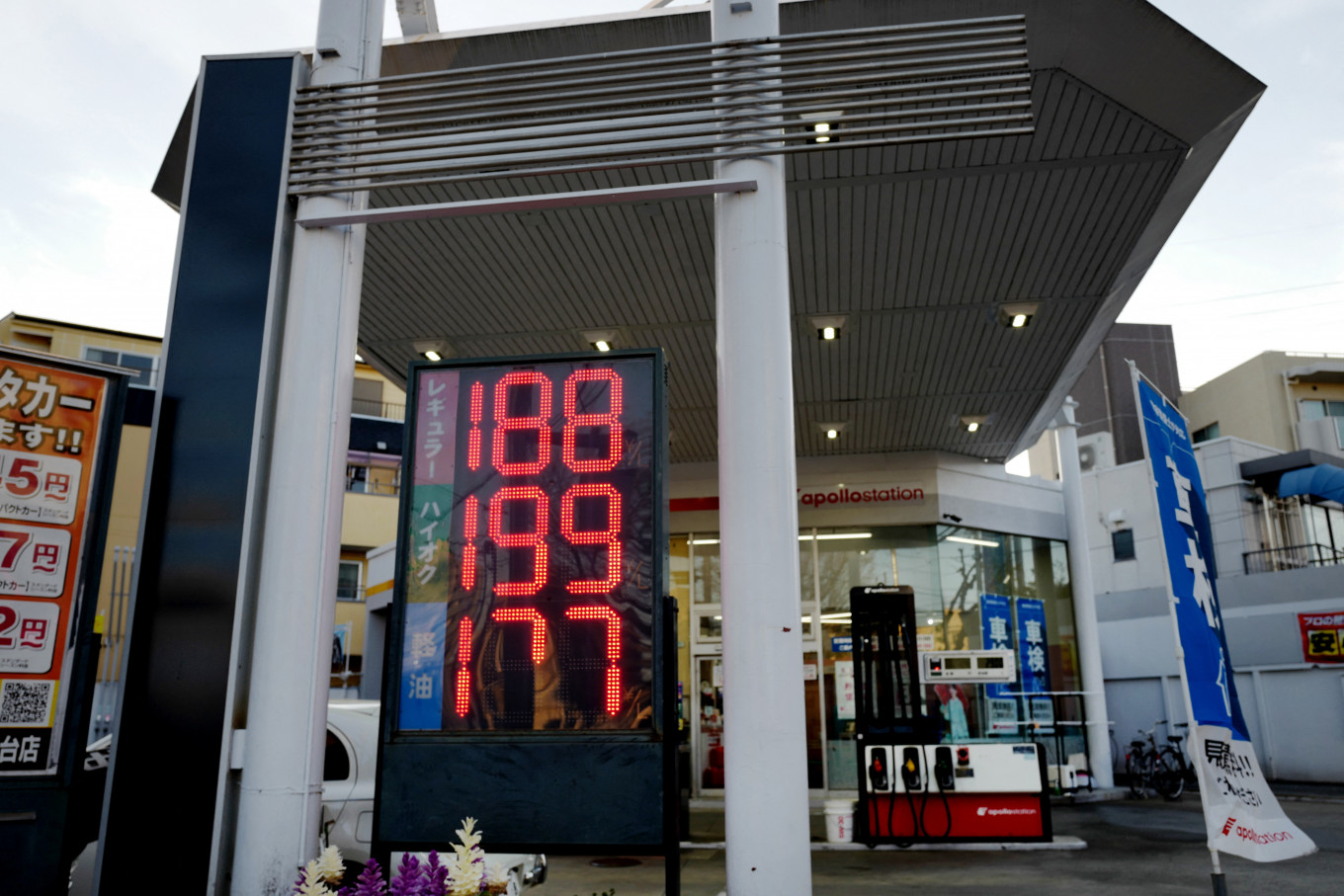 A sign at a gas station shows the price of gasoline, which has risen to 188 yen per liter for regular gasoline, in Tokyo on March 14, 2026, due to a sharp rise in crude oil prices sparked by the war in the Middle East. (AFP/Kazuhiro Nogi)
O
il prices rose to their highest levels since late April on Friday, with benchmark crude contract Brent North Sea climbing above US$116 a barrel as the Middle East conflict raged on.
Global markets were contending "with concerns around surging oil prices and the sustainability of AI spending," noted AJ Bell's head of financial analysis Danni Hewson.
"Escalating tensions in Ukraine and the prospect of increased energy demand as the northern hemisphere heads into the winter months are only adding to the upwards pressure on oil and gas prices," Hewson added.
The benchmark international oil contract, Brent crude for December, rose more than 3 percent to $116.72 per barrel.
The benchmark US contract, West Texas Intermediate, jumped 3.8 percent to $103.27 a barrel.
Wall Street's main indices spent most of the day in negative territory. The Dow finished down 1.2 percent, more than the 0.2 percent retreat in the Nasdaq, reversing its trend in recent sessions.

"Today everyone appears to be rotating back into the stuff they rotated out of yesterday," Chris Beauchamp, chief market analyst at online trading and investing platform IG.
"No one wants to be caught holding risk over the weekend," he added.
European stock markets mostly dropped following some poorly-received earnings from Gucci parent Kering and Swedish group Volvo Cars.
Asian equity indices closed out the week mixed as technology companies managed to claw back some of the week's hefty losses.
Rising energy prices have influenced movements across stock markets in recent days along with developments in the artificial intelligence sector as investors have become more leery of massively expensive capital spending outlays for data centers.
"People are now looking at the cap ex as a liability and that's different from six months ago," said Joseph Zidle, chief market strategist at Cresset Capital.
Gucci, Volvo
Kering shed more than 16 percent on Friday after the French luxury group published results that failed to reassure investors about a turnaround at its key Gucci brand.
Volvo Cars meanwhile plunged more than 24 percent after it said US tariffs and strong competition from local brands in China pushed it into a third-quarter loss.
In response, the company announced a new 5-billion-kronor savings plan it said would lead to about 2,000 job cuts in Sweden and 500 more globally.
Aside from energy markets, AI and earnings next week, focus will fall firmly on interest-rate meetings for the US Federal Reserve and European Central Bank, as well as an update on US economic growth data.