The Jakarta Post
Please Update your browser
Your browser is out of date, and may not be compatible with our website. A list of the most popular web browsers can be found below.
Just click on the icons to get to the download page.


Popular Reads
Top Results
No results found. Please check your search term and try again
Can't find what you're looking for?
View all search results
Popular Reads
Top Results
No results found. Please check your search term and try again
Can't find what you're looking for?
View all search resultsSouth Korean investment in Batam reaches US$65.1 million as BP Batam seeks opportunities
South Korean investment in Batam surged to Rp1.175 trillion (US$65.1 million) in the first half of 2026, making the country the island’s third-largest foreign investor. BP Batam is now seeking to build on this momentum by promoting opportunities in aviation, logistics, electronics and other strategic industries.
Change text size
Gift Premium Articles
to Anyone
Share the best of The Jakarta Post with friends, family, or colleagues. As a subscriber, you can gift 3 to 5 articles each month that anyone can read—no subscription needed!
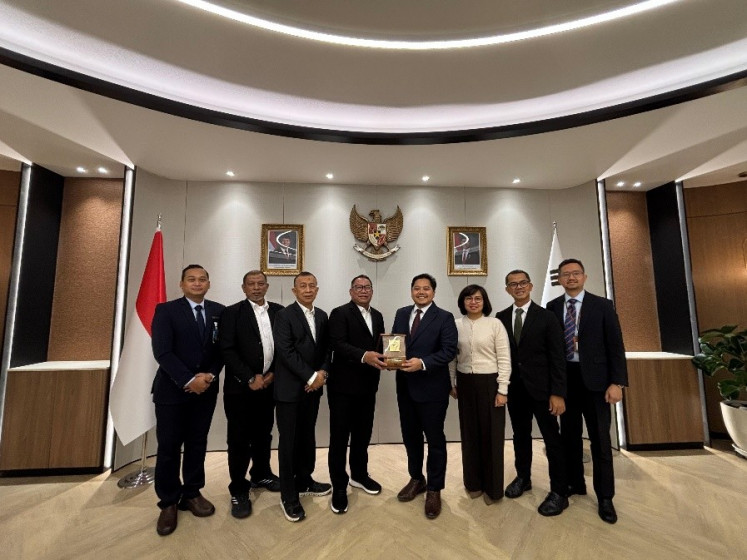
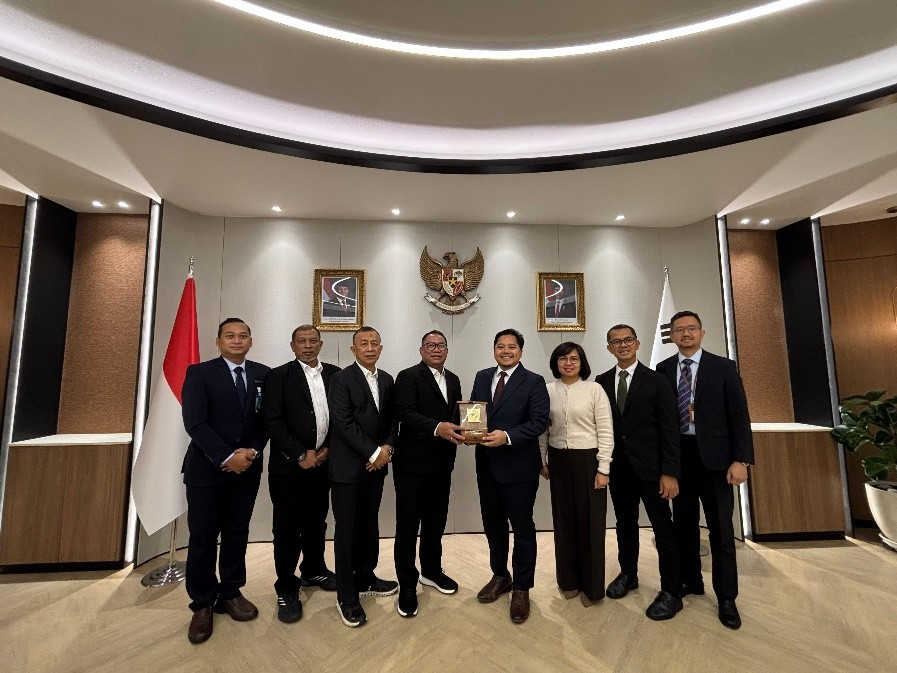 A BP Batam delegation, comprising (from left) Annang Setia Budhi, President Director of PT Bandara International Batam (BIB); Kurnia Budi, Director of BP Batam’s Airport Business Entity; Alexander Zulkarnain, Deputy Head of Administration and Finance at BP Batam; and Fary Djemy Francis, Deputy Head of Investment at BP Batam, poses for a photograph with the Deputy Ambassador of the Indonesian Embassy in South Korea and embassy staff during a visit to Seoul. The delegation is seeking to attract further investment from South Korea.(Image courtesy of BP Batam)
B
atam, a strategic industrial hub in Indonesia’s Riau Islands Province, is seeking to attract further investment from South Korea through its participation in the South Korea Aero Summit 2026 and meetings with the Indonesian Embassy in Seoul.
These initiatives build on a sharp increase in South Korean investment in Batam, particularly in infrastructure and connectivity.
As part of the engagements, Fary Djemy Francis, Deputy Head of Investment at BP Batam, was accompanied by Aleks Zulkarnain, Deputy Head of Administration and Finance at BP Batam, and Kurnia Budi, Director of BP Batam’s Airport Business Entity. Their participation aims to strengthen coordination in investment promotion, governance and business development at Hang Nadim International Airport.
According to investment data from the Investment Coordinating Board (BKPM), compiled through the Capital Investment Activity Report (LKPM) and presented by BP Batam, realized South Korean investment in Batam reached Rp 1.175 trillion (approximately US$65.1 million) in the first half of 2026. This was 34.1 times the Rp 34.41 billion recorded for the whole of 2025, representing a year-on-year increase of 4,169.8 percent compared with the first half of 2025.
The achievement made South Korea Batam’s third-largest foreign investor, accounting for 6.60 percent of total foreign investment.
The composition of investment also shifted significantly. In 2025, South Korean investment was spread across fisheries, transportation equipment, machinery and electronics, as well as chemicals and pharmaceuticals. In the first half of 2026, however, approximately Rp 1.170 trillion, or 99.6 percent of the total, went to transportation, warehousing and telecommunications, primarily through PT Bandara Internasional Batam.

Against this backdrop, Fary participated as a speaker at the South Korea Aero Summit on Oct. 21–22, 2026, presenting investment opportunities in aviation, aircraft maintenance, repair and overhaul (MRO), air cargo and supporting industries at Hang Nadim International Airport.
“The runway must become a runway for investment growth and prosperity,” Fary said in his notes ahead of the visit to South Korea.
Fary emphasized that Hang Nadim’s development must be integrated with industrial zones and global supply chains. Regulatory certainty, ease of doing business and investor confidence, he said, are essential to attracting sustainable investment.
The BP Batam delegation also met with the Indonesian Embassy in Seoul, where they were received by Deputy Chief of Mission Ali Andika Wardhana. Discussions focused on identifying South Korean companies with expansion potential, facilitating business meetings and encouraging prospective investors to visit Batam.
Target sectors include electronics and semiconductors, electric vehicle components, precision engineering, aviation, logistics and digital technology. Batam’s investment appeal is further supported by its free trade zone status, four special economic zones (SEZs) and 31 industrial estates.
The visit, scheduled for Oct. 20–24, 2026, also includes a study of airport and economic zone management in Incheon, South Korea. The broader objective is to strengthen Hang Nadim’s business ecosystem and translate international partnerships into concrete investment projects, industrial growth and new employment opportunities for the people of Batam.