The Jakarta Post
Please Update your browser
Your browser is out of date, and may not be compatible with our website. A list of the most popular web browsers can be found below.
Just click on the icons to get to the download page.


Popular Reads
Top Results
No results found. Please check your search term and try again
Can't find what you're looking for?
View all search results
Popular Reads
Top Results
No results found. Please check your search term and try again
Can't find what you're looking for?
View all search resultsIndonesia-EU trade: Mapping smallholders is the next step
According to Statistics Indonesia (BPS), smallholders tend 99.6 percent of its cocoa area, 98.6 percent of its coffee, 91.3 percent of its rubber and 43.9 percent of its oil palm, and most of this land is yet to be registered.
Change text size
Gift Premium Articles
to Anyone
Share the best of The Jakarta Post with friends, family, or colleagues. As a subscriber, you can gift 3 to 5 articles each month that anyone can read—no subscription needed!
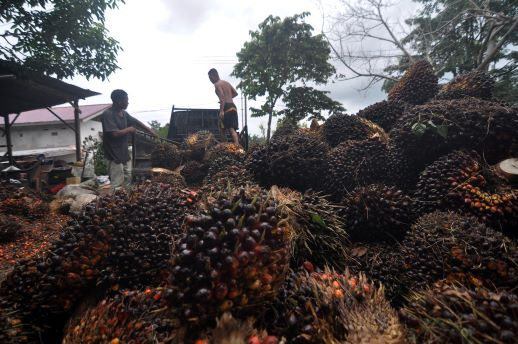
 Fresh from oven: Workers unload on July 5, 2024 fresh oil palm fruit bunches that were bought from farmers in Bengkulu city, Bengkulu. (Antara/Muhammad Izfaldi)
For Indonesian plantation exporters, the European Union is about to become easier to reach but more challenging to supply.
Indonesia and the EU finalized negotiations on the Indonesia-EU Comprehensive Economic Partnership Agreement (IEU-CEPA) in September 2025. The agreement is now awaiting signature and European Parliament consent.
It covers goods, services, investment and sustainable development and opens a market of around 450 million consumers in the EU.
According to the European Commission, the two sides will eliminate tariffs on over 98 percent of tariff lines, with 80 percent liberalized at entry into force, and palm oil, textiles and footwear are among the main sectors for Indonesia.
For plantation exporters, however, this opportunity comes with a condition. The EU Deforestation Regulation (EUDR), which applies from Dec. 30, aims to keep products linked to deforestation out of the EU market. It requires large and medium-sized companies selling palm oil, rubber, coffee, cocoa, wood, soy or cattle products in the EU to trace each shipment to the plot where it was grown, as well as show that the land was not deforested after 2020 and was farmed legally.
After two delays, the European Commission said in May that it did not consider further changes to the law appropriate.

The rule applies to all countries, including those with free trade agreements. The IEU-CEPA does not change this, and lower tariffs will help only those goods that can meet it.
This weighs on Indonesia because smallholders tend 99.6 percent of its cocoa area, 98.6 percent of its coffee, 91.3 percent of its rubber and 43.9 percent of its oil palm, according to Statistics Indonesia (BPS), and most of this land is yet to be registered. The problem is whether this land can be registered soon enough for plantation exports to benefit from the agreement.
BPS data show that Indonesia exported around US$6.9 billion of EUDR products to Europe in 2025, up 23 percent from 2024, and 36 percent of its $19.3 billion of non-oil and gas exports to the bloc.
The EU took 11 percent of Indonesia's EUDR product exports but 30 percent of its coffee and 18 percent of its cocoa products, against around 10 percent for palm oil and rubber.
By value, however, palm oil leads. At $3.9 billion, it makes up more than half of total exports, and Indonesia supplies 23.5 percent of EU imports of palm oil and its derivatives.
Coffee beans, cocoa beans and natural rubber already enter the EU at zero tariffs, so the agreement changes little for these and the EUDR is their only main issue.
Processed goods are different. The EU is removing Indonesia from its Generalized Scheme of Preferences on Jan. 1, after which these goods will pay standard tariffs of 9 percent on refined palm oil, 7.7 percent on cocoa butter and 4.5 percent on car tires.
The IEU-CEPA will eliminate tariffs on over 98 percent of tariff lines, which could favor processing in Indonesia over shipping raw materials.
The EUDR is not a ban. Indonesia is classed as "standard risk", which means authorities will check at least 3 percent of the operators sourcing from the country each year. European importers file due diligence statements and face maximum fines of at least 4 percent of their EU turnover, so will tend to favor goods they can trace and are compliant.
Indonesia already has a tool for this. The registration document for plantation crops, known as the Cultivation Registration Certificate (STDB), records a smallholder's identity and their plot’s the coordinates, which EU buyers need to show where a crop came from. As of Nov. 3, the national crop registration system showed 231,247 STDB and around 839,000 hectares registered or in process across all crops, compared with the total 12.6 million ha smallholders tend for coffee, cocoa, rubber and oil palm.
Palm oil needs particular attention, since Indonesia supplies more than 40 percent of EU refined palm oil imports and smallholders tend around 7.09 million ha. The commodity has a national standard, the Indonesian Sustainable Palm Oil (ISPO).
Coffee and cocoa are the most exposed, since a large part of their exports goes to the EU, almost all of it from small farms. Their exports to the EU fell in value in the first eight months of 2026, although harvests and prices play a large part, while palm oil exports rose.
Three steps could help.
First, the government should prioritize mapping in coffee and cocoa areas, where exposure is highest, and among independent oil palm smallholders, where the value at stake is largest. Mapping whole villages through cooperatives and farmer groups could be faster and cheaper than processing individual applications.
Second, the government could help exporters widen their markets, starting with shipping coffee to the United States, Canada, Japan, South Korea and China, which bought around $550 million of Indonesian coffee in 2025.
Third, the government should publish how much of Indonesia's exports to the EU traces to a mapped plot. Regularly publishing figures by commodity would show the progress being made.
The IEU-CEPA gives Indonesia a chance to sell more to the EU, and the EUDR sets the condition its plantation exporters must meet. Mapping will affect how much of the agreement plantation exporters can use.
Indonesia has made a start with more than 231,000 registration certificates issued. The coming months are a chance to put more of its farmers on the map so that they share in the gains when tariffs fall.
*****
The writer is an analyst at Bank Mandiri.