The Jakarta Post
Please Update your browser
Your browser is out of date, and may not be compatible with our website. A list of the most popular web browsers can be found below.
Just click on the icons to get to the download page.


Popular Reads
Top Results
No results found. Please check your search term and try again
Can't find what you're looking for?
View all search results
Popular Reads
Top Results
No results found. Please check your search term and try again
Can't find what you're looking for?
View all search resultsPart I: Artist-activist Mumtaz Khan Chopan’s tale of fleeing Afghanistan for Indonesia
An Afghanistan-born Yogyakarta artist escaped from the death and destruction of his homeland before settling in Indonesia. Today, he uses art to free others like him from the consistent terror of marginalization.
Change text size
Gift Premium Articles
to Anyone
Share the best of The Jakarta Post with friends, family, or colleagues. As a subscriber, you can gift 3 to 5 articles each month that anyone can read—no subscription needed!
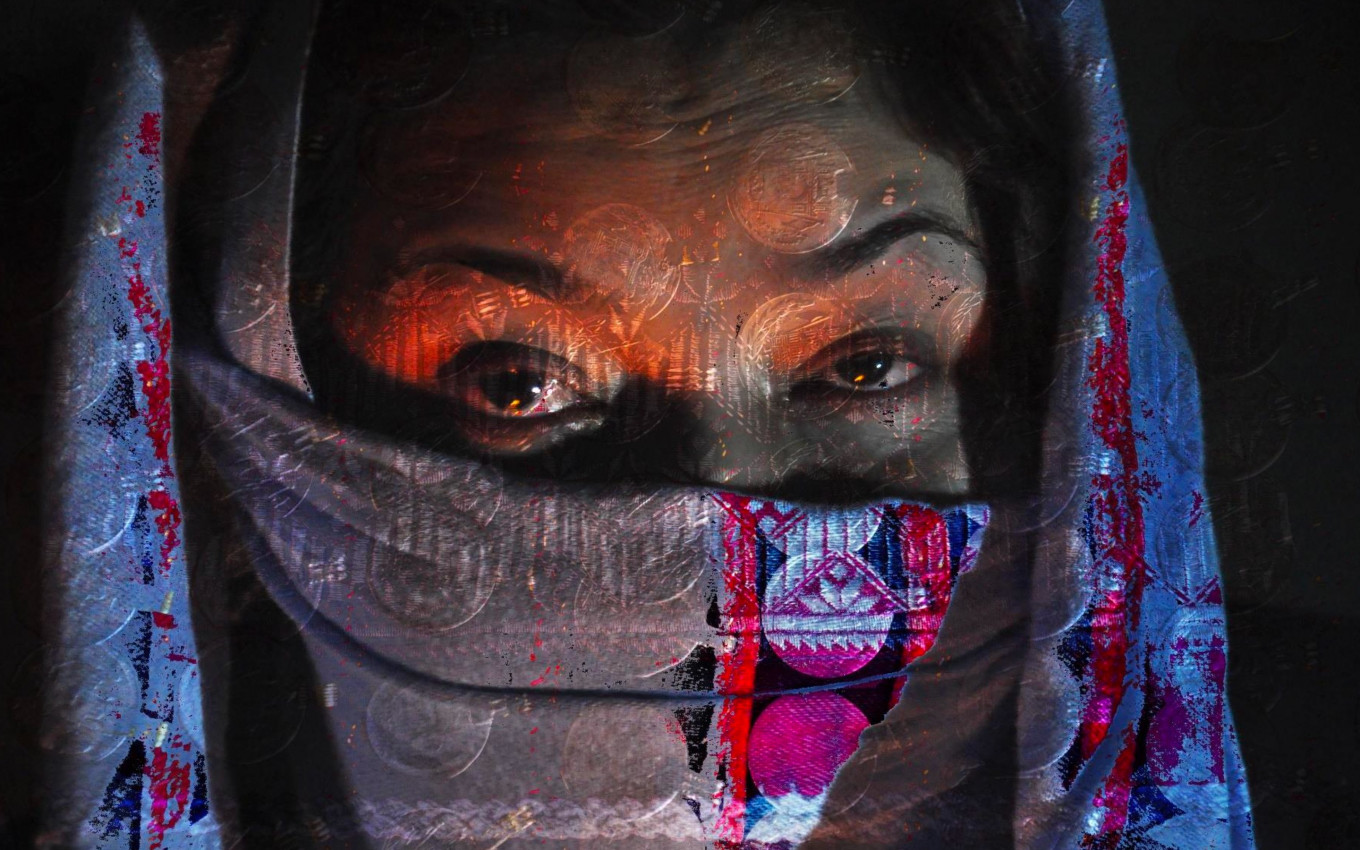 Deeper exploration: Chopan's photography work, “Patience Stone” (2012), is shown in this undated photo. Chopan started exploring conceptual photography and experimented more after participating in Documenta 13 workshops held in Kabul, Afghanistan in 2012. (Courtesy Mumtaz Khan Chopan) (Courtesy Mumtaz Khan Chopan)
A
n Afghan-born Yogyakarta artist escaped from death and destruction of his homeland before settling in Indonesia. Today, he uses art to free others like him from the consistent terror of marginalization.
This is Part 1 of a two-part story. Part 2 will be published tomorrow.
A displaced child
One afternoon in 1996 Afghanistan, Mumtaz Khan Chopan – barely 6 years old – was walking back home from primary school, carrying his school notebook in his arms. “We will go to Pakistan,” Chopan recalled vague memories of what could be his mother’s or other relatives’ words upon his arrival in the house that day. The Taliban had taken over a third of their country.
“I remembered that there was war. [...] People were crying. One of the leaders of the Hazaras was killed,” said Chopan.
He remembered looking over from the roof of his house with his cousins during heavy snow in winter. They were observing the deceased leader’s body and cortège, all clad in black, marching through different villages and cities until the leader’s hometown. “It kind of looked like a black and white photograph.”
Chopan’s village had no electricity. His only means of information about the war was from a television nailed down on the back of a military jeep. He saw footage of the war that was shot in Kabul. Even as a child, he knew that something was wrong.

More from The Weekender

Siapa Anda? Mengapa Anda?
What begins as a small grammatical curiosity becomes a larger question about language, culture and the way we understand ourselves in relation to others - and, ultimately, about what we risk losing in a world increasingly impatient with reflection, ambiguity and the humanities.

A passport to the kingdom of the sick
A breast cancer diagnosis, a journey to the kingdom of the sick and a determination to describe what lies there without metaphor, euphemism or the word “fight.”

The weight of time
Richard Mille’s newest ultralight timepiece pares down haute horlogerie to its mechanical necessities, proving that sophistication often comes from knowing what to leave out.