The Jakarta Post
Please Update your browser
Your browser is out of date, and may not be compatible with our website. A list of the most popular web browsers can be found below.
Just click on the icons to get to the download page.


Popular Reads
Top Results
No results found. Please check your search term and try again
Can't find what you're looking for?
View all search results
Popular Reads
Top Results
No results found. Please check your search term and try again
Can't find what you're looking for?
View all search resultsRecreating once-hidden historic Indonesian reliefs
An interactive exhibition at the Salihara arts center in Jakarta seeks to immerse the public in the scale and scope of reliefs conveying founding father and first Indonesian president Soekarno’s vision for the young country.
Change text size
Gift Premium Articles
to Anyone
Share the best of The Jakarta Post with friends, family, or colleagues. As a subscriber, you can gift 3 to 5 articles each month that anyone can read—no subscription needed!
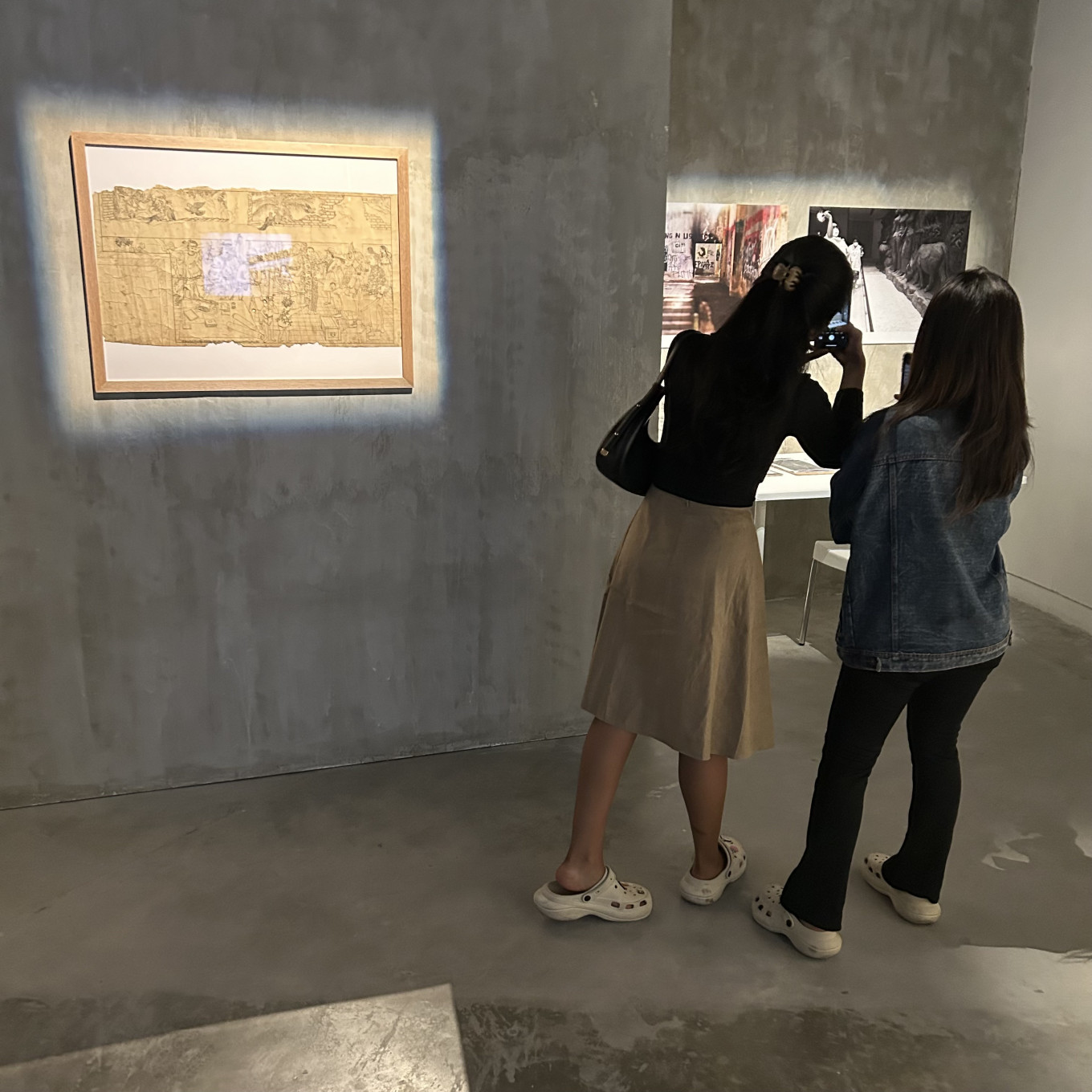 Spellbound: Visitors take pictures of the reliefs’ inception during an exhibition at Salihara arts center in South Jakarta on May 11, 2024. The exhibition presented reliefs commissioned by Indonesia’s first president Soekarno. (JP/Tunggul Wirajuda)
T
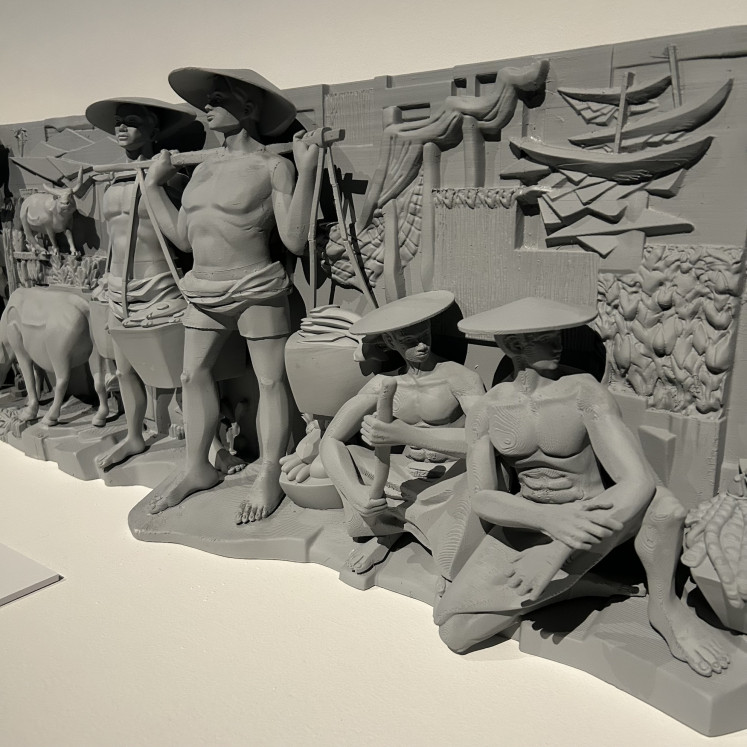
he figures of fishermen and farmers perched on the wall seemed bent on selling their catch and produce to passersby. Titled “Sarinah Relief 3D Print”, the resin and polyactic acid work by digital artist Nus Salomo and his NuMo Studio sought to take “photographs that record each element of the relief [to be] as whole and complete as possible,” curators Asikin Hasan and Ibrahim Soetomo note in a curatorial text of the work.
They noted that the printing would then go through a number of stages, starting with “photographs that record each element of the relief as a whole and complete as possible [to] redesign [the relief] through digital sculpture,” they asserted, as “Sarinah is a type of high relief where the sculptures are projected out of the stone background.”
They acknowledged that the 3D print for the relief, which was created by state-of-the-art blue laser printing technology, was made possible by the completeness of its digital data, following its rediscovery in 2021 in a basement of the Sarinah mall in Central Jakarta, and immediate preservation on the instructions of State-Owned Enterprises Minister Erick Thohir.
Modern take on Indonesian reliefs
“Sarinah Relief 3D Print” is one of the works featured in the Relief Era Bung Karno exhibition at the Salihara arts center in South Jakarta.
The exhibition aims to shed light on the restoration of reliefs commissioned by Sukarno in 1957, particularly a triptych made for Jakarta’s Kemayoran International Airport, under his Djakarta City Planning campaign to beautify the capital.


More from The Weekender
A passport to the kingdom of the sick
A breast cancer diagnosis, a journey to the kingdom of the sick and a determination to describe what lies there without metaphor, euphemism or the word “fight.”

The weight of time
Richard Mille’s newest ultralight timepiece pares down haute horlogerie to its mechanical necessities, proving that sophistication often comes from knowing what to leave out.

At this wellness retreat, your poo is everybody’s business
Ayurvedagram promises balance through ancient Ayurvedic practices. For four days, I surrendered my schedule, my modesty and, almost, my digestive tract.