The Jakarta Post
Please Update your browser
Your browser is out of date, and may not be compatible with our website. A list of the most popular web browsers can be found below.
Just click on the icons to get to the download page.


Popular Reads
Top Results
No results found. Please check your search term and try again
Can't find what you're looking for?
View all search results
Popular Reads
Top Results
No results found. Please check your search term and try again
Can't find what you're looking for?
View all search resultsUNESCO recognizes Kartini's letters as a Memory of the World
Through letters she wrote to her pen pals, Kartini expressed bold ideas on issues such as girls' access to education, opposition to polygamy and resistance to forced and child marriage.
Change text size
Gift Premium Articles
to Anyone
Share the best of The Jakarta Post with friends, family, or colleagues. As a subscriber, you can gift 3 to 5 articles each month that anyone can read—no subscription needed!
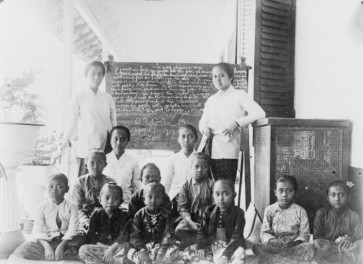
 The educators: Kartini (right) and her sisters Roekmini, Kartinah and Soemarti as teachers, pose for a photo, believed to be taken in Jepara, Central Java, 1903. (Courtesy of Leiden University) (Leiden University/-)
T
he United Nations Educational, Scientific and Cultural Organization (UNESCO) has officially recognized a collection of letters by 19th-century Indonesian writer and thinker Raden Adjeng Kartini as part of the world's documentary heritage, listed under the Memory of the World category.
This decision was made on April 11 during the 221st UNESCO Executive Board session, held between April 2 and 17 in Paris.
According to a statement released on Monday by the Indonesian National Archives, the collection was submitted as a joint nomination by the Indonesian National Archives, the Netherlands National Archives and Leiden University Libraries.

The three institutions preserve Kartini’s letters and archival materials. Leiden University Libraries hold the majority, with 326 letters and related items, while the Netherlands National Archives in The Hague and the Indonesian National Archives each hold nine items.
The Memory of the World register aims to ensure the preservation of vital documentary heritage and to raise global awareness of its significance.
Born on April 21, 1879, in Jepara, Central Java, Kartini was the daughter of a local regent and a noblewoman who would go on to challenge the deeply rooted gender norms of her time. Today, she is celebrated as a pioneering voice for women’s rights in Indonesia.
Through letters she wrote to her pen pals, Kartini expressed bold ideas on issues such as girls’ access to education, opposition to polygamy and resistance to forced and child marriage. She also voiced sharp criticism of feudalism and colonialism, revealing a progressive mind far ahead of her era.
More from The Weekender

Machines Without a Beating Heart?
As electric cars reshape the driving experience, enthusiasts wrestle with what makes a car special: the roar of its engine, the quirks of an aging machine, or the memories we leave behind the wheel.

FX Harsono revisits Indonesia’s unresolved past in Ambang/Threshold
The veteran artist reworks familiar images of violence and discrimination to confront a history that continues to shape the present.

Farewell, good breast
A cancer diagnosis brings more than the fear of illness. It raises difficult questions about how to protect those we love while revealing unexpected reserves of tenderness and resilience.