The Jakarta Post
Please Update your browser
Your browser is out of date, and may not be compatible with our website. A list of the most popular web browsers can be found below.
Just click on the icons to get to the download page.


Popular Reads
Top Results
No results found. Please check your search term and try again
Can't find what you're looking for?
View all search results
Popular Reads
Top Results
No results found. Please check your search term and try again
Can't find what you're looking for?
View all search resultsMeta lashes Australia's bid to make tech giants pay for news
Traditional media companies around the world are in a battle for survival as readers increasingly consume their news on social media.
Change text size
Gift Premium Articles
to Anyone
Share the best of The Jakarta Post with friends, family, or colleagues. As a subscriber, you can gift 3 to 5 articles each month that anyone can read—no subscription needed!
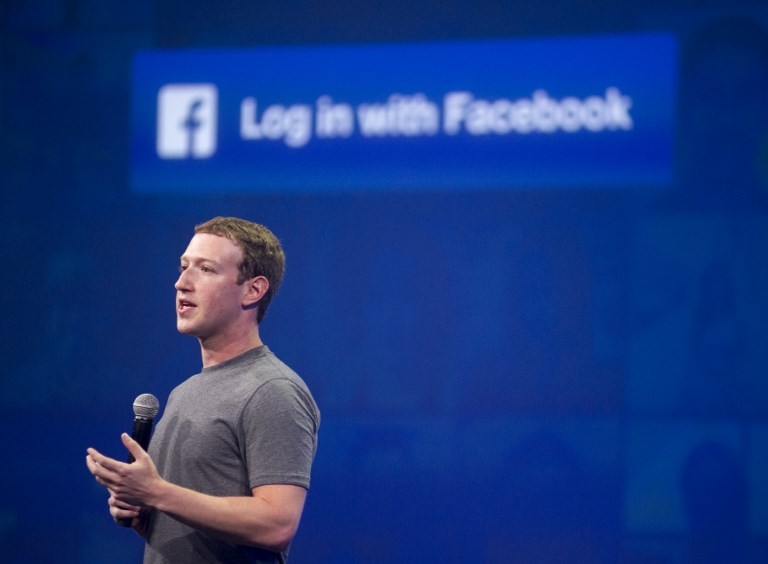 Facebook CEO Mark Zuckerberg speaks at the F8 summit in San Francisco, California, on March 25, 2015. Facebook shares plunged March 19, 2018 as the social media giant was pounded by criticism at home and abroad over revelations that a firm working for Donald Trump's presidential campaign harvested and misused data on 50 million members. (AFP/Josh Edelson)
T
ech giant Meta on Thursday attacked Australia's "grossly unfair" bid to make social media companies pay for news, saying it is vehemently opposed to the draft laws.
Traditional media companies around the world are in a battle for survival as readers increasingly consume their news on social media.
Australia wants big tech companies to compensate local publishers for sharing articles that drive traffic on their platforms.

"Our position is clear: this law is poorly designed, grossly unfair, and will fail to deliver a diverse and sustainable news industry," said Meta, the parent company of Facebook and Instagram.
"We are vehemently opposed to this legislation.
"It is discriminatory, economically incoherent, and will not deliver the sustainable news sector that Australian journalists and audiences deserve."
The laws specifically target Meta, Google and TikTok.
Those companies will first be given a chance to strike content deals directly with local news publishers.
If they refuse, they faced a compulsory levy that amounted to 2.25 percent of their Australian revenue.
The three firms were singled out based on a combination of their Australian revenues and large numbers of domestic users.
"It is a discriminatory tax, applied only to a handful of foreign companies," Meta said.
"Call it what it is: a discriminatory, retroactive tax targeting a handful of foreign companies while competitors offering comparable services face no equivalent obligation."
The draft laws, unveiled earlier this year, aimed to close a loophole that allowed social media companies to simply strip news from their platforms.

When Canberra mooted similar laws in 2024, Meta announced that Australian users would no longer be able to access the "news" tab.
Meta had previously announced it would not renew content deals with news publishers in the United States, Britain, France and Germany.
Supporters of such laws argue that social media companies attract users with news stories and hoover up online advertising revenue that would otherwise go to struggling newsrooms.
"Large digital platforms cannot avoid their obligations under the news media bargaining code," Australian Prime Minister Anthony Albanese said in April.
Journalism needed to have a "monetary value attached to it", Albanese said at the time.
"It shouldn't be able to be taken by a large multinational corporation and used to generate profits with no compensation."
Australia's University of Canberra has found that more than half the country uses social media as a source of news.
The draft laws will be introduced into parliament later this year.
Australia has been at the forefront of global efforts to regulate big tech companies and social media platforms.
In December, it banned under 16s from a raft of popular social media platforms, launching a world-first crackdown designed to protect children from online bullying and "predatory algorithms".



More from The Weekender

A passport to the kingdom of the sick
A breast cancer diagnosis, a journey to the kingdom of the sick and a determination to describe what lies there without metaphor, euphemism or the word “fight.”

The weight of time
Richard Mille’s newest ultralight timepiece pares down haute horlogerie to its mechanical necessities, proving that sophistication often comes from knowing what to leave out.

At this wellness retreat, your poo is everybody’s business
Ayurvedagram promises balance through ancient Ayurvedic practices. For four days, I surrendered my schedule, my modesty and, almost, my digestive tract.