The Jakarta Post
Please Update your browser
Your browser is out of date, and may not be compatible with our website. A list of the most popular web browsers can be found below.
Just click on the icons to get to the download page.


Popular Reads
Top Results
No results found. Please check your search term and try again
Can't find what you're looking for?
View all search results
Popular Reads
Top Results
No results found. Please check your search term and try again
Can't find what you're looking for?
View all search resultsJember Fashion Carnaval takes the stage, rain and all
At the 26th edition of the annual festival in East Java, elaborate costumes inspired by Indonesian heritage and global cultures continued their procession despite a torrential downpour, turning resilience into part of the spectacle.
Change text size
Gift Premium Articles
to Anyone
Share the best of The Jakarta Post with friends, family, or colleagues. As a subscriber, you can gift 3 to 5 articles each month that anyone can read—no subscription needed!
 Set as preferred source
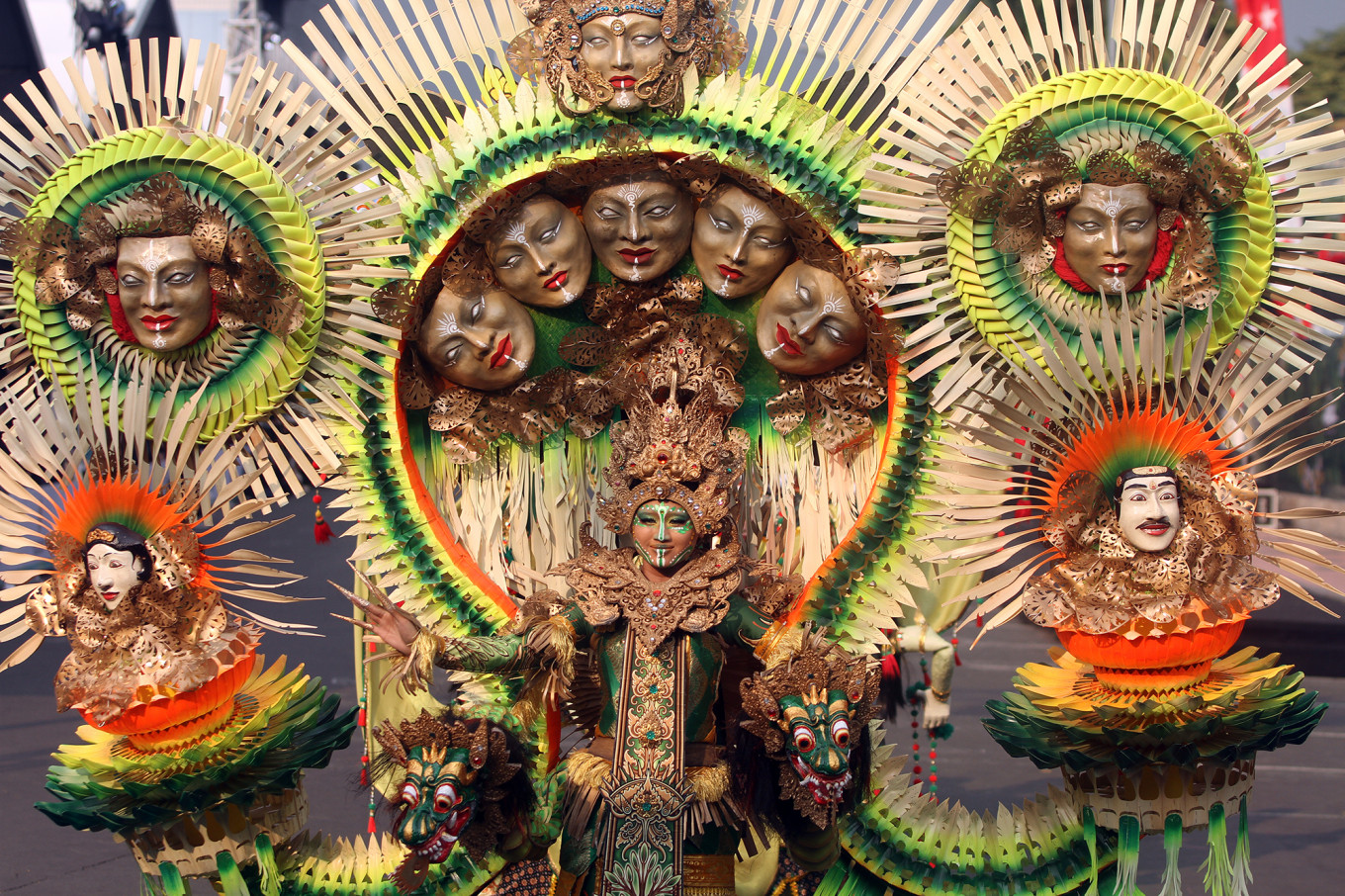 Noise in motion: A participant in the Noise defile performs on July 27, 2026, during the Grand Carnival of Jember Fashion Carnaval (JFC) 2026 in Jember, East Java. (JP/Wendra Ajistyatama)
T
hree days before she was due to step onto Jember's 3.6-kilometer runway in East Java, Shanum stood quietly in the living room of her family home, wearing a towering crown adorned with golden flames.
Around her, her parents carefully adjusted every fold of fabric and every ornament, ensuring not a single bead was out of place before their daughter made her debut. It was a moment few spectators ever witness: the hours of patience, craftsmanship and family devotion that lie behind the dazzling spectacle of this year’s Jember Fashion Carnaval (JFC).
Held from July 24 to 26, the 26th edition of the festival carried the theme “HEAL” (humanity, earth and life), exploring humanity's relationship with nature and the shared responsibility of safeguarding the future. Since its founding by the late Dynand Fariz in 2003, the JFC has grown from a local creative movement into one of Indonesia's best-known street fashion festivals, where elaborate costume-making meets theatrical performance and cultural storytelling.
The three-day celebration opened with the World Kids Carnival and Pets Carnival, followed by the World Able Art Carnival and Artwear Carnival, before culminating in the Grand Carnival. Shanum joined the opening parade, taking her first steps as part of the World Kids Carnival. For many participants, the costume fittings held in the days before the event were more than practical preparations. They marked the final stage before months of design, sewing and handcrafting were finally brought to life on the streets.
As the procession began, Jember's main avenue became a moving gallery of cultures, myths and environmental messages. Each defile presented its own visual narrative while reflecting the festival's tradition of blending Indonesian heritage with global artistic influences.
Culture on parade

More from The Weekender

The long plié
Having discovered ballet in her forties, a writer-cum-dancer learns that mastery is less about talent than the willingness to return, and the joy that comes from learning and growing.

Of cats and writers
After 19 years, a beloved cat leaves behind more than memories: he survives in a family’s lore, two novels, and the peculiar bond between writers and their feline muses.

The girl I chose to forget
Growing up complicated a childhood love of Indonesia. Years later, an old song offers one young writer a way back: not to innocence, but to a more difficult kind of belonging.