The Jakarta Post
Please Update your browser
Your browser is out of date, and may not be compatible with our website. A list of the most popular web browsers can be found below.
Just click on the icons to get to the download page.


Popular Reads
Top Results
No results found. Please check your search term and try again
Can't find what you're looking for?
View all search results
Popular Reads
Top Results
No results found. Please check your search term and try again
Can't find what you're looking for?
View all search resultsAsha Smara Darra and the threads of Sumba
Through her Umaratu Foundation, the designer is working with weavers, food researchers and builders to sustain the knowledge behind Sumba’s intricate tenun, traditional cuisine and architecture shaped by local materials.
Change text size
Gift Premium Articles
to Anyone
Share the best of The Jakarta Post with friends, family, or colleagues. As a subscriber, you can gift 3 to 5 articles each month that anyone can read—no subscription needed!
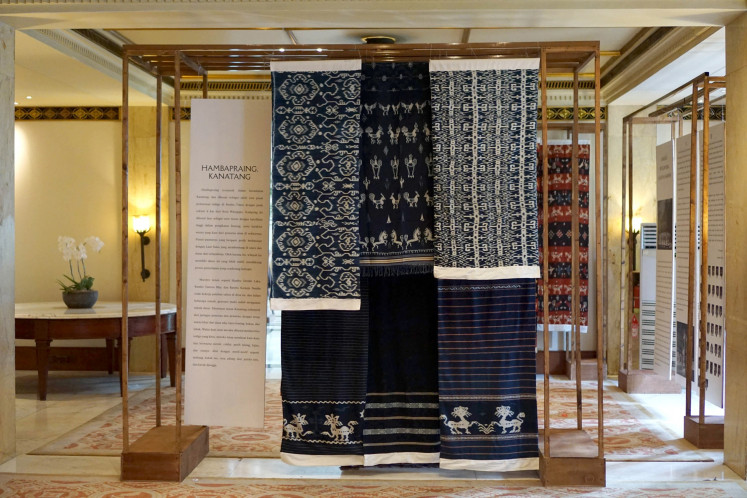
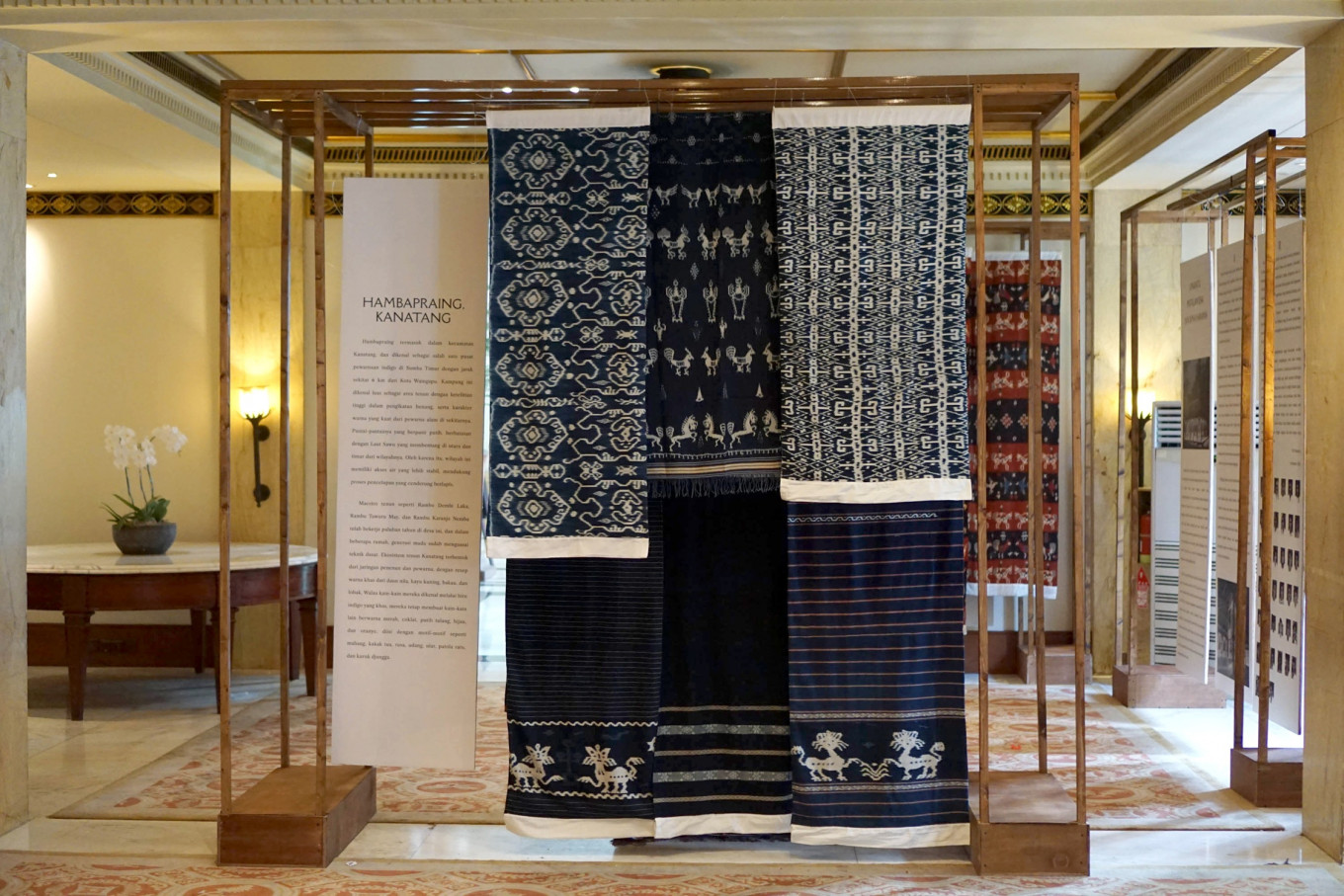 Indigo heritage: Handwoven textiles from Hambapraing, Kanatang, are displayed on Sept. 3, 2026, in the foyer of The Dharmawangsa Jakarta’s grand ballroom in South Jakarta. The East Sumba area is known for its indigo-dyed fabrics and motifs inspired by local flora and fauna, and remains an important center of Sumba’s weaving tradition. (Courtesy of ASA PR/-)
M
ajestic handwoven textiles from Sumba cascade down the walls and around the corners of the grand ballroom foyer at The Dharmawangsa Jakarta. Look closely, and distinctive patterns emerge: crocodiles, turtles, cockatoos, horses and other figures that embody the island’s beliefs and wisdom, passed down through generations.
The textiles were displayed at a one-day exhibition organized by Umaratu Foundation in early September. Established in December 2025 by fashion designer Asha Smara Darra, formerly known as Oscar Lawalata, the foundation seeks to preserve Sumba’s cultural heritage while helping its people build sustainable livelihoods.
“Indonesian textiles are not merely about beauty,” Asha said at the exhibition’s opening. “They embody the way people live, their philosophy and their understanding of life.”
Over her 25-year career, Asha has traveled extensively across Indonesia to study traditional textiles. Along the way, she fell in love with Sumba, its culture and its people.
“Despite their many limitations, the people of Sumba create handwoven textiles of extraordinary beauty,” she said. “And they do this while tending to their land and cattle and taking care of their households, too.”
Yet many Sumbanese continue to struggle financially. Around a quarter of Sumba’s population lives below the poverty line, according to Statistics Indonesia (BPS). Weavers face unpredictable weather, limited materials and difficulties finding markets that appreciate their work. Some motifs can only be woven after ancestral permission is sought through ceremonies rooted in the island’s Marapu belief.
“At this stage in my life, I feel the need to leave a legacy,” Asha said. “Umaratu will be a sustainable legacy, not just for me, but for all of us, for the people of Sumba and for Indonesia.”



More from The Weekender

A passport to the kingdom of the sick
A breast cancer diagnosis, a journey to the kingdom of the sick and a determination to describe what lies there without metaphor, euphemism or the word “fight.”

The weight of time
Richard Mille’s newest ultralight timepiece pares down haute horlogerie to its mechanical necessities, proving that sophistication often comes from knowing what to leave out.

At this wellness retreat, your poo is everybody’s business
Ayurvedagram promises balance through ancient Ayurvedic practices. For four days, I surrendered my schedule, my modesty and, almost, my digestive tract.