The Jakarta Post
Please Update your browser
Your browser is out of date, and may not be compatible with our website. A list of the most popular web browsers can be found below.
Just click on the icons to get to the download page.


Popular Reads
Top Results
No results found. Please check your search term and try again
Can't find what you're looking for?
View all search results
Popular Reads
Top Results
No results found. Please check your search term and try again
Can't find what you're looking for?
View all search resultsThe ‘Godzilla’ El Niño and the race to save Indonesia’s coral reefs
Record ocean temperatures threaten Indonesia’s coral reefs, but restoration and local conservation training offer hope amid a powerful El Niño.
Change text size
Gift Premium Articles
to Anyone
Share the best of The Jakarta Post with friends, family, or colleagues. As a subscriber, you can gift 3 to 5 articles each month that anyone can read—no subscription needed!
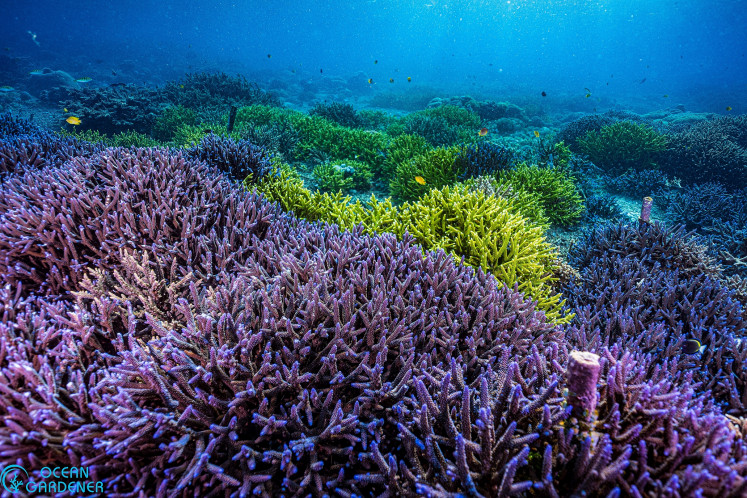
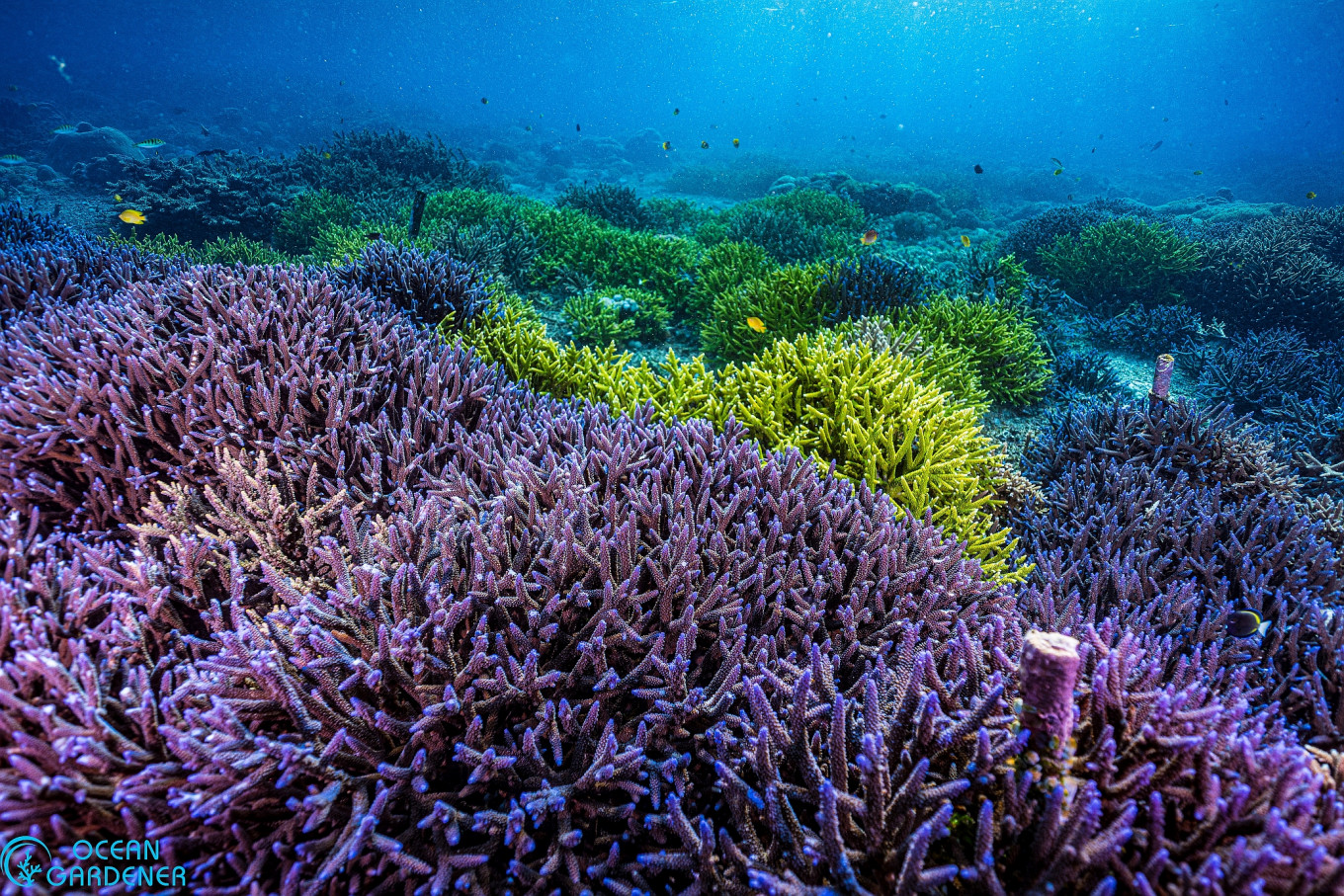 Under threat: A powerful El Niño event warming Pacific waters has raised fears for Indonesia’s coral reefs. Dubbed a “Godzilla” event by climate experts, the phenomenon could bring severe stress to marine ecosystems. (Courtesy of Ocean Gardener/-)
I
ndonesia’s coral reefs are among the richest and most diverse ecosystems on the planet, yet they face mounting threats. Proper regulations and sustainable business models are essential to their survival. Coral farming offers one solution, restoring damaged reefs while providing livelihoods for local communities, spreading knowledge about marine life and advancing conservation across the archipelago.
For more than two decades, French marine biologist Vincent Chalias has worked to restore Indonesia’s reefs. A specialist in mariculture, or the cultivation of marine organisms in the open ocean, he began with commercial ambitions before turning toward preservation.
After completing three years of marine aquaculture studies in France, Chalias left his native Marseille for Kenya, where he worked for an ornamental fish exporter. A business trip to Bali revealed the island’s potential and eventually led him to establish Ocean Gardener, an NGO dedicated to training Indonesians in reef conservation, with operations in Nusa Penida and Amed.

“Bleaching can wipe out 80 percent of a reef. It may recover to 70 percent, but another El Niño can push it down to 10 percent. It climbs back to 50 percent, then falls again to 5 percent. This is how reefs die, little by little.” — Vincent Chalias, marine biologist
Delayed impact
This year’s El Niño, a recurring climate phenomenon that warms the Pacific Ocean, has raised concerns over Indonesia’s coral reefs. Its intensity has prompted climate experts to describe it as a “Godzilla” event, with potentially severe consequences for marine ecosystems.
“For now, the effects of this ‘Godzilla’ El Niño are not yet visible in the ocean,” Chalias said. “They are being felt on land, through worsening drought and, most dramatically, the forest fires raging in Kalimantan and Sumatra. The abnormal rise in sea temperatures, possibly up to 2.5 degrees Celsius above average, will only begin to show its consequences on coral reefs next year, and may continue until 2028.”



More from The Weekender

Machines Without a Beating Heart?
As electric cars reshape the driving experience, enthusiasts wrestle with what makes a car special: the roar of its engine, the quirks of an aging machine, or the memories we leave behind the wheel.

FX Harsono revisits Indonesia’s unresolved past in Ambang/Threshold
The veteran artist reworks familiar images of violence and discrimination to confront a history that continues to shape the present.

Farewell, good breast
A cancer diagnosis brings more than the fear of illness. It raises difficult questions about how to protect those we love while revealing unexpected reserves of tenderness and resilience.