The Jakarta Post
Please Update your browser
Your browser is out of date, and may not be compatible with our website. A list of the most popular web browsers can be found below.
Just click on the icons to get to the download page.


Popular Reads
Top Results
No results found. Please check your search term and try again
Can't find what you're looking for?
View all search results
Popular Reads
Top Results
No results found. Please check your search term and try again
Can't find what you're looking for?
View all search resultsAsia-Pacific women artists challenge generational boundaries
Through paintings, textiles and installations, a group exhibit in Bali explores the changing relationship between tradition, identity and contemporary art.
Change text size
Gift Premium Articles
to Anyone
Share the best of The Jakarta Post with friends, family, or colleagues. As a subscriber, you can gift 3 to 5 articles each month that anyone can read—no subscription needed!
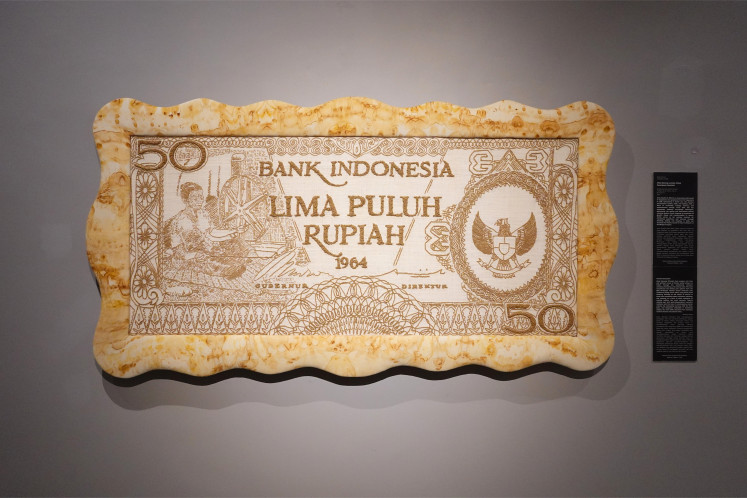
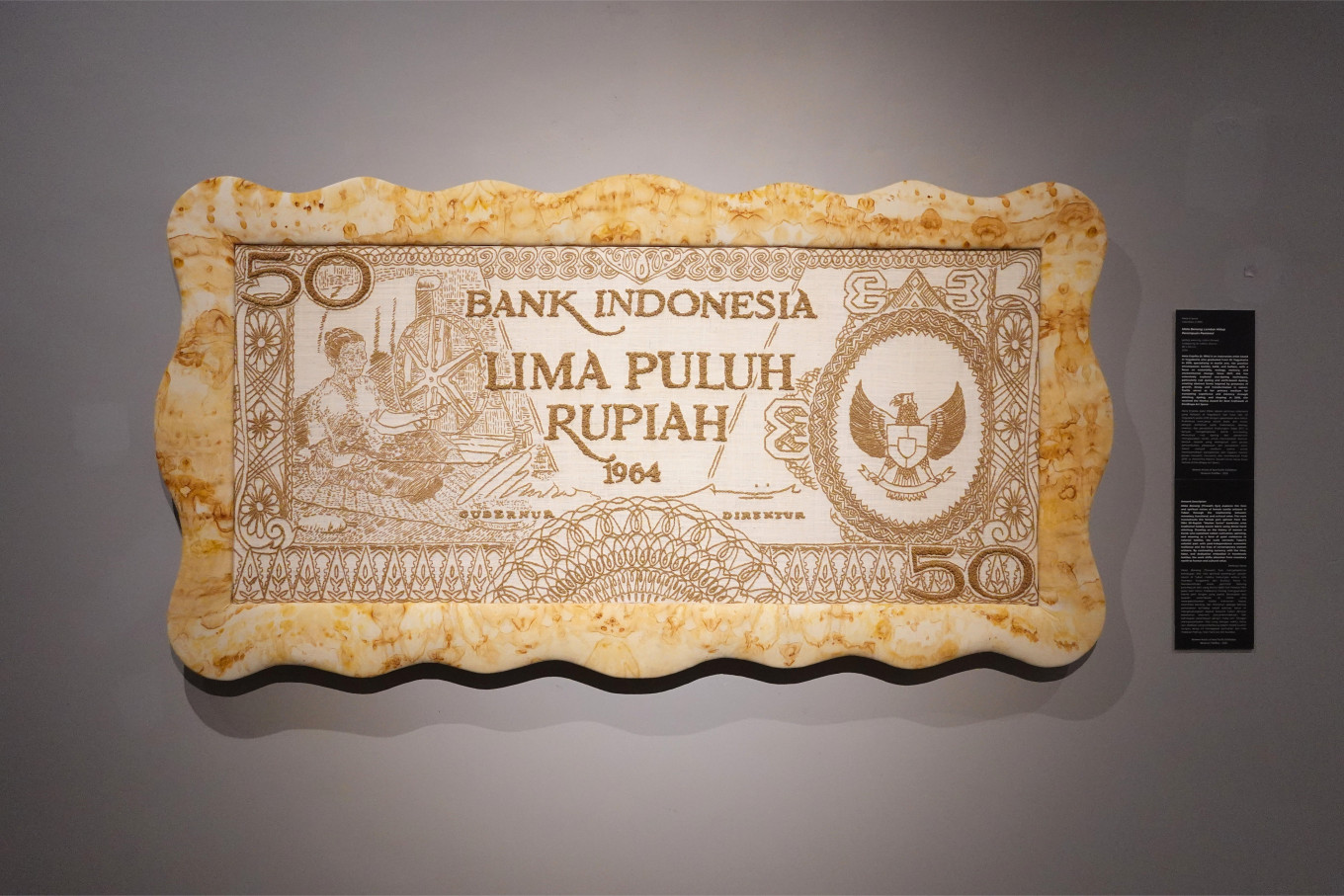 'Rusty’ thread: Mata Benang; Lembar Hidup Perempuan Pemintal (Eye of the thread; women weavers’ fabric of life) by Meta Enjelita juxtaposes the invisible labor of rural women against hyperinflation in 1960s Indonesia. (Courtesy of Museum Pasifika/-)
L
ong overlooked in dominant narratives of art history, women artists have continually shaped the region's artistic development, negotiating influences from abroad while drawing on their own cultural experiences. An exhibition at Museum Pasifika in Nusa Dua, Bali, offers an opportunity to revisit their contribution and consider how women's artistic practices have evolved across generations.
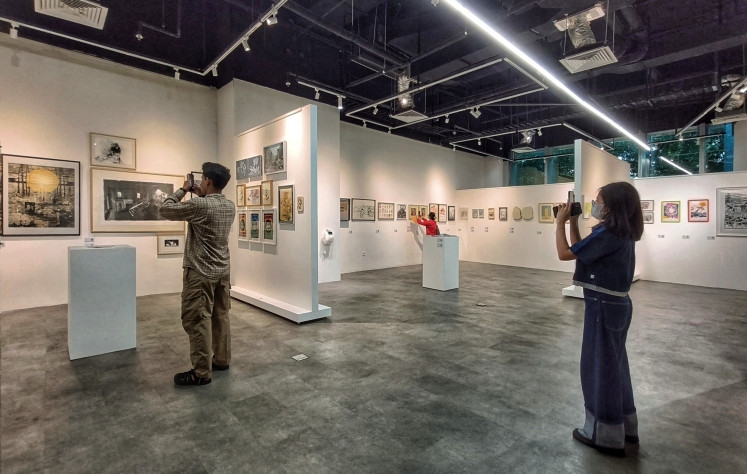
Titled Women Artists of Asia-Pacific: Nostalgi = Transendensi (nostalgia = transcendence), the exhibition brings together 47 works by 30 women artists from 12 countries. Running from Oct. 9 to Dec. 9, it surveys more than a century of artistic practice, from pioneering modernists to contemporary artists exploring new materials and forms.
The exhibition also includes artists from outside the region, particularly Europeans whose connections with the Asia-Pacific developed through travel or extended residence. Their presence adds another dimension to the cultural exchanges that have shaped artistic expression in the region.
Looking beyond the artworks themselves, the exhibition invites reflection on the different paths taken by pioneering women artists. Chinese artist Pan Yuliang, Singaporean painter Georgette Chen and Indonesian painter Emiria Soenassa, for instance, each negotiated the encounter between Western modernism and local cultural contexts.
Their experiences, however, were far from identical.
Emiria (1894-1964) traveled extensively across the Indonesian archipelago and brought the lives and cultures of its diverse communities into her paintings. Chen (1907-1992), who received artistic training in Paris and New York before settling in Singapore, became an important figure in the development of the Nanyang style, combining Western painting techniques with Asian subjects.
Their practices illustrate how modernism was not simply imported from the West but reinterpreted through the regional experiences of individual artists.

More from The Weekender
Machines Without a Beating Heart?
As electric cars reshape the driving experience, enthusiasts wrestle with what makes a car special: the roar of its engine, the quirks of an aging machine, or the memories we leave behind the wheel.

FX Harsono revisits Indonesia’s unresolved past in Ambang/Threshold
The veteran artist reworks familiar images of violence and discrimination to confront a history that continues to shape the present.
Farewell, good breast
A cancer diagnosis brings more than the fear of illness. It raises difficult questions about how to protect those we love while revealing unexpected reserves of tenderness and resilience.