The Jakarta Post
Please Update your browser
Your browser is out of date, and may not be compatible with our website. A list of the most popular web browsers can be found below.
Just click on the icons to get to the download page.


Popular Reads
Top Results
No results found. Please check your search term and try again
Can't find what you're looking for?
View all search results
Popular Reads
Top Results
No results found. Please check your search term and try again
Can't find what you're looking for?
View all search resultsUnresolved chapter of Reformasi
The demonstrations turned deadly on Nov. 13, when security forces used excessive force to disperse the crowds, killing 17 people and injuring hundreds. The incident later became known as the Semanggi I tragedy.
Change text size
Gift Premium Articles
to Anyone
Share the best of The Jakarta Post with friends, family, or colleagues. As a subscriber, you can gift 3 to 5 articles each month that anyone can read—no subscription needed!
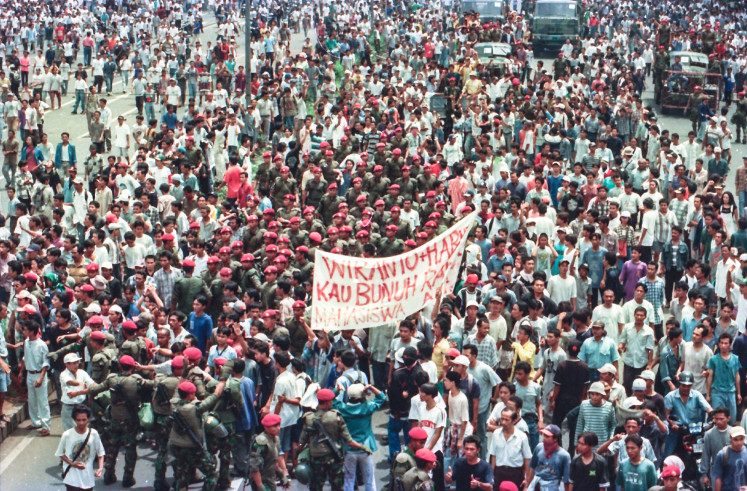
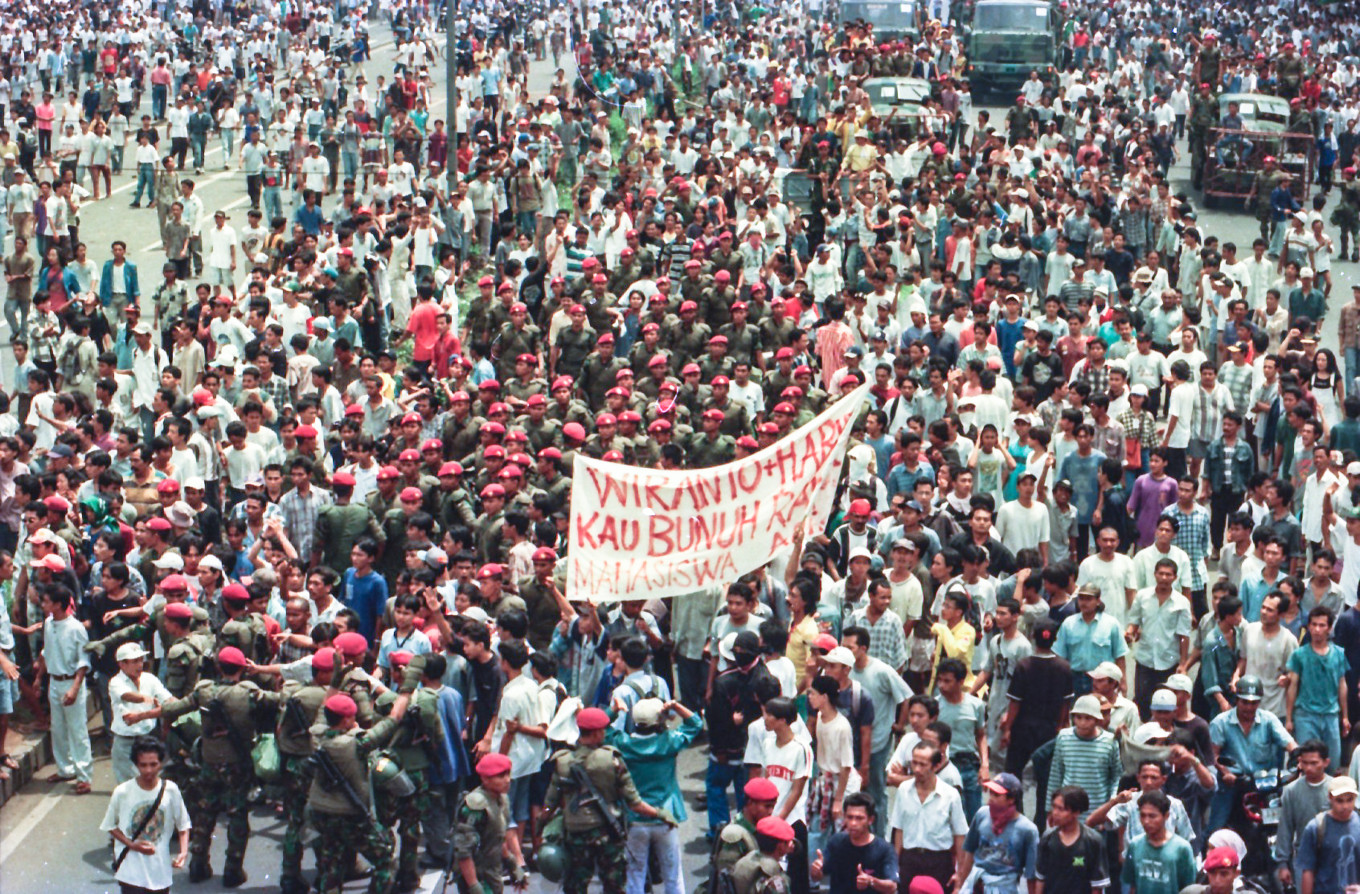 Thousands of students and members of civil society took to the streets over several days, with major demonstrations on Nov. 13 and 14, 1998, to protest a special session of the People's Consultative Assembly (MPR) convened under then President BJ Habibie. (The Jakarta Post Archive/Mulkan Salmona)
Six months after the fall of Soeharto, the struggle for reform turned deadly in the heart of the capital.
The Reform Era movement that brought down Soeharto's 32-year rule in May 1998 had raised hopes for a more democratic Indonesia. It called for an end to corruption, collusion and nepotism, greater political freedoms and an overhaul of institutions long dominated by the New Order.
Thousands of students and members of civil society took to the streets over several days, with major demonstrations on Nov. 13 and 14, 1998, to protest a special session of the People's Consultative Assembly (MPR) convened under then President BJ Habibie.
Protesters demanded that officials and politicians from the New Order era step down and called for an end to the military's dual function, which allowed the Indonesian Armed Forces (ABRI) to assume both military and political roles.
The demonstrations turned deadly on Nov. 13, when security forces used excessive force to disperse the crowds, killing 17 people and injuring hundreds. The incident later became known as the Semanggi I tragedy.
The photograph, taken on Nov. 14, captures the scale of the continuing demonstrations, with a massive crowd filling the streets and facing security personnel in red berets. Above the crowd, a banner accuses then-ABRI commander Gen. Wiranto and the military of killing students.
In its Nov. 14, 1998, edition, The Jakarta Post reported that security forces had deployed light tanks, armored personnel carriers and water cannons, while firing tear gas and bullets to disperse the demonstrators, who responded by throwing stones and other objects.

More from The Weekender

Machines Without a Beating Heart?
As electric cars reshape the driving experience, enthusiasts wrestle with what makes a car special: the roar of its engine, the quirks of an aging machine, or the memories we leave behind the wheel.
FX Harsono revisits Indonesia’s unresolved past in Ambang/Threshold
The veteran artist reworks familiar images of violence and discrimination to confront a history that continues to shape the present.

Farewell, good breast
A cancer diagnosis brings more than the fear of illness. It raises difficult questions about how to protect those we love while revealing unexpected reserves of tenderness and resilience.