The Jakarta Post
Please Update your browser
Your browser is out of date, and may not be compatible with our website. A list of the most popular web browsers can be found below.
Just click on the icons to get to the download page.


Popular Reads
Top Results
No results found. Please check your search term and try again
Can't find what you're looking for?
View all search results
Popular Reads
Top Results
No results found. Please check your search term and try again
Can't find what you're looking for?
View all search resultsNTT school processing banana waste wins regional competition
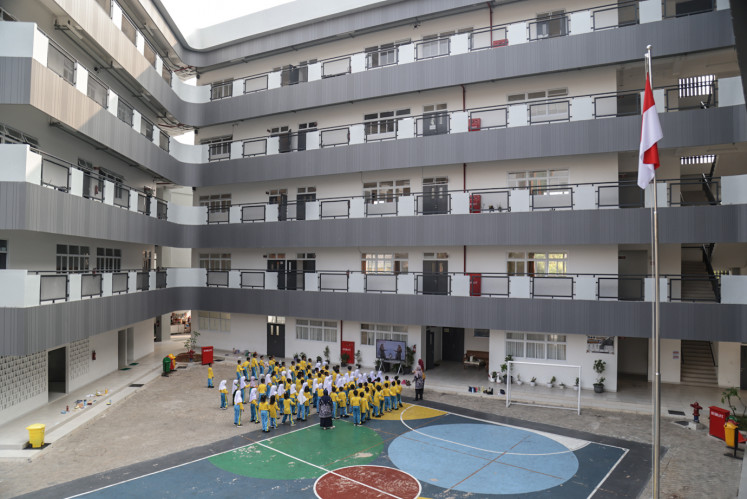
SMP Il Kapten Fatubaa in Fatubaa village, Belu regency, East Nusa Tenggara, was awarded the grand prize of US$40,000 for transforming banana peel into ice cream, compost fertilizer and liquid fertilizer.
Change text size
Gift Premium Articles
to Anyone
Share the best of The Jakarta Post with friends, family, or colleagues. As a subscriber, you can gift 3 to 5 articles each month that anyone can read—no subscription needed!
 Set as preferred source
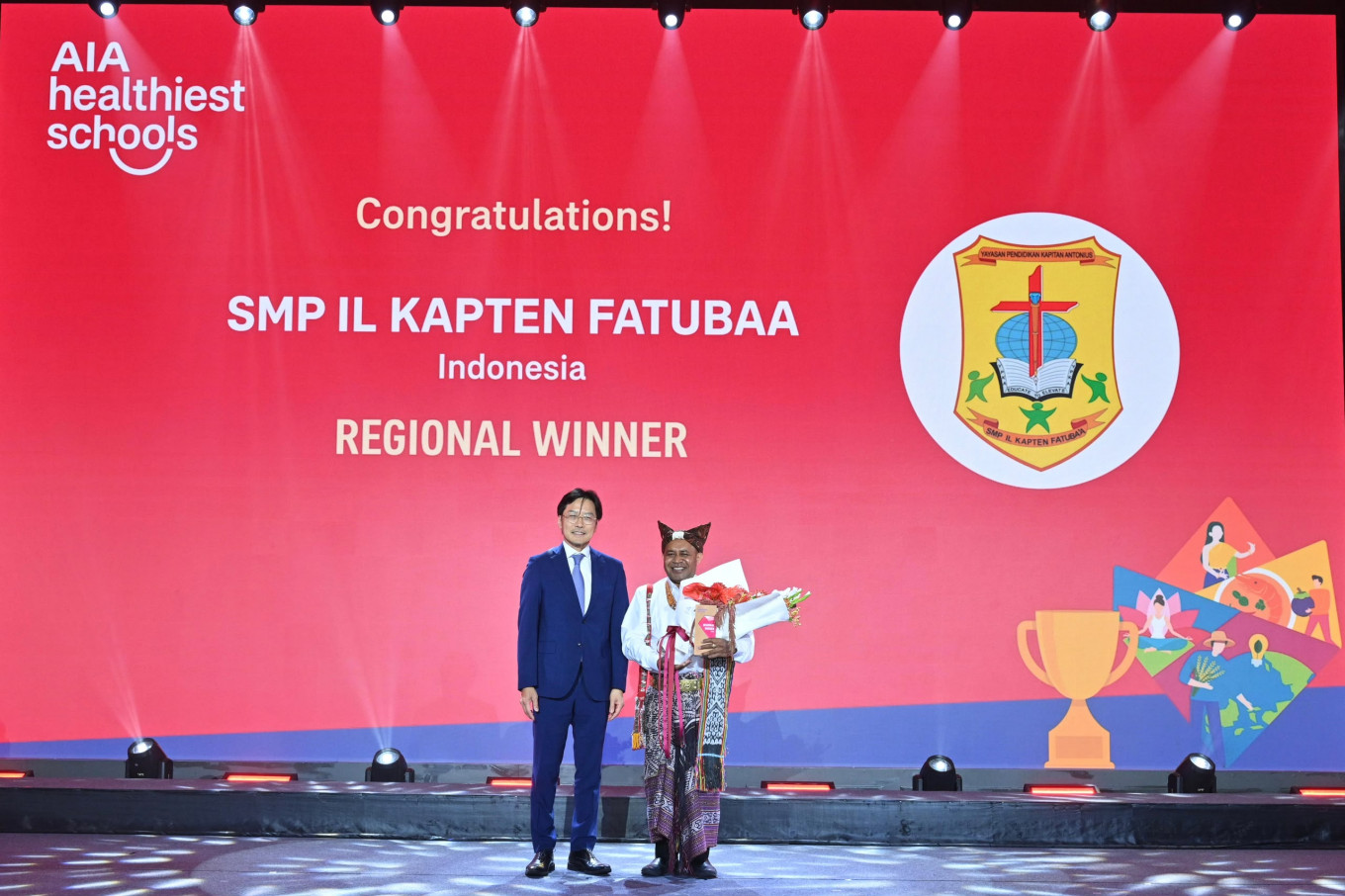 Teacher and project lead at the SMP Il Kapten Fatubaa junior high school in Belu regency, East Nusa Tenggara, Antonius Kapitan (right) receives the grand prize in the AIA Healthiest Schools Competition from AIA Group chief executive and president Lee Yuan Siong during a ceremony in Bangkok on Wednesday. (Courtesy of AIA/-)
A
junior high school in East Nusa Tenggara has won the AIA Healthiest Schools Competition by integrating environmental science, entrepreneurship and community engagement by transforming widespread banana peel waste into ice cream, compost and liquid fertilizer, benefiting over 1,000 people.
SMP Il Kapten Fatubaa in Fatubaa village, Belu regency, was awarded the grand prize of US$40,000 during a regional ceremony in Bangkok, AIA said in a press statement on Thursday.
The school was selected as the Regional Winner from nearly 1,000 entries across Asia-Pacific, the highest participation level since the program’s launch, and was announced at the regional ceremony.
“I am so speechless because we could not imagine that we would win this award. We only tried to do the best with our team, our teachers and especially our students,” said a teacher at the school, Antonius Kapitan, as quoted by the statement.
“We try to change banana peels into new products like ice cream, liquid fertilizer and compost fertilizer.”
Antonius said the school had a special task to continue our project because we developed it not only to win, but for the students, their future and the community around the school.

“We want to continue our production and share the benefits with more students and communities,” he said.
The school faces limited infrastructure, low environmental literacy, scarce clean water and unmanaged waste, especially banana peel waste generated by a Healthy Eating Movement.
These challenges created an urgent need for a sustainable, contextual solution that would strengthen health awareness, environmental responsibility and practical life skills.
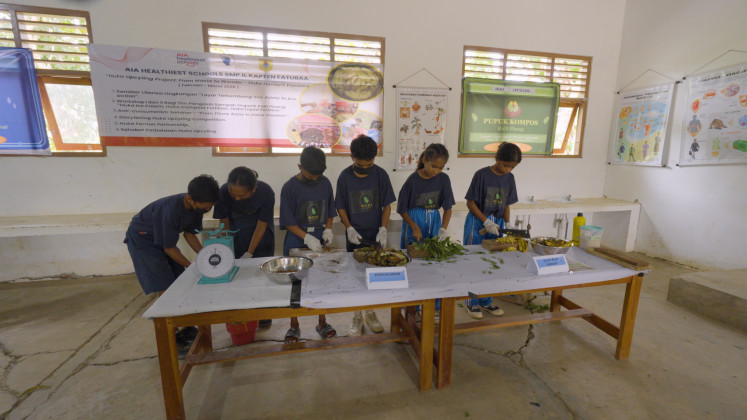
This need sparked the creation of the Huka Upcycling Project (HUP), named after the Tetun term, Hudi Kakun, meaning banana peel.
This project is grounded in science education, practical skill-building and Indonesian language integration, helping students see how local resources can drive innovation within marginalized border communities.
HUP is carried out through six strategic programs and 20 activities, having benefitted more than 1,000 people.
The school now aims to secure Drug and Food Monitoring Agency (BPOM) certification, develop product patents, expand its model to neighboring schools, and deepen collaboration with government and cross-border networks.
Head judge of the AIA Healthiest Schools Competition and AIA Group chief marketing officer Stuart A. Spencer said that the AIA Healthiest Schools Competition was one of the leading programs of its kind in Asia and was helping young people take ownership of their health by turning knowledge into action.
“Across the region, we are seeing rising levels of inactivity, poorer nutrition and increasing mental health pressures among young people, and the evidence shows that early intervention can make a lasting difference,” he said in the statement.
AIA Group chief executive and president Lee Yuan Siong said that the most powerful about the program was that it turned health from something students were taught into something they do every day.
“On their own, actions like eating better, moving more and looking after mental wellbeing seem simple, but when repeated across schools and communities, they change behavior at scale,” he said in the statement.
Healthy competition
There were four other categories in the competition, with each winner receiving $15,000.
The AIA Outstanding Healthy Eating Award went to Chu Van An Primary School in Vietnam; the AIA Outstanding Active Lifestyles Award went to Sekolah Kebangsaan Manir, in Malaysia; the AIA Outstanding Mental Wellbeing Award went to Chongqing Nan’an District Shanhu Puhui Experimental Primary School, in China; and the AIA Outstanding Health & Sustainability Award went to Angchum Secondary School, in Cambodia.
Now in its fourth year, the competition is a flagship initiative of the AIA Healthiest Schools program (AHS), which empowers students aged 5 to 16 to embed healthy living into daily life across four key pillars: healthy eating, active living, mental wellbeing and sustainability.
The AIA Healthiest Schools Competition challenges schools to turn their best health and wellbeing ideas into practical action. By applying what they have learned to real-life issues, students are embedding healthy habits into daily life while creating positive impact within schools and across their wider communities.
Since its launch, the competition has expanded rapidly, growing from four to now nine participating markets: Cambodia, China, Hong Kong, Indonesia, Malaysia, the Philippines, Sri Lanka, Thailand and Vietnam. Entrants were asked to detail a health and wellness project they run, how they made it happen and the difference it made to their school community.