The Jakarta Post
Please Update your browser
Your browser is out of date, and may not be compatible with our website. A list of the most popular web browsers can be found below.
Just click on the icons to get to the download page.


Popular Reads
Top Results
No results found. Please check your search term and try again
Can't find what you're looking for?
View all search results
Popular Reads
Top Results
No results found. Please check your search term and try again
Can't find what you're looking for?
View all search resultsCourt ruling shift focus back to schools, teacher welfare
Change text size
Gift Premium Articles
to Anyone
Share the best of The Jakarta Post with friends, family, or colleagues. As a subscriber, you can gift 3 to 5 articles each month that anyone can read—no subscription needed!
 Set as preferred source
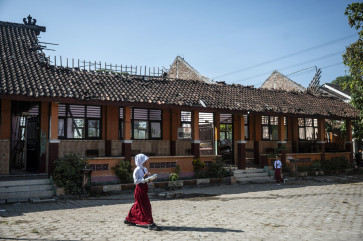
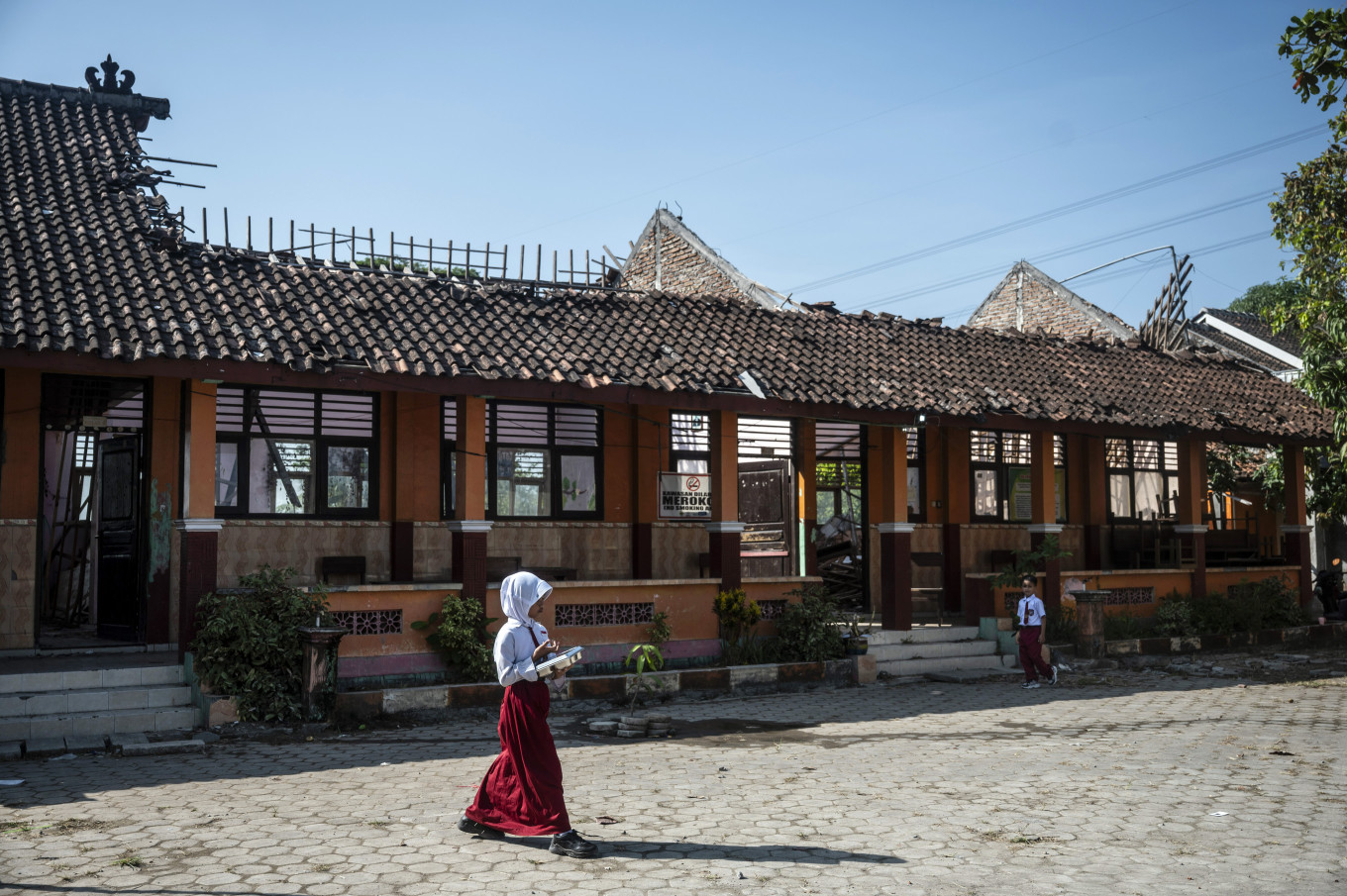 Pupils carry free nutritious meal packages past a classroom with a collapsed roof at SD Tanggirejo state elementary school in Tegowanu, Grobogan, Central Java, on July 21, 2026. According to the school, the classroom roof first collapsed in January and sustained further damage in April, forcing classes to rotate between the remaining usable classrooms, partitioned learning spaces and a prayer room converted into a temporary classroom to ensure pupils' safety. (Antara/Aprillio Akbar)
T
font size="2">The Constitutional Court's ruling on the removal of the free nutritious meal program from the education budget should pave the way for long-overdue investment in teacher welfare, school repair and equal access to education, teachers and education experts have said.
While welcoming Thursday’s ruling, they stressed that excluding the free meals program from the constitutionally mandated education spending alone would not improve education unless the government redirected the funding toward priorities that had long been underfunded, particularly contract teachers’ welfare and dilapidated schools.
"The court's ruling is certain, but the fate of contract teachers remains uncertain. The ruling will certainly take effect within two years, but free education is still far from guaranteed," Indonesian Teachers Association (P2G) national coordinator Satriwan Salim said.
Teacher welfare was one of the central arguments raised by the petitioners, who challenged the government's decision to finance President Prabowo Subianto’s flagship program through the education budget. The issue has persisted for years, with many contract teachers continuing to receive low pay and lacking certainty over their employment status.
Education expert Jejen Musfah of the Syarif Hidayatullah State Islamic University (UIN) in Jakarta said the ruling should also prompt the government to increase spending on repairing deteriorating schools and improving access to education, particularly in remote and underserved regions.
“The ruling shows that the government has been wrong all this time in managing the education budget,” he said. “Whether the ruling leads to meaningful improvements will depend on whether the government redirects the funds toward these priorities.”

The need for greater investment in school infrastructure has also come under renewed scrutiny. Although the government has implemented a nationwide school renovation program since last year, its budget declined to Rp 14 trillion (US$775.40 million) from Rp 16 trillion this year.
![A police tape reads “Crime scene [...]“ in this undated illustration of a crime scene.](https://img.jakpost.net/c/2026/09/14/2026_09_14_179717_1789368331._medium.jpg)