The Jakarta Post
Please Update your browser
Your browser is out of date, and may not be compatible with our website. A list of the most popular web browsers can be found below.
Just click on the icons to get to the download page.


Popular Reads
Top Results
No results found. Please check your search term and try again
Can't find what you're looking for?
View all search results
Popular Reads
Top Results
No results found. Please check your search term and try again
Can't find what you're looking for?
View all search resultsInconsistencies mar Indonesia-centric history books
Upon closer reading of the released volumes, historians have identified problems ranging from questionable historical claims to gaps in chronology and concerns over how Indonesia’s history is framed.
Change text size
Gift Premium Articles
to Anyone
Share the best of The Jakarta Post with friends, family, or colleagues. As a subscriber, you can gift 3 to 5 articles each month that anyone can read—no subscription needed!
 Set as preferred source
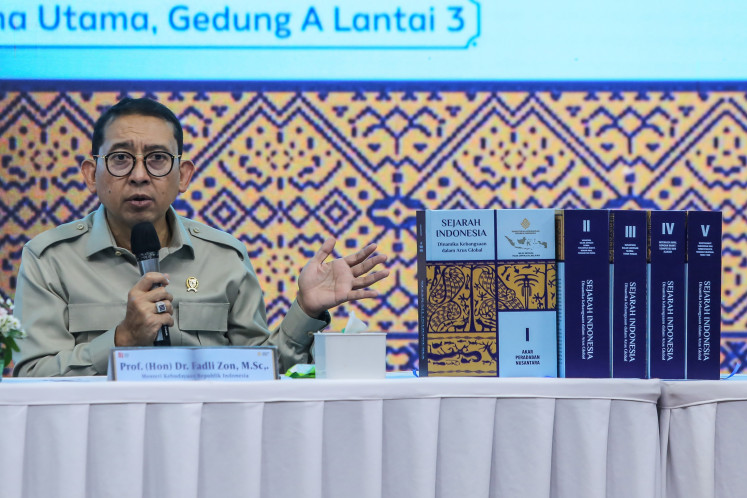
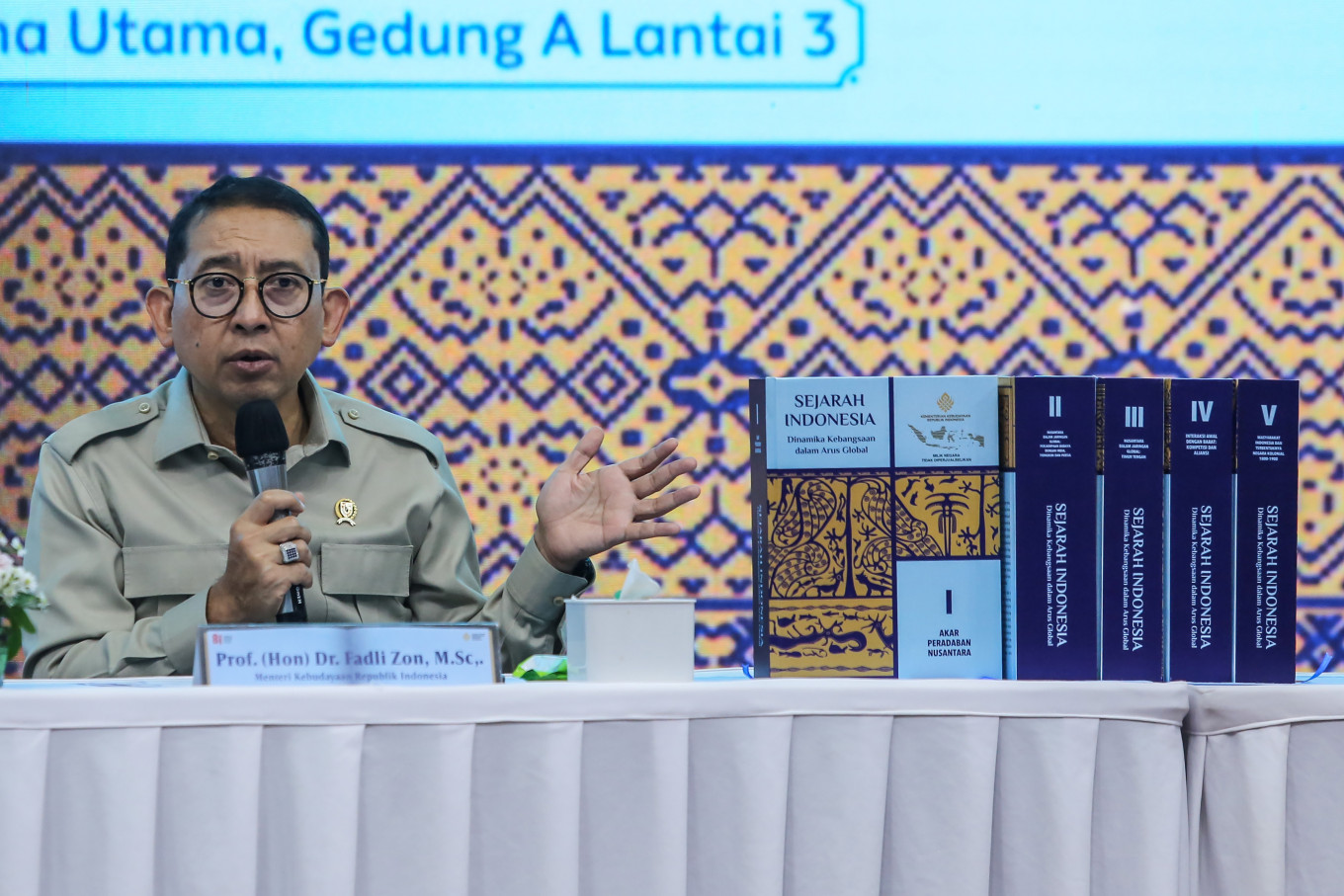 Culture Minister Fadli Zon speaks during a media briefing on the launch of Sejarah Indonesia: Dinamika Kebangsaan dalam Arus Global (Indonesian History: National Dynamics in Global Currents) in Jakarta on Monday, Aug. 31, 2026. The Culture Ministry launched the first five volumes of the 10-volume series, which are available for free download through its digital platform, pustakabudaya.id. (Antara/Asprilla Dwi Adha)
H
istorians have raised concerns over inconsistencies in the first half of the government-sanctioned national history book and what they described as an overly “Indonesia-centric” perspective, raising questions over how the country’s darker episodes will be presented in the forthcoming volumes.
The Culture Ministry, which spearheaded the book’s drafting, released the first five volumes of Sejarah Indonesia: Dinamika Kebangsaan dalam Arus Global (Indonesian History: National Dynamics in Global Currents) to the public in late August, months after the project was declared complete in December last year.
The 10-volume series, spanning nearly 8,000 pages, involves over 100 experts from dozens of universities and research institutions. The first five volumes cover the archipelago’s history from prehistoric societies through the arrival of European powers and the formation of the colonial state, while the full series is expected to extend into the early years of President Prabowo Subianto’s administration.
Upon closer reading of the released volumes, however, historians have identified problems ranging from questionable historical claims to gaps in chronology and concerns over how Indonesia’s history is framed.
Historian Asvi Warman Adam, for example, pointed to what he described as an “anachronism” in the first volume’s introductory passage, which linked the 1958 PRRI-Permesta rebellions to then-president Sukarno’s efforts to strengthen Indonesia’s international role.
“This is a reversed depiction of history,” Asvi said during a discussion in Central Jakarta on Tuesday. “Sukarno’s international ambitions had already materialized through the 1955 Asian-African Conference in Bandung, three years before the rebellions.”

Read also: Revising history to legitimize ruling regime