








Enjoy This Gifted Article!
You're reading this thanks to a The Jakarta Post subscriber.
Access is available for 30 days. For unlimited access, consider subscribing.
Please Update your browser
Your browser is out of date, and may not be compatible with our website. A list of the most popular web browsers can be found below.
Just click on the icons to get to the download page.

Can't find what you're looking for?
View all search resultsCan't find what you're looking for?
View all search resultsIn a study aiming at quantifying the relationship between temperature and excess mortality, researchers projected that Indonesia may see almost 20,000 extra heat-related deaths during this El Niño season.
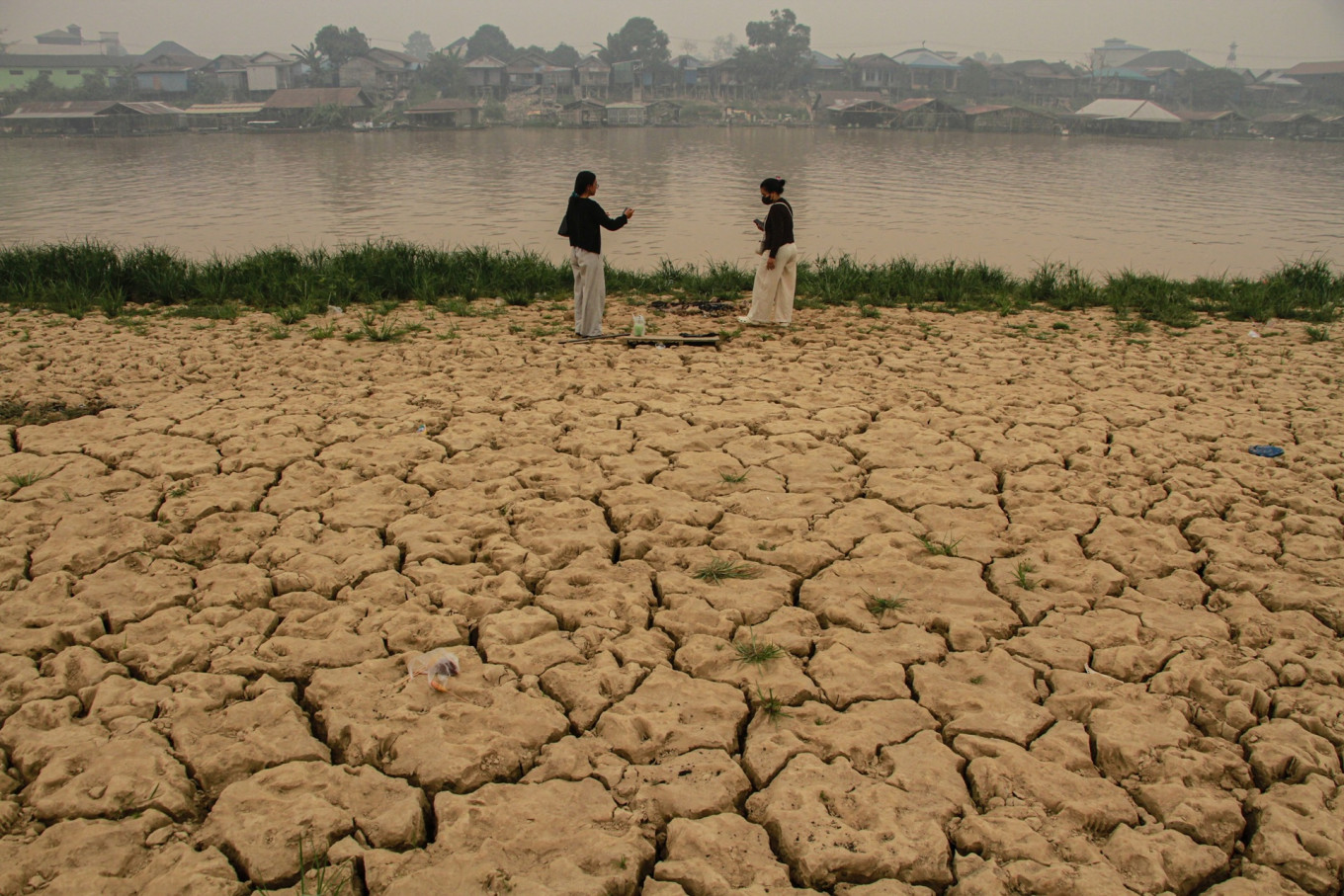 Two women stand on the receded bank of the Kahayan River on Sept. 15 in Palangka Raya, Central Kalimantan. (Antara/Auliya Rahman)
ndonesia may see nearly 20,000 additional heat-related deaths until early next year due to El Niño, a report has suggested, with experts calling for improved efforts to mitigate the health impacts from the heat brought by the climate phenomenon.
In a report published on Sept. 23, the University of Chicago’s Climate Impact Lab projected around 451,000 additional deaths globally from extreme hot days during this year’s “Super El Niño” period, in which the warming of the southern Pacific Ocean is expected to be higher compared to previous El Niño seasons.
Most of the excess deaths will be observed in Global South countries, including Indonesia, which is expected to see 19,300 deaths until next February, the second highest after Nigeria with 31,400. Across Southeast Asia, the researchers projected a total of 19,400 additional deaths in the Philippines, Vietnam, Thailand and Cambodia.
Researchers aimed to quantify the relationship between temperature and excess mortality by accounting for differences in local climate, vulnerability and capacity to adjust to extreme temperatures, explained Genevieve Maricle, executive director of the Climate Impact Lab, in a recent interview with The Jakarta Post.
To get the number, the researchers broke the world down into 24,378 regions and applied various weather forecasting models, including one produced by the European Centre for Medium-Range Weather Forecasts to estimate excess temperature-related deaths.
She further explained the researchers saw several factors that drive the projection of heat-related deaths, such as the population of a region, resilience to heat and historical mortality response to temperature.

Several weather forecasts projected Indonesia to be around 1 to 2 degrees Celsius hotter than average because of El Niño until February, and the country could see excess deaths because of hot temperature already, according to the researchers.
“You’re ratcheting up what would already be the highest sort of temperature levels,” Maricle went on to say.
“When you combine that with the number of people in any one of these regions, that’s why the sort of number of deaths has been so high in Indonesia specifically.”
The researchers will publish the full methodology of their study in an upcoming peer-reviewed journal.
Read also: Rivers dry up, water crisis worsens as El Niño intensifies
While some researchers questioned the validity of the methodology, Climate Impact Lab researchers said the projection served as a push for authorities and other related stakeholders to strengthen prevention and mitigation measures against extreme heat.
Because of global heating, the global average temperature is expected to rise by at least 1.5 degrees above preindustrial levels.
“But we’re getting [the temperature rise] all right now [when] we haven’t yet been able to fully build the sort of adaptive systems that we need for when we expect this to be an every year thing. And so it’s hitting a lot harder right now,” Maricle said.
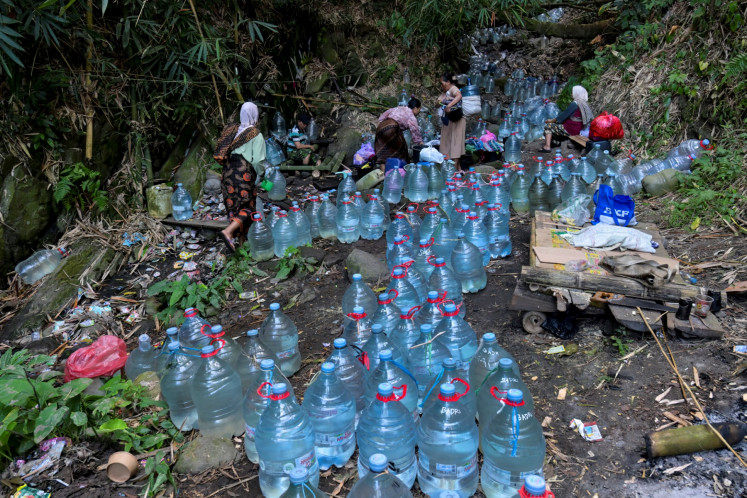
The projection was published as Indonesia scrambles to adapt to the impacts of the “Super El Niño”, ranging from drought to intensified forest and land fires on the country’s main islands.
The Meteorology, Climatology and Geophysics Agency (BMKG) reported a temperature increase of 2.83 degrees by late August. Other researchers predicted a peak of up to 3.5 degrees by December, making the climate anomaly the strongest since records began.
While El Niño does not directly cause disease, it may heighten the pressure on public health systems, according to the World Health Organization (WHO).
“The greatest risks are expected where El Niño-related climate anomalies coincide with weak health systems, low population immunity, poor access to care and environmental conditions favorable to disease transmission,” the WHO wrote in an El Niño Health Risk Analysis issued on Sept. 5.
Read also: El Niño may raise stunting rate as food output falls and prices rise
Beta Paramita, associate urban and architectural professor at the Indonesian Education University (UPI), underlined the risk might be higher in cities because of the urban heat island effect, where heat from the atmosphere and vehicle emissions are trapped longer in concrete buildings and structures.
In rural areas, she added the health risk could be high because of poor access to health facilities and information about hazards from the extreme heat.
“It is important to push for climate resilience societies, with measures targeting outdoor workers and other groups that are more resilient to heat-related deaths,” Beta said.
In a video statement on Sept. 24, Health Ministry spokesperson Widyawati said the ministry is monitoring the latest situation while improving national awareness of public health concerns.
‘The Health Ministry will keep monitoring the situation and strengthen public health mitigation based on risks in every region,” Widyawati said.
She also urged the public to wear masks, rehydrate regularly and limit outdoor activities.
Share your experiences, suggestions, and any issues you've encountered on The Jakarta Post. We're here to listen.
Thank you for sharing your thoughts. We appreciate your feedback.
Quickly share this news with your network—keep everyone informed with just a single click!
Share the best of The Jakarta Post with friends, family, or colleagues. As a subscriber, you can gift 3 to 5 articles each month that anyone can read—no subscription needed!
Get the best experience—faster access, exclusive features, and a seamless way to stay updated.


