The Jakarta Post
Please Update your browser
Your browser is out of date, and may not be compatible with our website. A list of the most popular web browsers can be found below.
Just click on the icons to get to the download page.


Popular Reads
Top Results
No results found. Please check your search term and try again
Can't find what you're looking for?
View all search results
Popular Reads
Top Results
No results found. Please check your search term and try again
Can't find what you're looking for?
View all search resultsWho are the real ‘foreign agents’?
Fueled by the antek asing (foreign agent) rhetoric, harassment of activists and civil society organizations is sure to persist, if not escalate, in the country.
Change text size
Gift Premium Articles
to Anyone
Share the best of The Jakarta Post with friends, family, or colleagues. As a subscriber, you can gift 3 to 5 articles each month that anyone can read—no subscription needed!
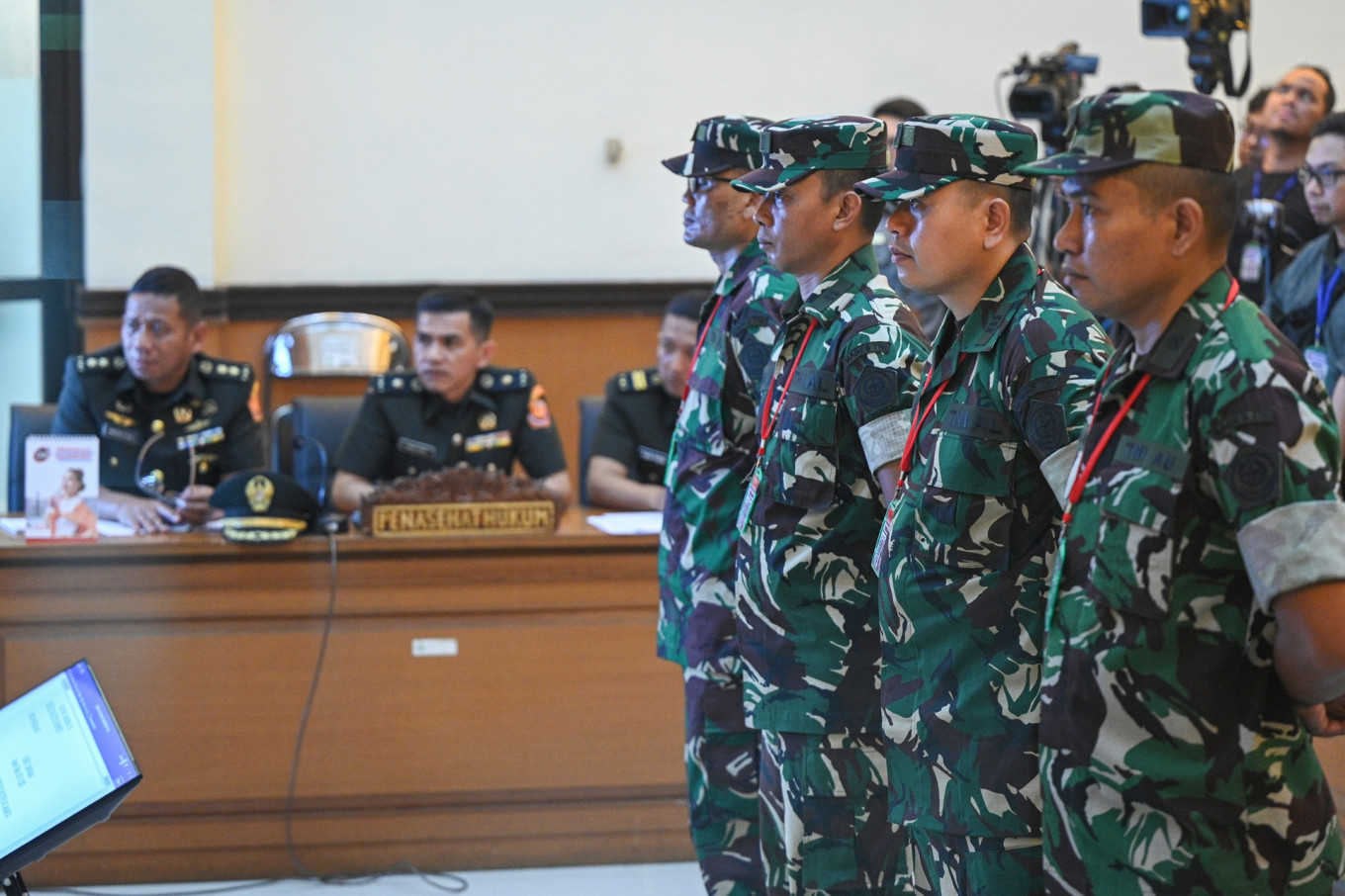 Defendants Second Sgt. Edi Sudarko (from left), First Lt. Budhi Hariyanto Cahyono, Capt. Nandala Dwi Prasetya and First Lt. Sami Lakka attend the indictment hearing against them in the case of acid attack against activist Andrie Yunus at the Jakarta Military Court in East Jakarta on April 29, 2026. (Antara/Fauzan)
T
he term antek asing (foreign agents) has become a favored weapon of President Prabowo Subianto’s administration to discredit critics. It functions less as an argument than as a slogan, one that burnishes nationalist credentials while deflecting responsibility for the country’s problems. Activists, civil society organizations and independent media that persist despite tightening restrictions on free expression, are routinely branded with this label.
But this narrative is beginning to unravel. A recent joint study by Tempo, Kompas, Suara.com, Tribunnews and Drone Emprit does more than challenge the claim, it exposes its contradictions. The investigation found that so-called pro-Russia and pro-China actors actively amplified the antek asing narrative online during last August’s violent riots in Jakarta and other cities.
The study on foreign information manipulation and interference (FIMI) traced many of these social media posts to foreign origins, some even written in non-Indonesian languages, before being rapidly amplified by domestic accounts. If foreign interference is truly the concern, the findings raise an obvious question: Why are domestic critics the primary targets while evidence points elsewhere?
So again: Who are the real “foreign agents”?
Defenders of the government’s rhetoric often cite foreign funding of civil society organizations as proof of hidden agendas. Yet this argument collapses under scrutiny. Many of these groups do receive support from Western governments and philanthropic institutions, but their operations are defined by transparency and accountability. Funding sources are disclosed, programs are audited and activities are conducted openly.
To leap from foreign funding to accusations of subversion or regime change is not just far-fetched, it is politically convenient. It transforms legitimate criticism into suspicion and encourages the public to distrust voices that play an essential role in democracy.

In reality, civil society organizations have long been the pillars of Indonesia’s democratic institutionalization. They helped dismantle the authoritarian legacy of the Soeharto era and shaped the Reform period that followed. One of their own, Abdurrahman “Gus Dur” Wahid, even rose to the presidency during the country’s most fragile democratic transition from 1999 to 2001.