The Jakarta Post
Please Update your browser
Your browser is out of date, and may not be compatible with our website. A list of the most popular web browsers can be found below.
Just click on the icons to get to the download page.


Popular Reads
Top Results
No results found. Please check your search term and try again
Can't find what you're looking for?
View all search results
Popular Reads
Top Results
No results found. Please check your search term and try again
Can't find what you're looking for?
View all search resultsMarket-friendly income boost, refocused spending: The keys to stable Rupiah
Stabilizing the rupiah at Rp 18,000 requires Indonesia to look past trailing GDP growth and actively rebuild market confidence by enforcing strict resource export repatriation, maintaining clean fiscal governance and speaking to global capital with a single, clear technocratic voice.
Change text size
Gift Premium Articles
to Anyone
Share the best of The Jakarta Post with friends, family, or colleagues. As a subscriber, you can gift 3 to 5 articles each month that anyone can read—no subscription needed!
 Set as preferred source
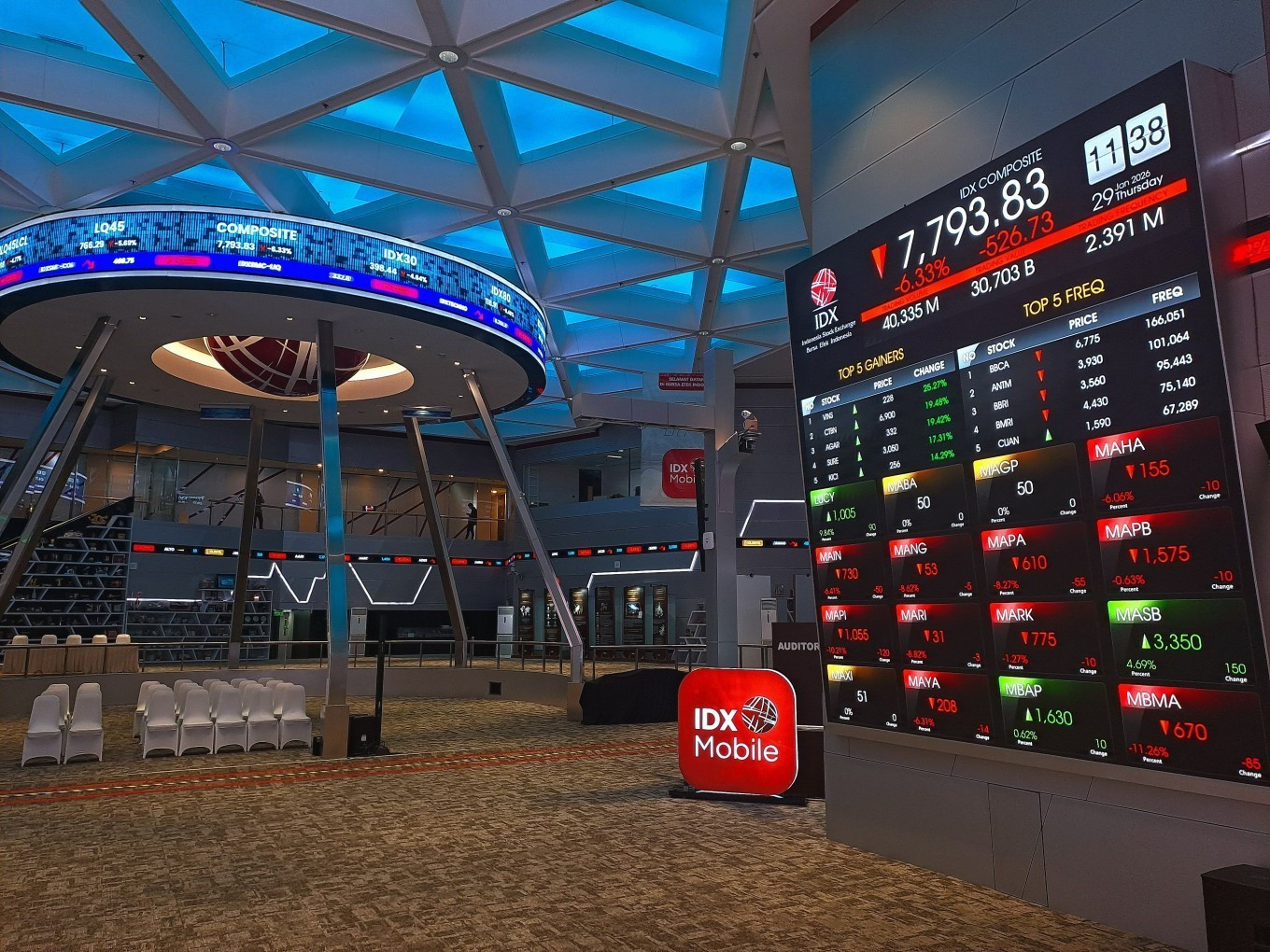 An electronic display board inside the main hall of the Indonesia Stock Exchange (IDX) in South Jakarta shows an overall downward movement across most stocks during the lunch break on Jan. 29, 2026, when the IDX Composite index fell 6.3 percent after MSCI raised concerns about its free float and trading transparency. (TJP/Deni Ghifari)
I
ndonesia is not facing a crisis of economic growth. The nation's economy continues to expand at a healthy clip above 5 percent. Yet, financial markets are sending a starkly different signal: the rupiah has breached Rp 18,000 per United States dollar, while the Indonesia Stock Exchange (IDX) Composite index suffered deep losses alongside persistent foreign capital outflows.
This divergence underscores a critical macroeconomic reality: Markets today are no longer anchored solely in trailing growth figures, but in immediate confidence, capital flows and policy clarity.
At its core, the current market weakness is a foreign exchange liquidity problem. The rupiah remains under pressure not because Indonesia lacks fundamental growth, but because the economy is not generating a sufficient and consistent supply of dollar inflows to offset the rising demand driven by imports, external debt servicing and capital flight.
This dynamic transforms Indonesia’s vital resource sectors, copper, gold, coal and steel, from simple industrial assets into crucial macroeconomic levers that must be managed deliberately to strengthen onshore foreign exchange supply.
Copper, for example, requires a firmer domestic market obligation (DMO) combined with strict repatriation rules to ensure export proceeds are retained within the domestic banking system. Gold, with its dual role as a commodity and a monetary asset, can serve as a stabilizing central buffer if similar repatriation obligations are strictly applied.
Coal must remain a reliable export engine, but its management must be shielded from unpredictable policy shifts that risk driving away major sovereign buyers like China. Meanwhile, downstream steel policy must carefully avoid excessive protectionism that could trigger trade retaliation and inadvertently shrink export opportunities.

In coordinating all of these moving parts, state asset fund Danantara must play a clear, stabilizing role, ensuring cross-sectoral alignment, pricing discipline and policy consistency rather than adding to institutional fragmentation.