The Jakarta Post
Please Update your browser
Your browser is out of date, and may not be compatible with our website. A list of the most popular web browsers can be found below.
Just click on the icons to get to the download page.


Popular Reads
Top Results
No results found. Please check your search term and try again
Can't find what you're looking for?
View all search results
Popular Reads
Top Results
No results found. Please check your search term and try again
Can't find what you're looking for?
View all search resultsSilencing human rights defenders: Southeast Asia’s accountability crisis
Across Southeast Asia, human rights defenders face a tightening noose of physical violence and high-tech digital repression, threatening the very future of the rule of law and civic space in the region.
Change text size
Gift Premium Articles
to Anyone
Share the best of The Jakarta Post with friends, family, or colleagues. As a subscriber, you can gift 3 to 5 articles each month that anyone can read—no subscription needed!
 Set as preferred source
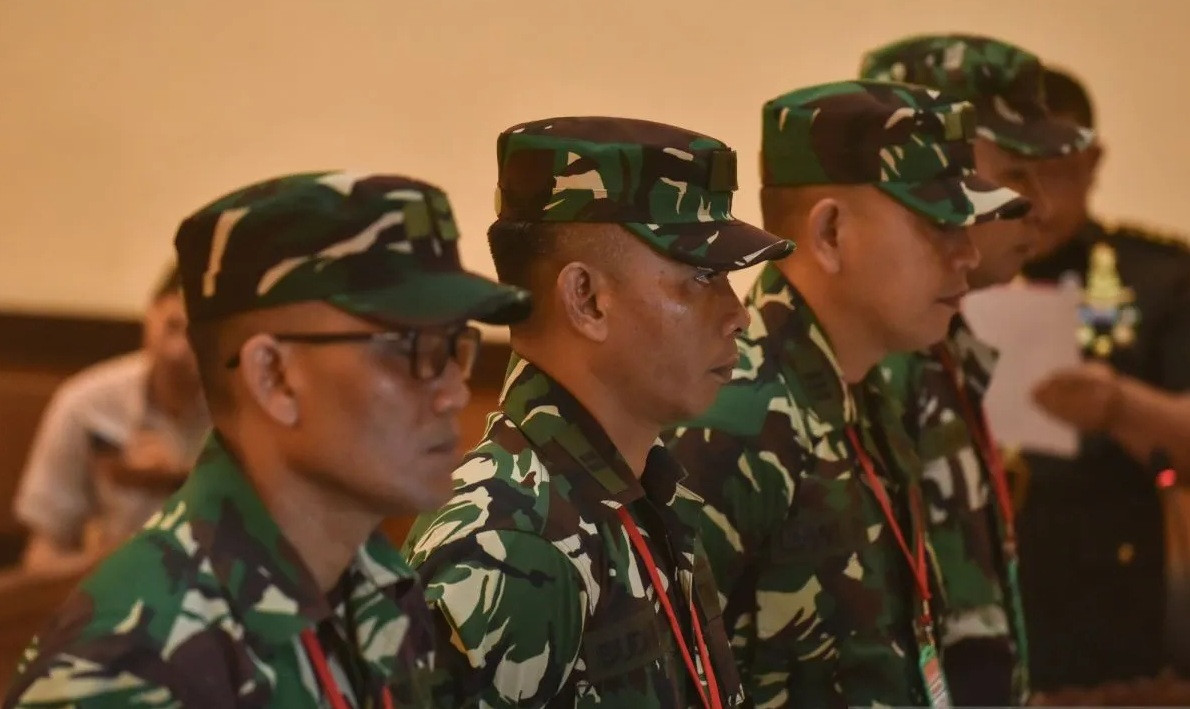 Officers from the Strategic Intelligence Agency (BAIS) of the Indonesian Military (from left) Second Sgt. Edi Sudarko, First Lt. Budhi Hariyanto Cahyono, Capt. Nandala Dwi Prasetya and First Lt. Sami Lakka attend a verdict hearing at the Jakarta Military Court II-08 in East Jakarta on June 8, 2026, when they were convicted for perpetrating an acid attack on human rights activist Andrie Yunus and sentenced to prison terms between 18 months and three years. (Antara/Fakhri Hermansyah)
H
uman rights defenders in Southeast Asia are paying an increasingly high price for speaking truth to power. In Indonesia, Andrie Yunus, an activist with the Commission for the Disappeared and Victims of Violence (Kontras), survived a brutal acid attack that left him with severe burns and permanent damage to one eye.
On June 10, a Jakarta military court sentenced four members of the Indonesian Military’s Strategic Intelligence Agency (BAIS) to prison terms ranging from 18 months to three years for carrying out the March 16 assault. Prosecutors stated that the attack was directly motivated by Yunus’ public criticism of the military’s expanding role in civilian affairs.
While the convictions marked a rare institutional acknowledgment of wrongdoing, they did little to assuage broader systemic concerns. Rights groups criticized the sentences as overly lenient, questioned why the case was tried in a restrictive military court rather than a transparent civilian one and demanded further investigations into the senior officials who might have ordered or enabled the attack.
The case underscores a fundamental dilemma: Can genuine accountability ever be achieved when those accused of abuses are deeply linked to the very institutions responsible for investigating and prosecuting them?
Across the region, human rights defenders face severe reprisals for exposing abuses of power, challenging official narratives and advocating for vulnerable communities.
In Thailand, Roning Dolah was shot dead in 2024 after years of assisting victims who alleged torture and ill-treatment by security forces in the country’s deep south.

In the Philippines, human rights worker Zara Alvarez was murdered after years of being publicly “red-tagged” as an alleged communist sympathizer; a dangerous state practice that rights groups have long warned serves to legitimize threats and violence against activists.