The Jakarta Post
Please Update your browser
Your browser is out of date, and may not be compatible with our website. A list of the most popular web browsers can be found below.
Just click on the icons to get to the download page.


Popular Reads
Top Results
No results found. Please check your search term and try again
Can't find what you're looking for?
View all search results
Popular Reads
Top Results
No results found. Please check your search term and try again
Can't find what you're looking for?
View all search resultsA new framework for climate displacement
While some people remain to preserve cultural traditions and livelihoods despite mounting risks, others feel that they have no choice but to leave their homes.
Change text size
Gift Premium Articles
to Anyone
Share the best of The Jakarta Post with friends, family, or colleagues. As a subscriber, you can gift 3 to 5 articles each month that anyone can read—no subscription needed!
 Set as preferred source
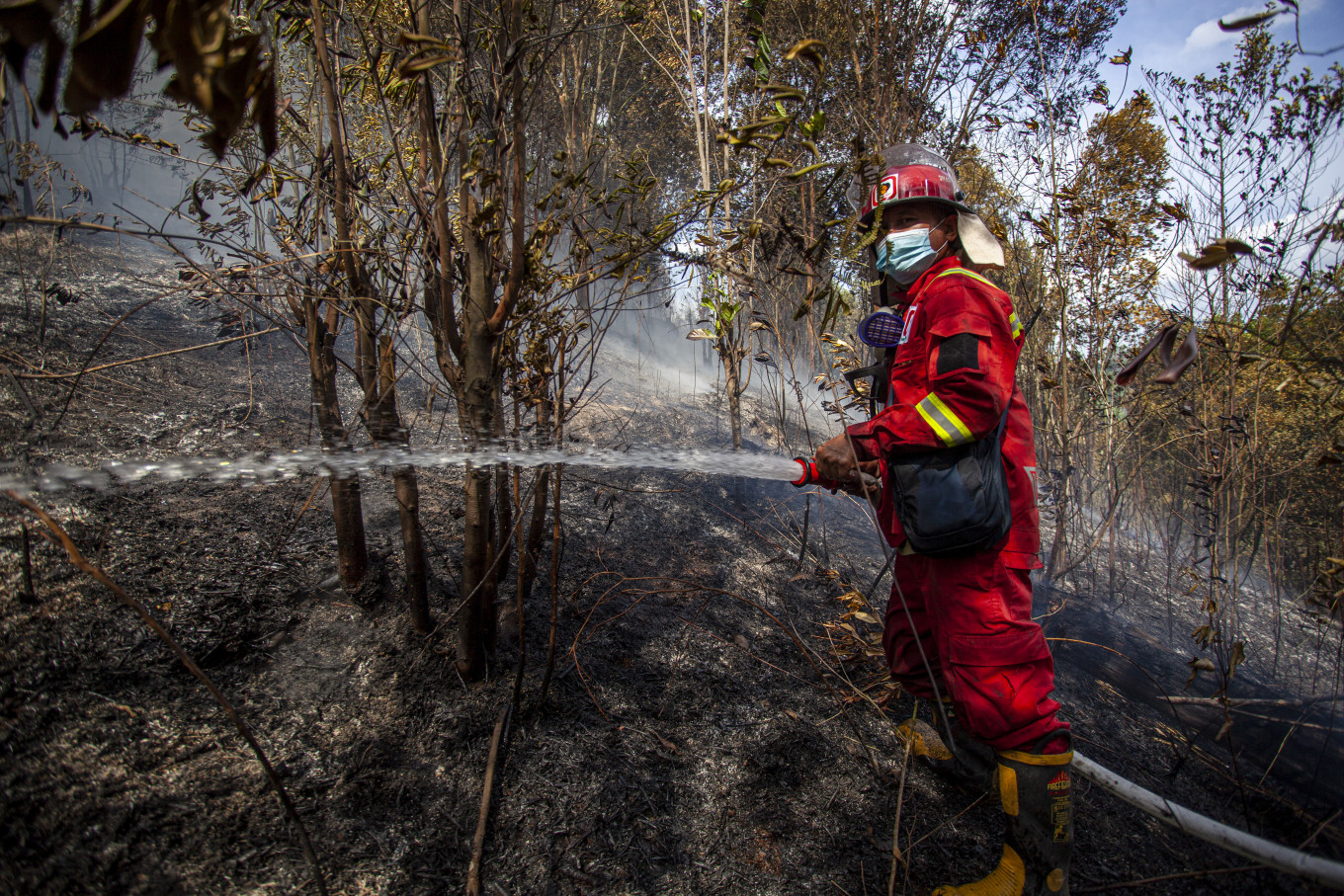 A fireman of the Environment and Forestry Ministry’s Manggala Agni fire brigade works to extinguish a forest fire on Feb. 9, 2026, in the protected forest area of Taman Lestari in Batam, Riau Islands. (Antara/Teguh prihatna)
L
ast year, at the inaugural Berlin Climate Mobility Forum, leaders from vulnerable countries across Africa, South Asia, the Pacific, the Caribbean and beyond highlighted an urgent yet often overlooked reality: Climate change threatens not only the planet, but also the people who call it home.
As the effects of climate change intensify, frontline communities face increasingly difficult choices. While some people remain to preserve cultural traditions and livelihoods despite mounting risks, others feel that they have no choice but to leave their homes. In some cases, entire communities have been displaced.
Of course, individuals alone cannot solve this issue. It was widely agreed at the forum that governments must direct resources where they are needed most and support communities in adaptation planning. But a year later, as leaders prepare to meet for the second Berlin Climate Mobility Forum on June 18–19, global and national policy frameworks remain inadequate and fragmented.
When sudden-onset disasters such as storms, floods and wildfires displace people, countries’ emergency response is responsible for the delivery of aid and assistance, with varying levels of success. Beyond the emergency phase, however, people uprooted by disasters may find it impossible to rebuild or return, requiring long-term solutions. While most climate-displaced persons remain within their countries, those who cross borders face an added challenge: they rarely meet the definition of refugees under international law, falling into a legal gray area that makes it difficult to protect them from threats.
The situation is even more complex when climate change gradually erodes living conditions. While those compelled to move do so out of necessity rather than choice, formal pathways offering assistance to rural-urban migrants or legal status for those settling abroad remain scarce. And those remaining behind in severely affected areas may slide deeper into poverty, becoming increasingly vulnerable. Climate negotiations, migration compacts and disaster-risk-reduction frameworks are all part of the solution, but none provides a comprehensive response. These efforts are siloed and reactive, resulting in communities that are underprepared for climate-related risks.
A new approach is desperately needed. A crucial first step is to find a common language for this complex, deeply human reality. The concept of climate mobility accurately encompasses the different types of movement, forced displacement, migration and planned relocation, as well as the risk of immobility, motivated by the adverse effects of sudden and slow-onset climate disasters, which occur within and across borders.

Next, policymakers must devise an appropriate course of action. The Global Climate Mobility Principles, which will be presented for endorsement at this month’s forum, provide precisely that.