The Jakarta Post
Please Update your browser
Your browser is out of date, and may not be compatible with our website. A list of the most popular web browsers can be found below.
Just click on the icons to get to the download page.


Popular Reads
Top Results
No results found. Please check your search term and try again
Can't find what you're looking for?
View all search results
Popular Reads
Top Results
No results found. Please check your search term and try again
Can't find what you're looking for?
View all search resultsParks for all
Jakarta’s crowded new parks aren't just a sign of success, they are a stark warning that access to green space must be treated as a basic urban right, not a luxury.
Change text size
Gift Premium Articles
to Anyone
Share the best of The Jakarta Post with friends, family, or colleagues. As a subscriber, you can gift 3 to 5 articles each month that anyone can read—no subscription needed!
 Set as preferred source
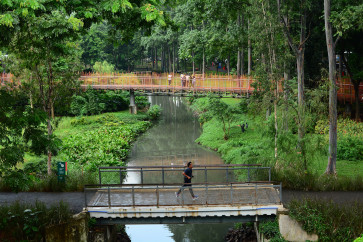
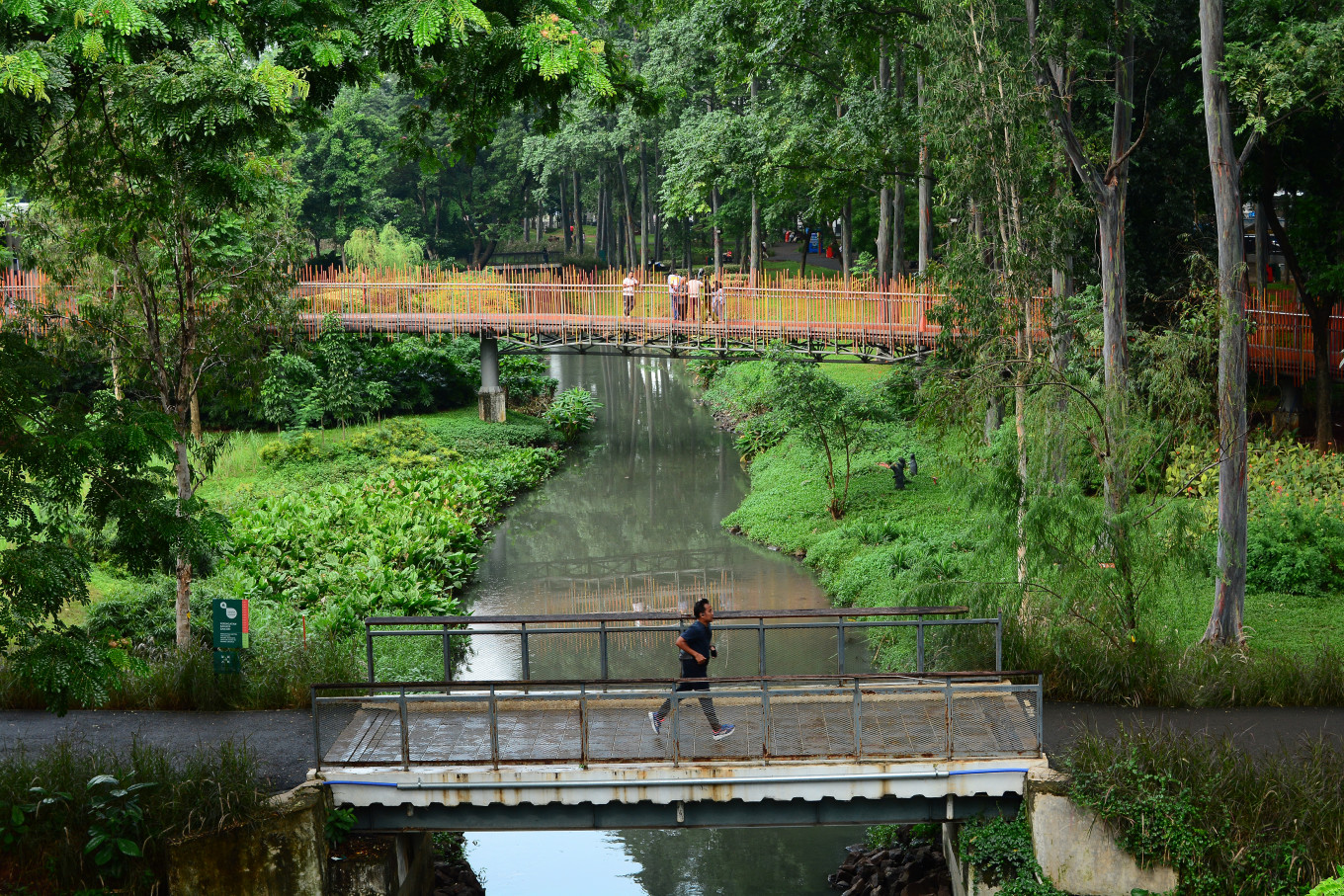 Healthy lifestyle: A man runs in Tebet Eco Park on Dec. 30, 2025, in South Jakarta. Tebet Eco Park, which is open to the public free of charge, is a popular destination for residents seeking to spend their day off with family or to exercise. (The Jakarta Post/Iqro Rinaldi)
E
very time Jakarta opens a new public park, a predictable pattern unfolds. Within days, families flock to the space: children fill the playground, joggers crowd the paths, and residents settle under trees. Yet, far from reflecting the novelty of a new attraction, these crowds expose a chronic, systemic shortage of accessible green space across the capital.
The overwhelming popularity of these parks serves as the clearest public opinion survey city planners could ask for. It demonstrates a profound demand for public areas where residents can breathe cleaner air, exercise, socialize and simply exist without the pressure to spend money. Access to safe, well-maintained green space should be regarded as a fundamental urban right.
Empirical studies consistently link public parks to improved physical and mental health, stronger social cohesion, and heightened resilience to climate change. In a megacity increasingly threatened by extreme heat, severe pollution and recurrent flooding, trees and open spaces are just as critical to urban survival as highways and bridges.
Yet, Jakarta remains one of Southeast Asia's least green megacities. Green open space accounts for barely 5 to 6 percent of the capital’s total area, falling drastically short of the 30 percent target mandated by the country's 2007 Spatial Planning Law. Meeting this legal obligation would require securing nearly 200 square kilometers of additional green space, an immense challenge in a metropolis where roughly 90 percent of the land is already developed.
However, structural density must not become an excuse for institutional inaction. Cities worldwide have demonstrated that expanding urban greenery no longer depends solely on acquiring vast, vacant tracts of land. Modern urban planning increasingly focuses on reclaiming underutilized spaces and integrating nature directly into existing infrastructure. Jakarta can achieve the same transformation, provided it musters the necessary political will.
Idle roadside lots, neglected alleyways, abandoned parcels beneath flyovers, canal embankments and unused government property can all be converted into "micro-parks" to serve surrounding neighborhoods. The same principle applies vertically: canal walls, office towers, parking structures and pedestrian overpasses can accommodate green walls and vertical gardens. While these initiatives cannot replace mature urban forests, they can measurably lower local temperatures, improve air quality, and soften Jakarta's stark concrete landscape.

Equally critical is accessibility. Parks should not function as isolated destinations requiring long car trips. Instead, they must connect seamlessly to Jakarta's expanding MRT, LRT, commuter rail and bus networks, while remaining safe to reach on foot or by bicycle. Nature should be a staple of everyday life rather than an occasional weekend escape. Currently, proper parks equipped with modern facilities remain disproportionately concentrated in the city center, leaving suburban populations underserved.