The Jakarta Post
Please Update your browser
Your browser is out of date, and may not be compatible with our website. A list of the most popular web browsers can be found below.
Just click on the icons to get to the download page.


Popular Reads
Top Results
No results found. Please check your search term and try again
Can't find what you're looking for?
View all search results
Popular Reads
Top Results
No results found. Please check your search term and try again
Can't find what you're looking for?
View all search resultsSaving Tapanuli orangutan a test for Indonesia’s ESG claims
Protecting the world’s rarest great ape is not a rejection of development. It is a fundamental test of whether Indonesia can pursue economic growth without crossing irreversible ecological limits.
Change text size
Gift Premium Articles
to Anyone
Share the best of The Jakarta Post with friends, family, or colleagues. As a subscriber, you can gift 3 to 5 articles each month that anyone can read—no subscription needed!
 Set as preferred source
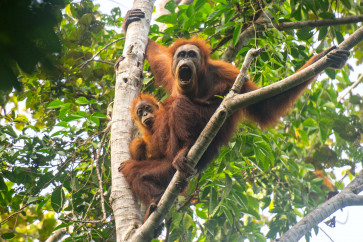
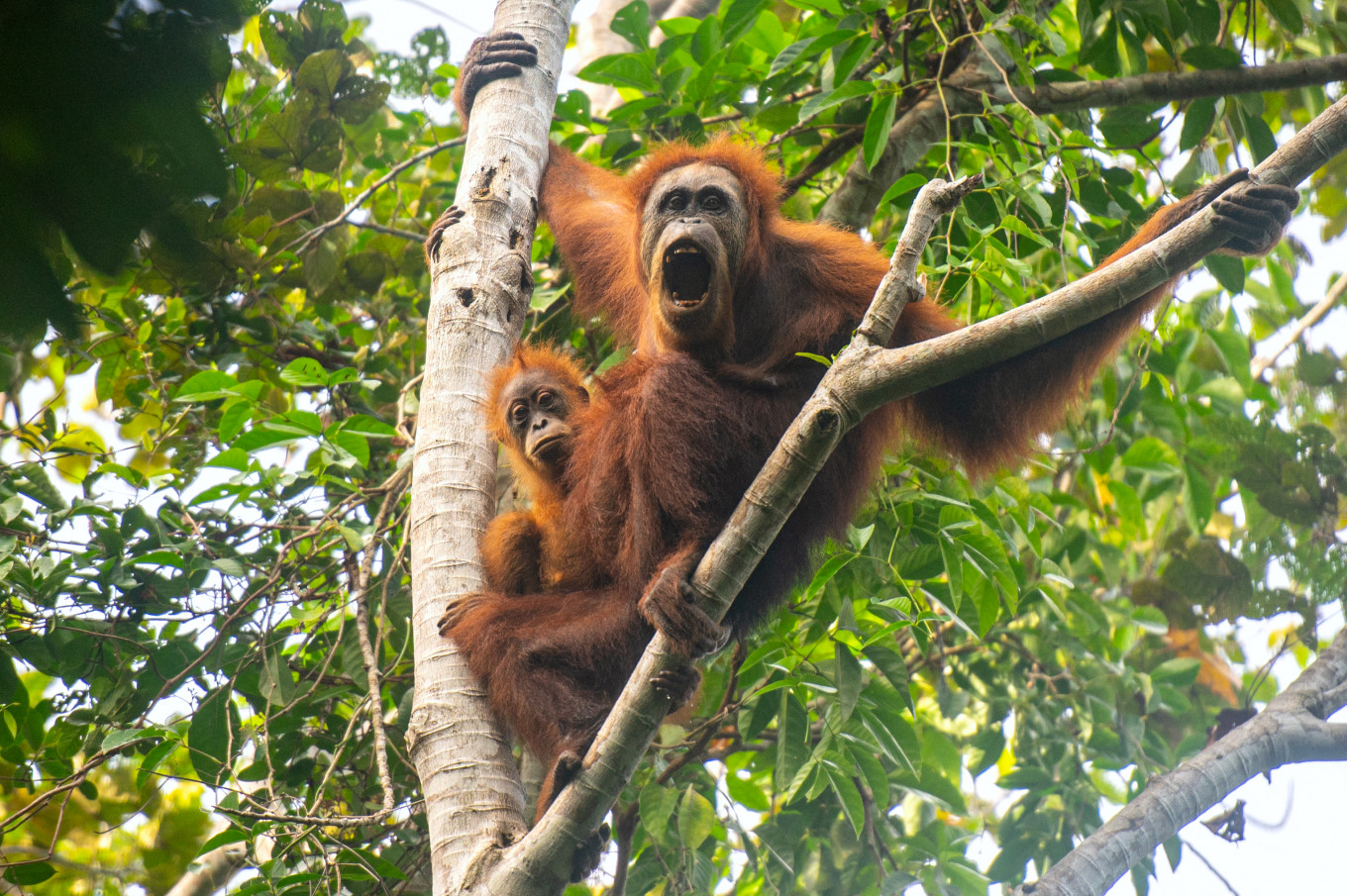 An adult and child Tapanuli orangutan hang on a tree in the Batang Toru forest in North Sumatra on June 10, 2026. Climate change-fuelled landslides have wiped out nearly one in 10 remaining members of the world's rarest great ape species on Sumatra island, scientists said on June 10. (AFP/Handout/Orangutan Information Centre)
I
n the Batang Toru ecosystem of North Sumatra, the fate of the critically endangered Tapanuli orangutan has transcended wildlife preservation. It has become a crucial barometer for Indonesia’s development governance, its commitment to environmental, social, and governance (ESG) principles, and the maturity of its investment climate.
The central question is no longer merely saving a rare species, but demonstrating that the nation can grow without eroding the ecological foundations necessary for long-term prosperity.
The Batang Toru landscape is being squeezed by compounding pressures from energy and mining infrastructure, road expansion, smallholder agriculture, small-scale logging, ambiguous land tenure and intensifying climate disasters. Framing this issue as a binary clash between conservation and development misinterprets the crisis. The deeper problem is that institutional landscape governance has failed to keep pace with these converging forces.
A study published in Biological Conservation provides a sobering assessment of this decline. Between 2000 and 2023, Batang Toru lost 7,659 hectares of forest cover. After 2012, the annual rate of deforestation escalated sharply from approximately 177 ha to about 502 ha per year. Utilizing a counterfactual approach, the study estimated that the landscape lost 3,472 ha more forest than would have occurred without the post-2012 initiation of major infrastructure projects.
However, the findings also complicate public discourse. Deforestation in Batang Toru has not been driven exclusively by large-scale commercial projects; smallholder agriculture and small-scale logging accounted for roughly 70 percent of the total forest loss. This data must not be used by policymakers to minimize the risks posed by major industrial developments. Conversely, criticism of large-scale infrastructure must not obscure the quieter, cumulative pressures exerted by local farming. Both realities demand regulatory intervention.
This intersection is where Indonesia’s ESG agenda faces its truest test. A credible ESG framework must move beyond superficial sustainability reports and ceremonial tree planting. It must identify and mitigate the specific ecological risks that matter most, even when they defy simple metrics. For the Tapanuli orangutan, the primary concern is not merely the aggregate number of hectares cleared, but precisely where that loss occurs and which ecological functions are destroyed.

In an orangutan habitat, forest value is non-fungible. Losing a narrow corridor that connects two subpopulations is far more catastrophic than losing a larger tract of land on the periphery of the ecosystem.