The Jakarta Post
Please Update your browser
Your browser is out of date, and may not be compatible with our website. A list of the most popular web browsers can be found below.
Just click on the icons to get to the download page.


Popular Reads
Top Results
No results found. Please check your search term and try again
Can't find what you're looking for?
View all search results
Popular Reads
Top Results
No results found. Please check your search term and try again
Can't find what you're looking for?
View all search resultsThe next UN chief must rebuild, reconcile and heal
As the United Nations prepares to choose its next leader, the selection must not be treated as a routine bureaucratic appointment. For Indonesia and the broader Global South, the stakes demand a courageous diplomat who will transform the office into a shield for the many, rather than a tool of convenience for the powerful.
Change text size
Gift Premium Articles
to Anyone
Share the best of The Jakarta Post with friends, family, or colleagues. As a subscriber, you can gift 3 to 5 articles each month that anyone can read—no subscription needed!
 Set as preferred source
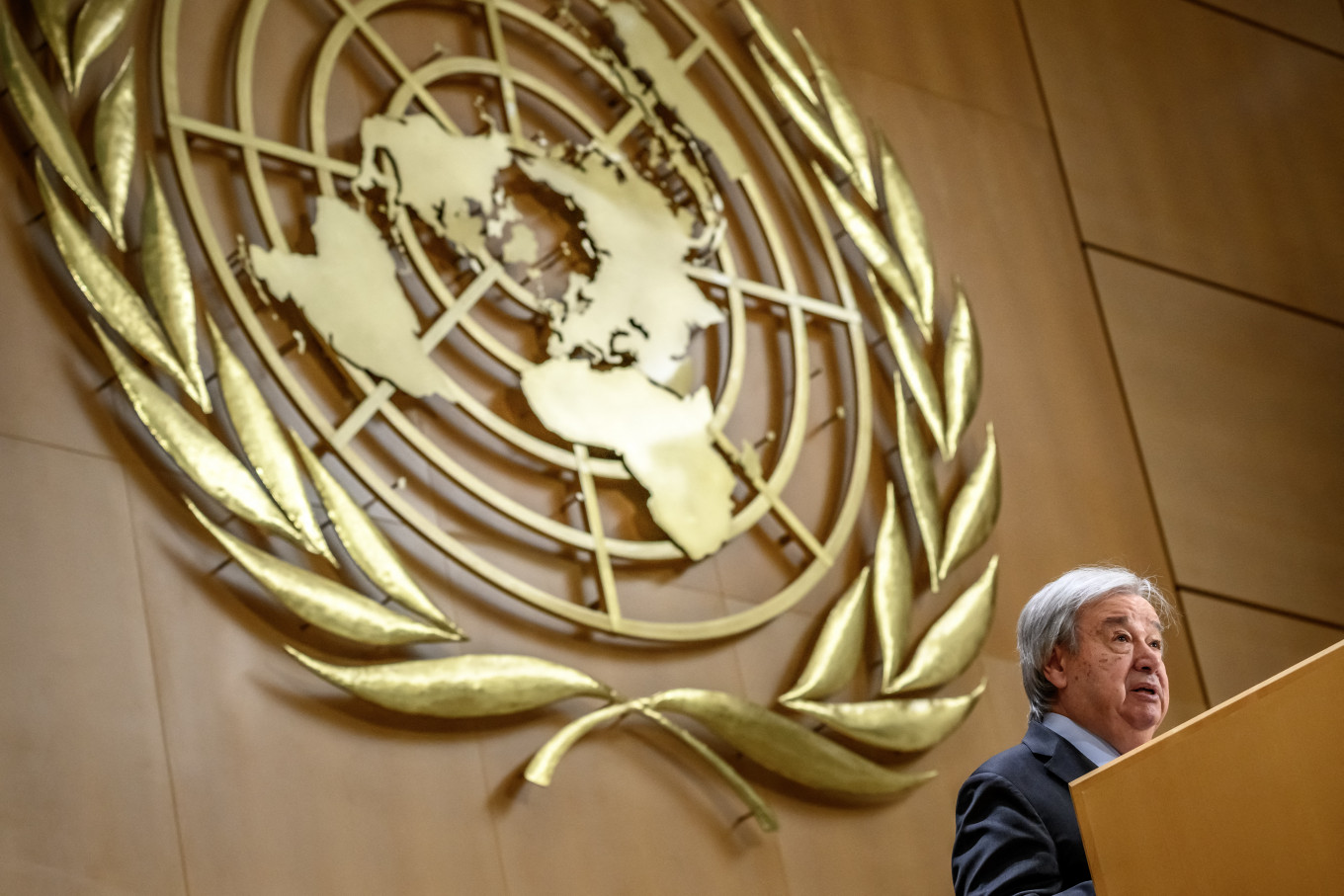 Global message: United Nations Secretary-General António Guterres addresses the audience on Feb. 23 at the opening of the 61st session of the UN Human Rights Council at the UN office in Geneva. (AFP/Fabrice Coffrini)
O
n Jan. 1, 2027, a new United Nations secretary-general will take office. The UN Charter describes the role as the organization’s “chief administrative officer”, but that definition is far too narrow for the fractured world the next leader will inherit. Today, the office demands a rare combination of diplomat, mediator, manager, advocate and guardian of the Charter.
This succession is not a routine personnel change. It is a critical test of whether the UN can still serve peace, development and human rights in an increasingly divided world.
The choice comes at a dangerous moment. Geopolitical rivalries are deepening, wars and humanitarian crises strain collective security and international law is too often invoked selectively. Unilateral sanctions, coercive measures and military actions increasingly bypass broad multilateral consent. Concurrently, climate disruption, debt distress, food insecurity and technological inequality are widening the gap between global promises and daily realities.
The UN is frequently criticized for failing to act, but many of its failures reflect the unwillingness of powerful states to accept common rules when those rules constrain their own choices. The next secretary-general must therefore be more than an administrator of mandates; he or she must defend the Charter firmly while keeping diplomacy from degenerating into confrontation for its own sake.
This leadership transition also occurs alongside severe financial strain. The UN ended 2025 with a regular-budget cash deficit of nearly US$400 million, while its 2026 budget reflected cuts of roughly 15 percent in resources and nearly 19 percent in staffing. Institutional reform will take place under intense pressure. Without clear, principled leadership, budget cuts can easily be disguised as "efficiencies", even as programs serving the most vulnerable are gutted.
For Indonesia, this is not an abstract bureaucratic contest. The Preamble to the 1945 Constitution commits the country to contributing to a world order based on freedom, perpetual peace, and social justice. Indonesia’s bebas aktif (independent and active) foreign policy depends on a robust multilateral system that protects strategic autonomy rather than forcing nations into rival blocs.

Indonesia has a direct stake in the capability of the next secretary-general. Its national interests in peace, maritime stability, climate resilience, food security, development finance and technology cannot be secured through unilateral action alone. The same is true for much of the Global South. The UN remains one of the few forums where legal equality can create political space for developing nations, and where middle powers can help shape rules that might otherwise be dictated solely by the strongest states.