The Jakarta Post
Please Update your browser
Your browser is out of date, and may not be compatible with our website. A list of the most popular web browsers can be found below.
Just click on the icons to get to the download page.


Popular Reads
Top Results
No results found. Please check your search term and try again
Can't find what you're looking for?
View all search results
Popular Reads
Top Results
No results found. Please check your search term and try again
Can't find what you're looking for?
View all search resultsBGN graft case shows police accountability reform cannot wait
The shocking graft scandal within the National Nutrition Agency is a stark warning that good intentions cannot survive without robust oversight. If the president’s flagship welfare program can be so easily compromised, Indonesia’s heavily funded, opaque National Police force cannot afford to wait any longer for deep financial and structural reform.
Change text size
Gift Premium Articles
to Anyone
Share the best of The Jakarta Post with friends, family, or colleagues. As a subscriber, you can gift 3 to 5 articles each month that anyone can read—no subscription needed!
 Set as preferred source
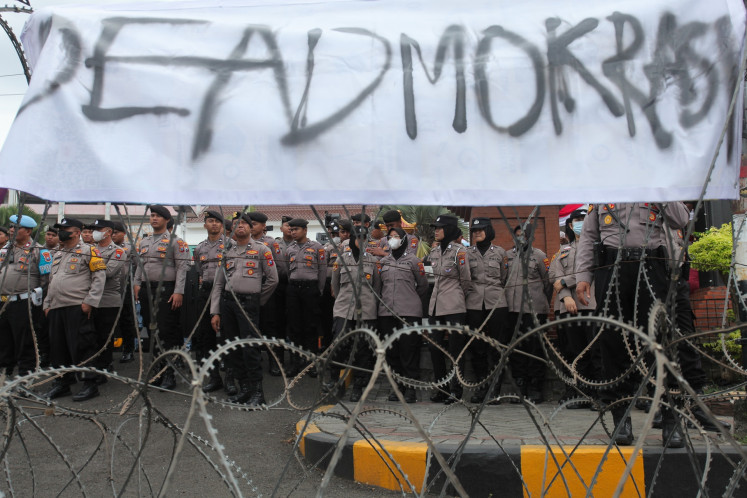
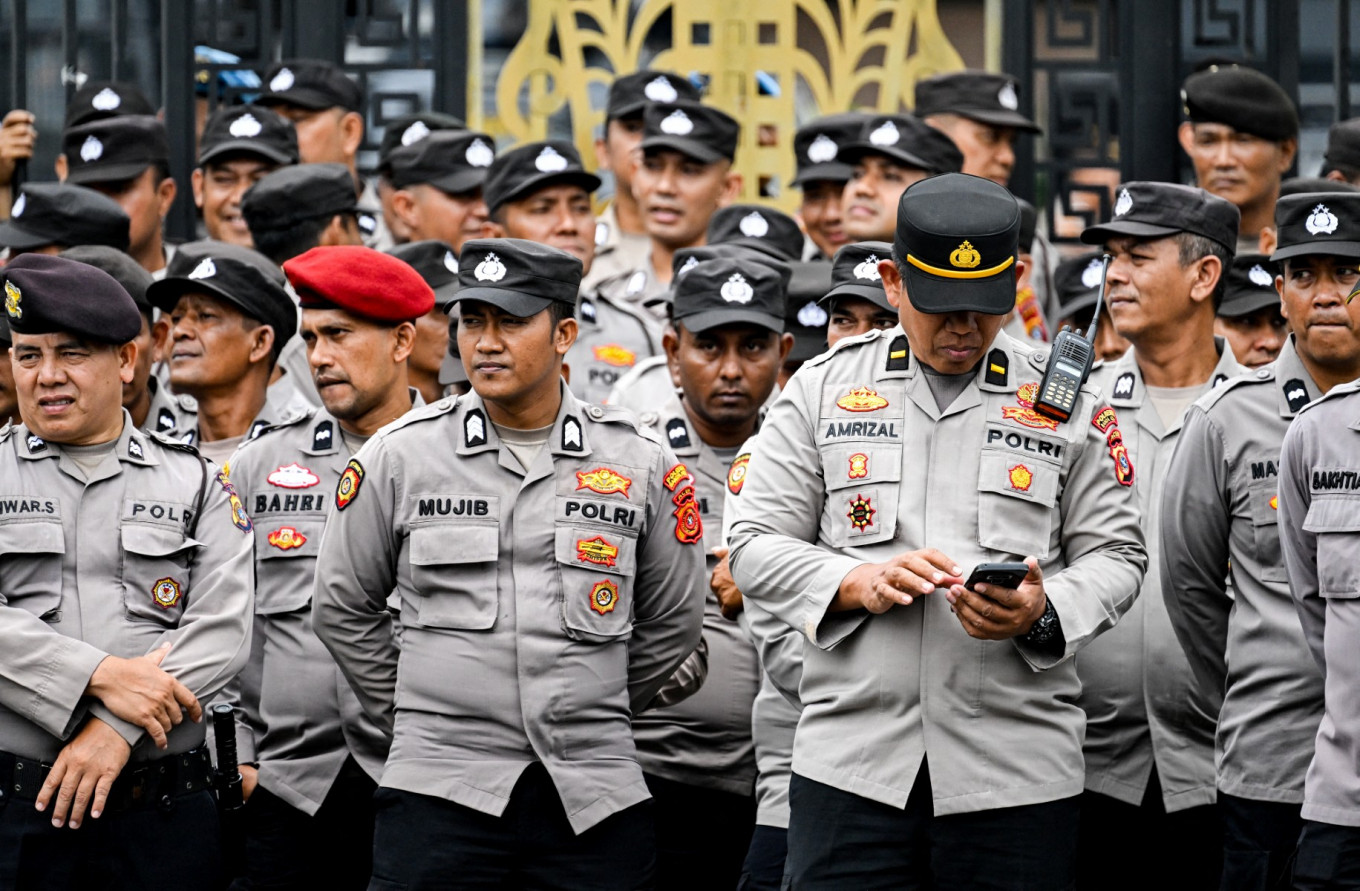 Police officers stand guard on Sept. 1, 2025, in front of the Aceh Provincial Legislative Council (DPRA) building in Banda Aceh, Aceh, during a protest by students demanding police reform and the dissolution of the House of Representatives. Thousands rallied across Indonesia on Sept. 1, as the military was deployed in Jakarta after six people were killed in nationwide protests sparked by anger over lavish perks for lawmakers. (AFP/Chaideer Mahyuddin)
E
arly in June, the Attorney General's Office (AGO) named three former leaders of the National Nutrition Agency (BGN) as suspects in a graft case involving inflated procurement contracts for the free nutritious meal program.
The alleged scheme orchestrated by former BGN head Dadan Hindayana and his two deputies, Lodewyk Pusung and Sony Sonjaya, is staggering. It involved the procurement of 21,801 electric motorcycles valued at over Rp 1 trillion (US$56 million), alongside 32,000 pairs of shoes, 31,994 tablets and 5,400 televisions—much of it entirely unnecessary for agency operations.
State prosecutors allege the suspects pressured commitment-making officers to alter terms of reference, bypassing actual operational needs. Even more brazenly, they reportedly appointed foundations closely tied to them to manage MBG kitchens, reaping billions of rupiah in daily incentives.
President Prabowo Subianto acted with unusual speed. Within 48 hours, he dismissed the three officials and appointed new leadership. "I don't want people's money robbed," he declared.
However, the BGN scandal is not an isolated incident; it is a symptom of a deeper, systemic disease plaguing Indonesia's public institutions for decades. No institution illustrates this problem more vividly than the National Police.
Consider the numbers. Polri’s 2026 budget reached approximately Rp 145.5 trillion amid a government-wide efficiency drive, placing it among the top three state budget users. Indonesia Corruption Watch (ICW) has repeatedly flagged the institution's opacity. "The police hold an enormous amount of state money," ICW researcher Almas Ghaliya Putri noted, "yet the public sees how this institution remains closed off regarding its budget management."

The problem runs deeper than financial statements. A January 2026 opinion piece in The Jakarta Post observed that despite the sweeping reforms of 1998, "the National Police is still fraught with a culture of violence, uneven professionalism and a lack of accountability." The image of a professional force "remains a pipe dream, far removed from the gritty reality on the ground." A February editorial went further, warning that with "a massive budget" and "wide-ranging authority but no external accountability, the police have morphed into a superbody."