TheJakartaPost
Please Update your browser
Your browser is out of date, and may not be compatible with our website. A list of the most popular web browsers can be found below.
Just click on the icons to get to the download page.


Popular Reads
Top Results
No results found. Please check your search term and try again
Can't find what you're looking for?
View all search results
Popular Reads
Top Results
No results found. Please check your search term and try again
Can't find what you're looking for?
View all search resultsIndonesia-India defense cooperation needs institutionalization of trust
To anchor Indo-Pacific stability, Indonesia and India must move past historical nostalgia and build a concrete defense partnership that transcends changing political leadership.
Change text size
Gift Premium Articles
to Anyone
Share the best of The Jakarta Post with friends, family, or colleagues. As a subscriber, you can gift 3 to 5 articles each month that anyone can read—no subscription needed!
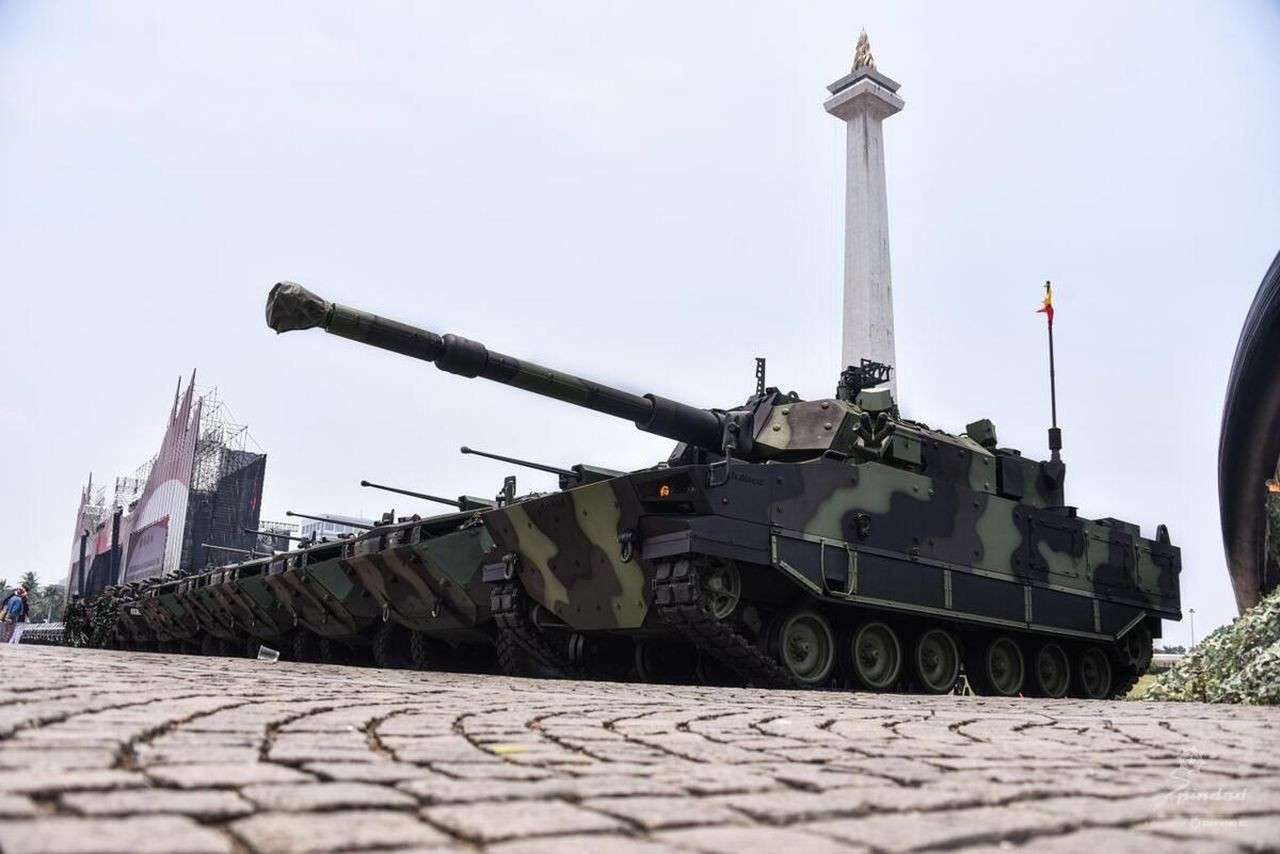 A Harimau medium tank made by state-owned defense manufacturer PT Pindad (right) is parked next to Pandur II 8x8 infantry fighting vehicles at the National Monument (Monas) in Central Jakarta on Oct. 2, 2024. (kompas.com/PT Pindad)
W
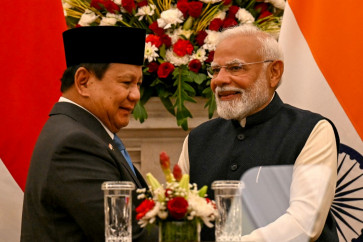
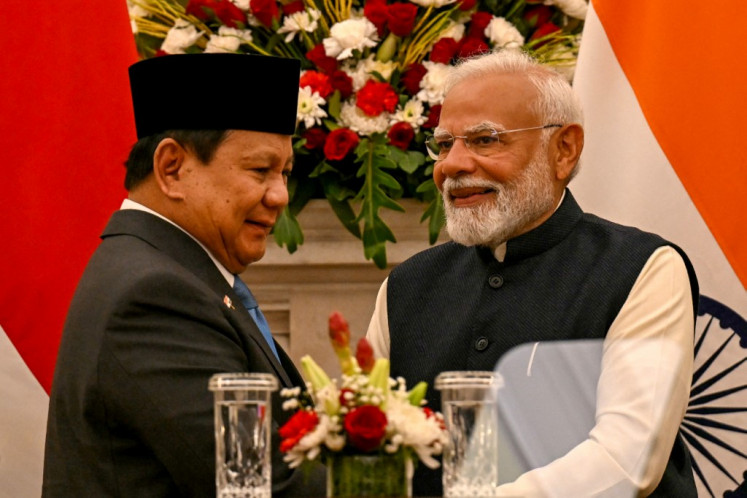
hen Indian Prime Minister Narendra Modi meets President Prabowo Subianto in Jakarta, defense and maritime cooperation will undoubtedly top the agenda. Yet, beyond the symbolism of high-level summits, both nations urgently require a clear, long-term strategy to build a sustainable partnership, one capable of enduring successive changes in political leadership.
The foundations of Indonesia–India relations are rooted in shared anti-colonial struggles and early diplomatic solidarity. In 1946, Indonesia launched its "Rice Diplomacy," dispatching 500,000 tonnes of rice to alleviate famine in India. A year later, during the 1947 Asian Relations Conference, India's first prime minister, Jawaharlal Nehru, openly opposed Dutch military aggression against Indonesia.
By the 1950s, bilateral ties had expanded into the security realm, culminating in their first joint naval exercise in 1960. However, this early momentum stalled as the Cold War intensified and the two nations navigated divergent geopolitical paths.
The post-Cold War era reopened avenues for bilateral cooperation and deepened India's engagement with ASEAN. India joined the ASEAN Regional Forum in 1996 and has included Indonesia and other member states in its MILAN naval exercises since 1997. By 2023, New Delhi had established varying levels of defense cooperation with nine ASEAN states.
A poignant example of this camaraderie occurred during the 2021 COVID-19 pandemic, when India offered critical assistance in the rescue operation for the missing Indonesian submarine Nanggala, a gesture that, unfortunately, received little public attention in Indonesia.
Bilateral defense ties reached a new milestone with the 2001 Defense Cooperation Framework Agreement, followed by a formal Defense Cooperation Agreement (DCA) in 2018. In the years between, the relationship was sustained by high-level visits, strategic dialogues and joint military exercises.

However, defense industrial cooperation remains virtually non-existent. The only notable business-to-business initiative to date has been a plan to co-produce water cannon vehicles between Indonesia's state arms producer PT Pindad and India's Tata Motors. This limited progress reflects a persistent, mutual unfamiliarity with each other’s strategic intentions and industrial capabilities.