The Jakarta Post
Please Update your browser
Your browser is out of date, and may not be compatible with our website. A list of the most popular web browsers can be found below.
Just click on the icons to get to the download page.


Popular Reads
Top Results
No results found. Please check your search term and try again
Can't find what you're looking for?
View all search results
Popular Reads
Top Results
No results found. Please check your search term and try again
Can't find what you're looking for?
View all search resultsInvesting in Indonesia: The need for regulatory reliability and predictability
To capture global markets, Indonesia must pivot from raw smelting to predictable, long-term manufacturing policies that offer Western investors a stable alternative to China.
Change text size
Gift Premium Articles
to Anyone
Share the best of The Jakarta Post with friends, family, or colleagues. As a subscriber, you can gift 3 to 5 articles each month that anyone can read—no subscription needed!
 Set as preferred source
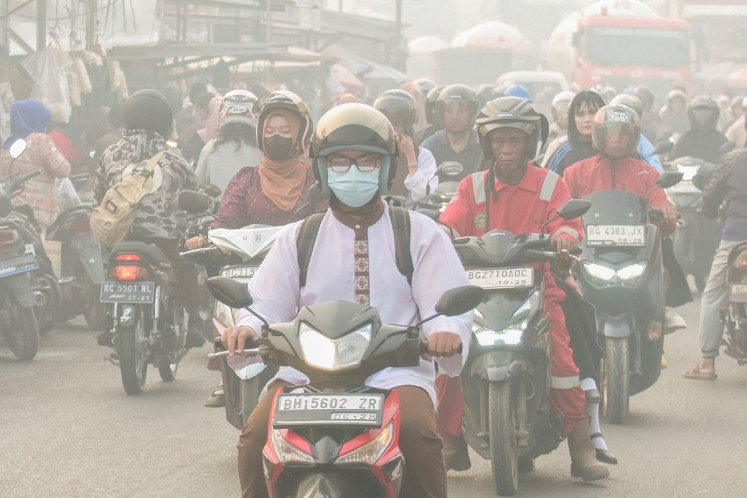
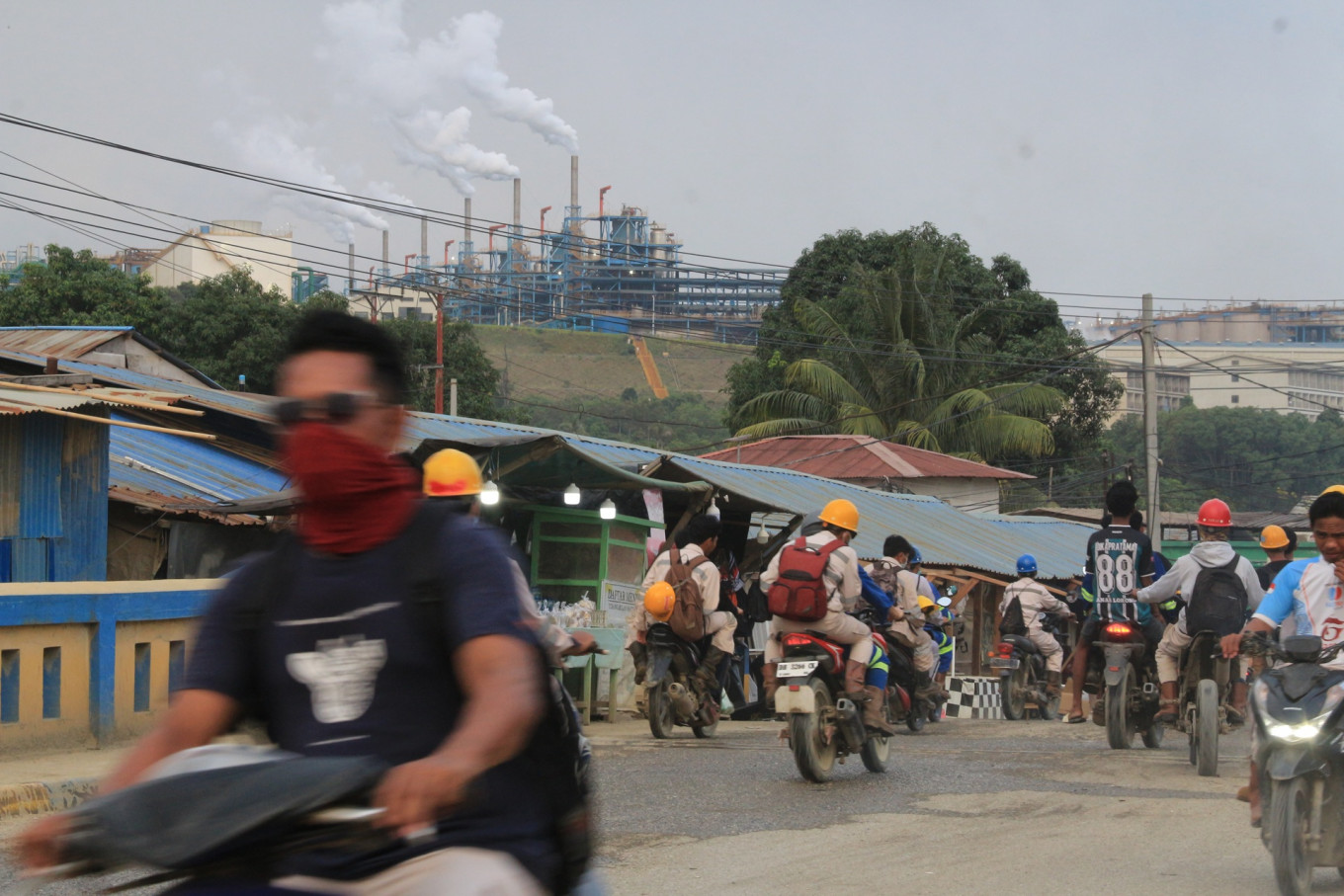 Mask up: Workers of the nickel plant operated by PT Indonesia Weda Bay Industrial Park (IWIP) ride on their motorcycles in the Central Weda district, Central Halmahera regency, North Maluku on Feb. 19, 2025. The industrial park is located around 100 meters from residential areas in the district. (Courtesy of Supriyadi Sudirman/-)
R
ecent policy shifts in Indonesia, most notably the decision to slash mining quotas and centralize control over commodity exports, have alarmed international investors. This anxiety is already reverberating through the markets, reflected in a plunging stock exchange and the rupiah hitting historic lows.
As Jakarta attempts to brand the nation as a global hub for critical mineral industries, these disruptive moves raise a pivotal question: Can Indonesia truly be seen as a reliable partner for Western and East Asian industrial powers, or will it remain dependent on China?
In recent years, the term "critical minerals" has surged in popularity. Beyond a clever rebranding of the traditional metals and mining industry, the phrase highlights a growing vulnerability: Western nations and East Asian economic powerhouses are heavily dependent on supply chains they do not control.
According to the International Energy Agency, China commands 60 to 85 percent of global production for nearly all clean energy technologies, including electric vehicles, solar panels and battery energy storage. Beijing’s dominance spans the entire value chain, from initial mineral processing through multiple layers of manufacturing. For specific components, this geographical concentration exceeds 90 percent.
While Western governments have made significant noise about securing critical minerals, passing legislative acts and rallying the financial sector, tangible results remain scarce. In several instances, taxpayer interventions have been required merely to prevent existing domestic smelters and refineries from closing.
This sluggish response stems from several factors.

First, China builds and operates heavy industry far more rapidly and cost-effectively than its Western counterparts. Second, traditional mining jurisdictions like Australia and Canada suffer from slow permitting processes and legal challenges that render even high-potential projects uneconomic.