The Jakarta Post
Please Update your browser
Your browser is out of date, and may not be compatible with our website. A list of the most popular web browsers can be found below.
Just click on the icons to get to the download page.


Popular Reads
Top Results
No results found. Please check your search term and try again
Can't find what you're looking for?
View all search results
Popular Reads
Top Results
No results found. Please check your search term and try again
Can't find what you're looking for?
View all search resultsFront-of-package labeling: What constitutes unhealthy food
As Indonesia prepares to introduce front-of-package food labels, a new study reveals that the proposed system may dangerously downplay the health risks of nearly half the country's unhealthiest snacks and beverages.
Change text size
Gift Premium Articles
to Anyone
Share the best of The Jakarta Post with friends, family, or colleagues. As a subscriber, you can gift 3 to 5 articles each month that anyone can read—no subscription needed!
 Set as preferred source
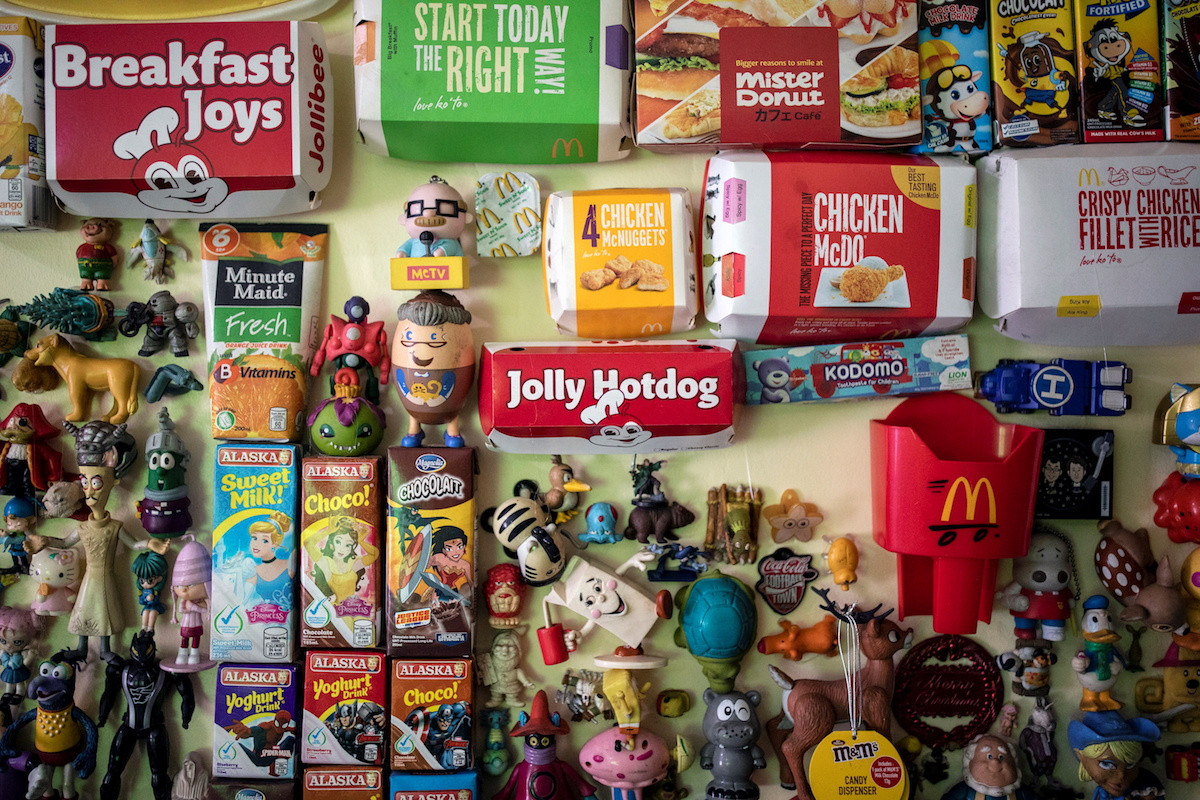 Fast-food fun: Toys and fast-food packaging are pictured in the home of Percival Lugue, who has the Guinness world record for the largest fast-food toy collection, on April 20, 2021, in Apalit, Pampanga province, the Philippines. (Reuters/Eloisa Lopez)
T
he Food and Drug Monitoring Agency (BPOM) is preparing to introduce front-of-package labeling (FOPL), a policy intended to help consumers make healthier purchasing decisions. At first glance, the strategy seems straightforward: place clear nutrition information on the front of food packages so consumers can make better-informed choices.
Yet, behind this seemingly simple initiative lies a more fundamental question: How do we determine which foods should be considered unhealthy in the first place? The answer matters more than we realize.
A recent study by the Center for Indonesia’s Strategic Development Initiatives (CISDI) and Airlangga University analyzed 8,077 packaged food and beverage products sold across Jakarta, Surabaya, Medan and Makassar. Using several internationally recognized nutrient profile models, we assessed whether these products contained excessive levels of sugar, salt or fat.
The results were striking. Approximately nine out of 10 packaged food products sold in Indonesia would be classified as items whose consumption should be restricted under evidence-based nutrient profile models developed by the World Health Organization (WHO). This finding underscores why the debate over FOPL must look beyond the mere design, color or symbols of the labels, and focus heavily on the underlying scientific standards.
These scientific frameworks, known as Nutrient Profile Models, are widely utilized by nutritionists and public health experts globally to establish thresholds for nutrients that pose severe health risks. Products that exceed these limits can then be subject to various public health interventions, including FOPL, restrictions on marketing to children, and fiscal measures like excise taxes. Ultimately, these models dictate how governments define unhealthy dietary choices, regulating which products can be marketed to minors and which require stricter regulatory oversight.
Our study revealed that the classification of unhealthy products varies considerably depending on the specific model applied. While the evidence-based WHO models identified roughly 90 to 95 percent of products as requiring consumption restrictions, the thresholds of the "Nutri-Level" system currently being developed by BPOM classified only around 73 percent of products into its least healthy category.

The discrepancy becomes even more pronounced when examining sugar-sweetened beverages—a product category expected to be prioritized in the initial rollout of FOPL. While evidence-based international models classified more than 90 percent of these beverages as unhealthy, the proposed Nutri-Level thresholds caught less than half of them.