The Jakarta Post
Please Update your browser
Your browser is out of date, and may not be compatible with our website. A list of the most popular web browsers can be found below.
Just click on the icons to get to the download page.


Popular Reads
Top Results
No results found. Please check your search term and try again
Can't find what you're looking for?
View all search results
Popular Reads
Top Results
No results found. Please check your search term and try again
Can't find what you're looking for?
View all search resultsHow Indonesia can sustain growth amid a post-crisis Middle East
As the Middle East forcedly rewires its economy and security amid conflict, Indonesia faces an urgent wake-up call to overhaul its own structural vulnerabilities before its demographic window slams shut.
Change text size
Gift Premium Articles
to Anyone
Share the best of The Jakarta Post with friends, family, or colleagues. As a subscriber, you can gift 3 to 5 articles each month that anyone can read—no subscription needed!
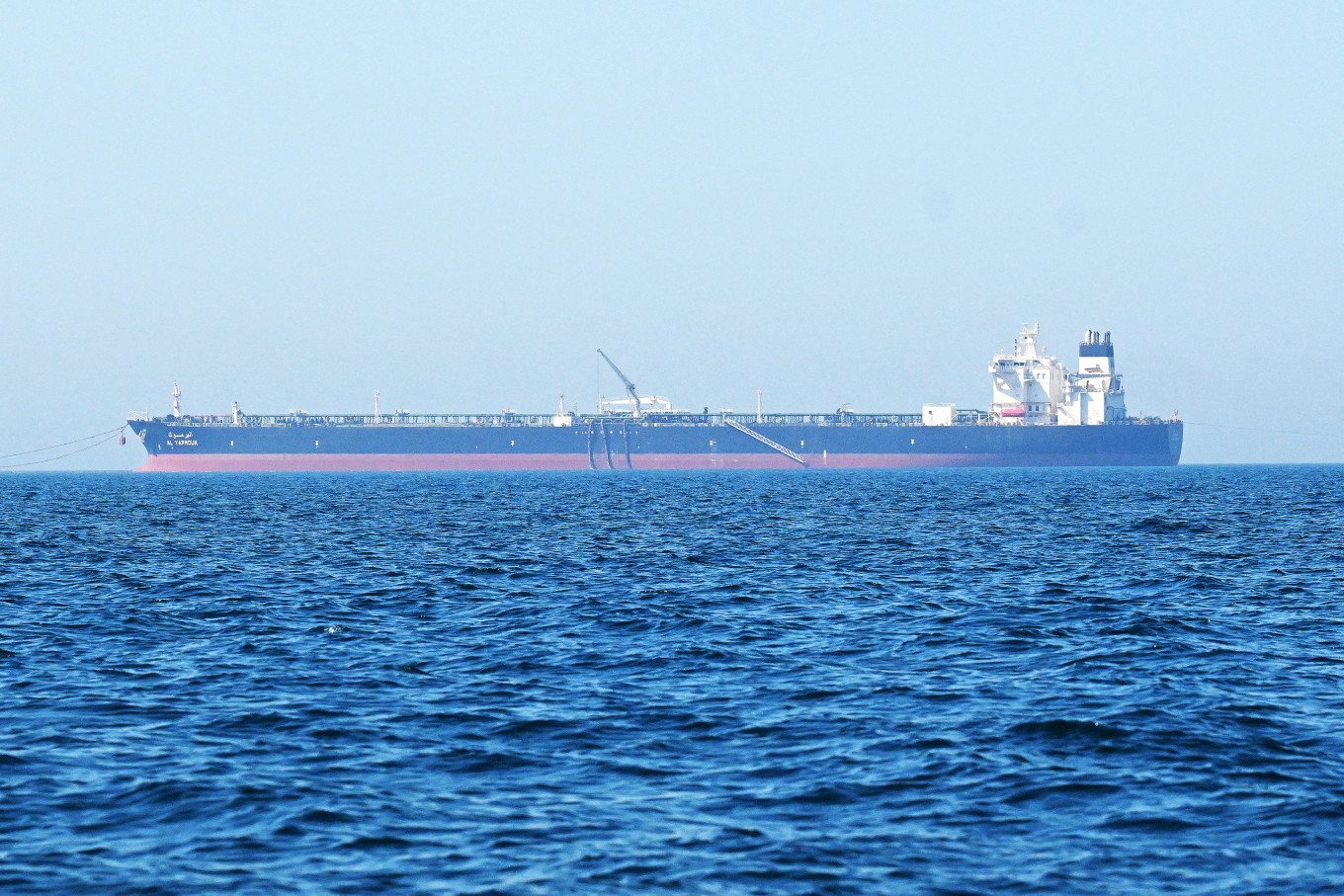 The 'Al-Yarmouk' oil tanker sails on June 27 in the Arabian Gulf waters, off the coast of Kuwait City. (AFP/Yasser al-Zayyat )
T
he storm of conflict sweeping through the Middle East since early 2026 has become a catalyst for profound structural transformation. Two decades of fiscal preparation by Gulf Cooperation Council (GCC) nations—including aggressive economic diversification that elevated non-oil sectors to 69 percent of GDP, substantial fiscal buffers and more than US$110 billion in defense spending—helped absorb the initial shock without systemic collapse.
Yet, under the pressure of kinetic disruptions, Gulf nations are being forced out of their traditional reliance on external security guarantees to build independent, sovereign defense and economic architectures.
Beyond immediate crisis management, the region is rewriting the rulebook on national resilience and regional integration. This shifting Middle Eastern landscape offers urgent lessons for emerging economies like Indonesia, particularly in navigating supply chain vulnerabilities, trade protectionism and dynamic global technology challenges.
The Middle East is entering a phase of deep strategic realignment. Persistent geopolitical tensions are driving a comprehensive reassessment of the region's geostrategic, economic and infrastructure systems.
Geostratigically, the Gulf faces critical vulnerabilities rooted in a historically fragmented security architecture. To mitigate these risks, regional powers are transitioning from bilateral Western dependencies toward integrated defense capabilities, such as joint air defense networks and unified C4ISR (Command, Control, Communications, Computers, Intelligence, Surveillance snd Reconnaissance) systems.
On the economic front, the Gulf’s transformation faces distinct headwinds. The non-oil GDP growth achieved by 2025 and the $126 billion in sovereign wealth funds deployed globally are being tested by conflict-related corridor disruptions and fluctuating investor confidence.

Furthermore, the conflict has exposed the fragility of efficiency-centered logistics. Gulf states are rapidly replacing lean supply models with infrastructure redundancy, prioritizing alternative pipeline routes, rail networks and deep-water ports to bypass maritime chokepoints like the Strait of Hormuz.