TheJakartaPost
Please Update your browser
Your browser is out of date, and may not be compatible with our website. A list of the most popular web browsers can be found below.
Just click on the icons to get to the download page.


Popular Reads
Top Results
No results found. Please check your search term and try again
Can't find what you're looking for?
View all search results
Popular Reads
Top Results
No results found. Please check your search term and try again
Can't find what you're looking for?
View all search resultsMany scuba divers don’t realize they damage reefs
We found that most damaging contacts were accidental and often went entirely unnoticed.
Change text size
Gift Premium Articles
to Anyone
Share the best of The Jakarta Post with friends, family, or colleagues. As a subscriber, you can gift 3 to 5 articles each month that anyone can read—no subscription needed!
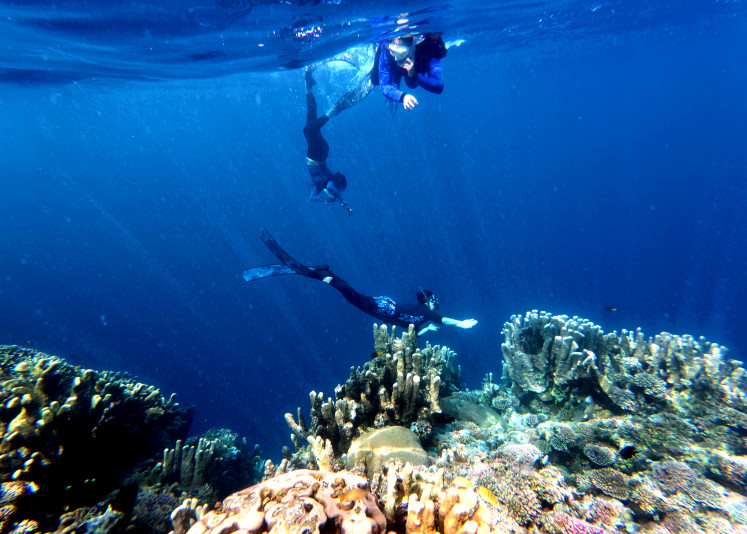
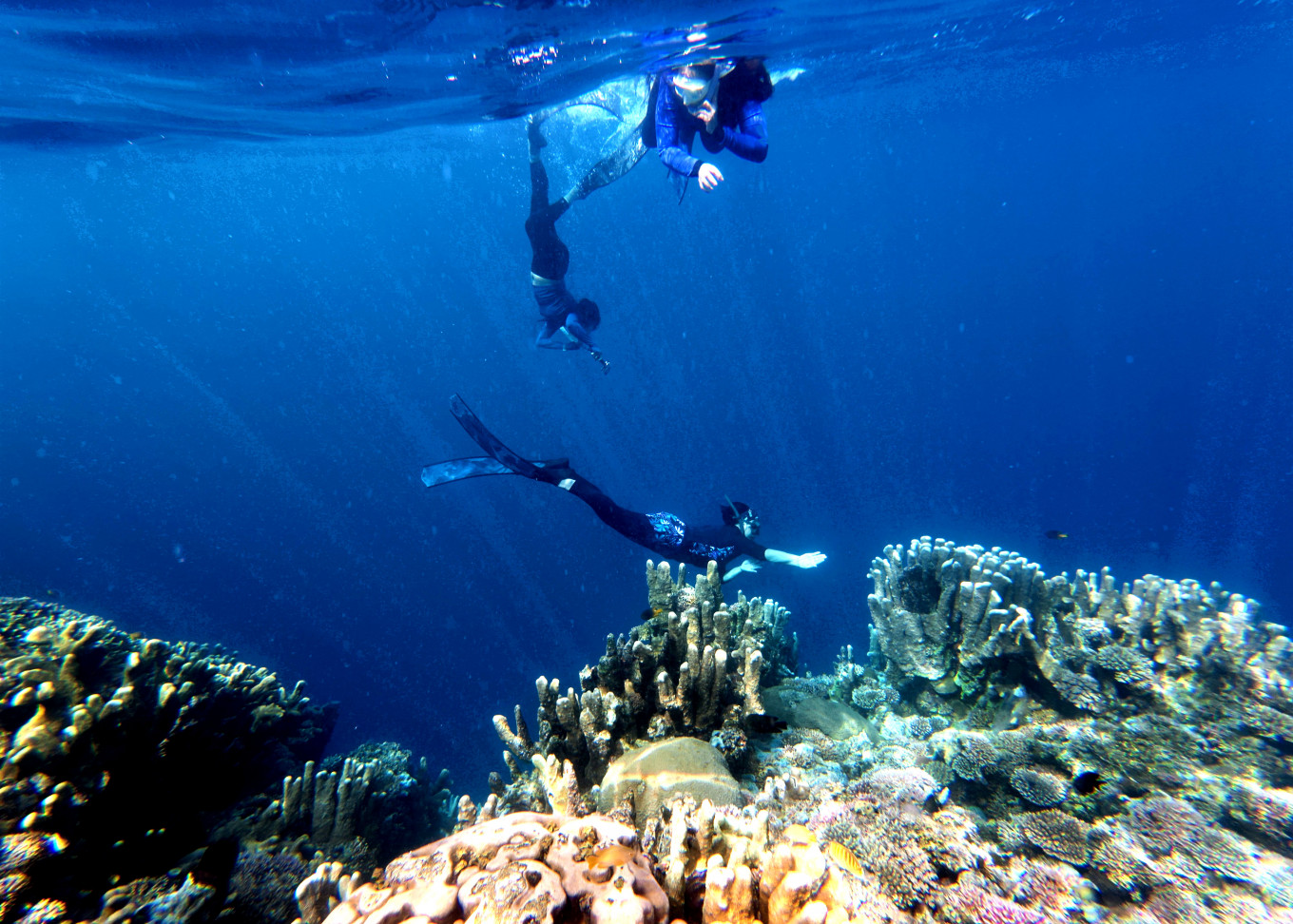 Tourists free dive at a coral reef on Dec. 28, 2025, at the Oluhuta Paradise tourist attraction in Bone Bolango regency, Gorontalo. (Antara/Adiwinata Solihin)
Scuba diving is often presented as a success story for marine ecotourism.
Each year millions of people dive beneath the surface to experience coral reefs first-hand. Scuba diving generates income for coastal communities and helps people understand why coral reefs matter.
But that success also brings a conservation challenge. It brings tourists into direct contact with sensitive coral ecosystems, where a misplaced fin, hand or camera can add to the stresses reefs already face. At a time when reefs are severely threatened, understanding how divers might help, or harm, those ecosystems has never been more important.
Between us, we have spent thousands of hours underwater as both dive professionals and marine scientists. In this time, we realized something uncomfortable: even people who admire and value coral reefs can unintentionally contribute to their decline through their actions underwater.
That observation led us to ask a simple question: how much impact are divers actually having on coral reefs underwater – and do they realize it?
For our research, we followed hundreds of recreational scuba divers, carefully documenting their behavior underwater. We then surveyed those same divers afterwards to compare what they thought they had done, with what had actually happened.

We spent hundreds of hours following, observing and surveying 732 scuba divers across world-famous dive destinations in Indonesia and the Philippines. We recorded every time a diver touched the reef and what was happening at that moment. The results surprised us.
Divers touched or hit the reef, on average, about once every four minutes. More than 40 percent of those contacts caused visible damage, including broken corals or sediment deposited onto living coral. Perhaps most striking, we found that most damaging contacts were accidental and often went entirely unnoticed.
Divers in our study also expressed strong environmental values, and many saw themselves as better than average at controlling buoyancy and avoiding reef contact. At least 69 percent of divers responding to our survey rated themselves “above average” in their ability to avoid intentional reef contacts, and 86 percent as “above average” in their ability to avoid accidental contacts.
But when we compared their survey responses with our underwater observations, divers underestimated how often they contacted the reef by almost fivefold. The divers making the most contacts also tended to be the most overconfident about their underwater performance.
This pattern is consistent with the Dunning-Kruger effect, a well-established psychological phenomenon in which people with lower skill levels are often least able to recognize their own limitations. For coral reefs, this creates a conservation problem: people may not change their behavior if they do not realize they are part of the problem.
Underwater behavior was also surprisingly social. When one diver hit or touched the reef, nearby divers became more likely to do the same. This is an example of social contagion, where people unconsciously take behavioral cues from those around them. Underwater, the actions of other divers can subtly reshape what feels acceptable creating social norms that may be detrimental to coral reef ecosystems.
Seeing sharks, turtles, manta rays or other charismatic species, increased the likelihood of intentional, unintentional and damaging reef contacts. In other words, the moments that often inspire people to value coral reefs might also be the same moments in which those reefs are most vulnerable.
This means dive sites famous for abundant marine life require particularly careful management. Smaller group size and appropriate viewing distances could help reduce impacts, especially during peak encounter periods. Instructors and dive guides also have a crucial role to play, by modelling good behavior and reminding divers that the best way to enjoy marine life is with space and respect.
The encouraging message is that the effects of scuba diving on coral reefs are not inevitable. Better buoyancy training, clearer pre-dive briefings, post-dive feedback and stronger guide leadership could all help reduce reef contact. Equipment also matters. We found that the use of accessories such as underwater cameras, muck sticks (rods used by divers to stabilize themselves) and gloves was associated with more frequent reef contacts.
Some coral reef dive locations have implemented conservation rules restricting these items, although such measures can be unpopular within the diving community.
Eco-certification schemes that take a broader look at the impact of scuba diving and sustainability also offer a promising route for change. In our study, Green Fins certification (an international initiative to promote responsible marine tourism) was linked to fewer intentional reef contacts, particularly among higher-performing dive centers.
But certification alone is unlikely to solve the problem unless it helps create a wider shift in expectations across the industry. Understanding the psychology behind how people act underwater may be one of the most effective ways to help ensure that reef tourism supports conservation and helps relieve pressures on fragile ecosystems.
---
Ronan Roche is a lecturer at the School of Ocean Sciences, Bangor University. Bing Lin is a postdoctoral fellow in the Thriving Oceans Research Hub, School of Geosciences, University of Sydney. This article is republished under a Creative Commons license. The views expressed are personal.