The Jakarta Post
Please Update your browser
Your browser is out of date, and may not be compatible with our website. A list of the most popular web browsers can be found below.
Just click on the icons to get to the download page.


Popular Reads
Top Results
No results found. Please check your search term and try again
Can't find what you're looking for?
View all search results
Popular Reads
Top Results
No results found. Please check your search term and try again
Can't find what you're looking for?
View all search resultsASEAN’s nuclear choices, geopolitical consequences
Southeast Asia’s nuclear push locks countries into long-term strategic alignments, reshaping regional autonomy as major powers compete for influence.
Change text size
Gift Premium Articles
to Anyone
Share the best of The Jakarta Post with friends, family, or colleagues. As a subscriber, you can gift 3 to 5 articles each month that anyone can read—no subscription needed!
 Set as preferred source
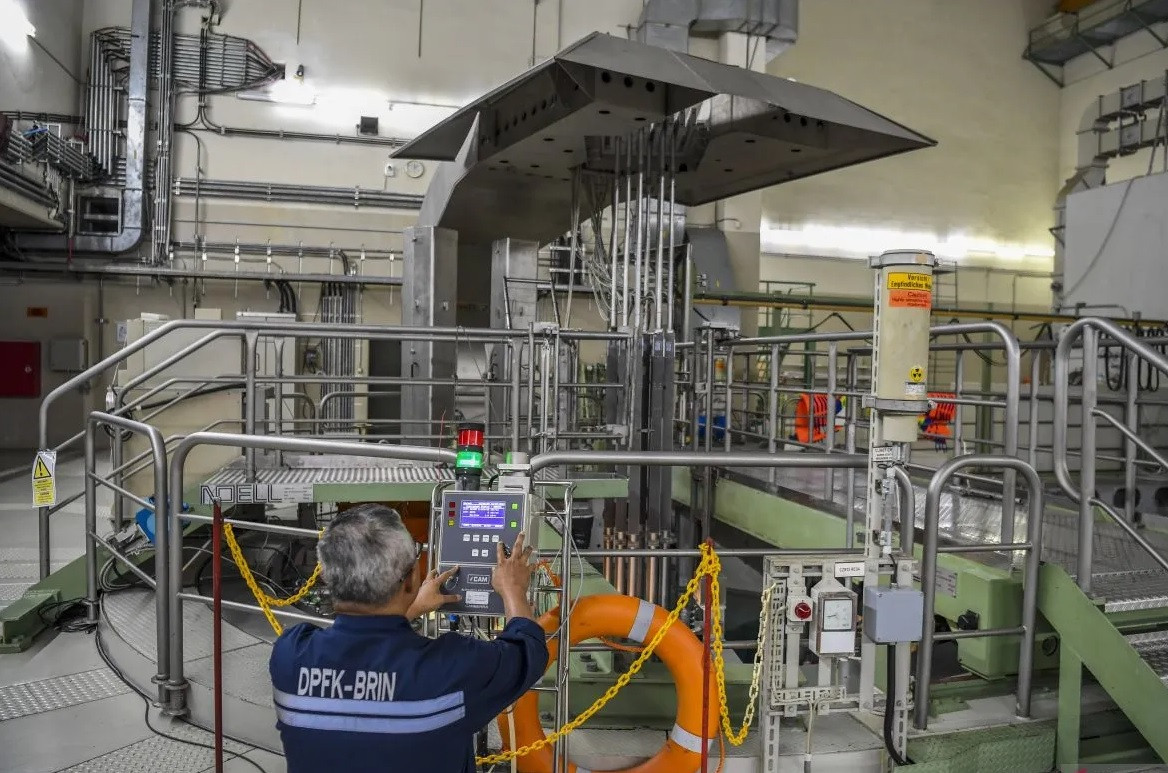 A National Research and Innovation Agency (BRIN) researcher inspects a nuclear reactor pond at GA Siwabessy nuclear facility in the BJ Habibie Science and Technology Estate in Serpong, Banten, on July 15, 2024. (Antara/Galih Pradipta)
S
outheast Asia is quietly entering a nuclear age. Driven by rising electricity demand, net‑zero commitments and concerns over fossil‑fuel volatility, more than half of ASEAN members are now revisiting nuclear power. Vietnam, Indonesia and the Philippines are moving fastest, targeting operational reactors in the early 2030s. Malaysia and Thailand are exploring longer horizons, while others signal interest without timelines.
This renewed momentum is shaped by global shifts: the rise of small modular reactors (SMRs), nuclear energy’s inclusion in green taxonomies, the World Bank’s openness to nuclear financing, and geopolitical disruptions to fossil‑fuel supply chains. But nuclear energy is not just a technical or climate decision. It is a long‑term geopolitical commitment that will shape Southeast Asia’s strategic landscape for decades.
The global civil nuclear market is characterized as oligopolistic. Civil nuclear technology is not interoperable. A country operating an American reactor cannot load Russian fuel; a Chinese SMR cannot be regulated under US standards. Once a country chooses a supplier, it effectively adopts a 60‑year “geopolitical package” involving fuel cycles, safety frameworks, financing terms and strategic alignment.
Three major suppliers dominate Southeast Asia’s options: Russia, the United States and its allies Japan and South Korea, and China.
Russia’s state-owned Rosatom is the world’s most aggressive exporter of nuclear power plants. Its Build‑Own‑Operate (BOO) model is attractive for newcomer states: Russia handles construction, operation and even waste management. For governments with limited budgets or technical capacity, this is the easiest path to nuclearization.
But the geopolitical cost is high. BOO locks countries into long-term dependence on Russian fuel, technology and regulatory support. In an era of sanctions and geopolitical fragmentation, this dependence could expose critical energy infrastructure to external shocks.

The US and its Asian partners offer advanced SMR technology and strong safety credentials. But access comes with legal constraints. Countries must sign a “123 Agreement”, which prohibits uranium enrichment and spent fuel reprocessing. This ensures non‑proliferation but limits national autonomy over the fuel cycle.
The US package is technologically attractive but politically demanding recipient states must align their nuclear governance with US regulatory frameworks.
China is promoting its Hualong One reactor and Linglong One SMR through state-owned firms China National Nuclear Corporation (CNNC) and China General Nuclear Power Group (CGN). Its offer includes rapid construction, competitive pricing and flexible financing from policy banks.
But China rarely treats nuclear projects as standalone deals. They are bundled into the Belt and Road Initiative (BRI), alongside power grids, industrial parks and digital infrastructure. For Southeast Asian states with South China Sea disputes, relying on Chinese nuclear technology carries strategic risks that extend beyond energy.
ASEAN states have long relied on hedging strategy, balancing relations with major powers through diversified trade, investment and defense cooperation. It is common for a country to buy Russian fighter jets, host US military exercises and welcome Chinese investment simultaneously.
Nuclear energy breaks this pattern.
Because reactor systems are non‑interoperable, nuclear procurement is a monogamous choice. A country cannot hedge by mixing suppliers or switching frameworks mid‑way. Nuclear infrastructure is deeply embedded in national security, regulatory systems and energy planning. Once a supplier is chosen, strategic alignment follows.
This means Southeast Asian countries must confront a reality they have long avoided: nuclear energy forces them to pick sides.
ASEANTOM, established in 2013, is ASEAN’s network of nuclear regulatory bodies. It aims to harmonize safety standards, strengthen safeguards and coordinate emergency response. While ASEANTOM cannot make Russian fuel compatible with American reactors, it can reduce the geopolitical vulnerabilities that come with bilateral nuclear deals.
A regional regulatory framework can improve bargaining power vis‑à‑vis major suppliers, prevent predatory financing or restrictive legal terms, ensure nuclearization does not undermine the Southeast Asia Nuclear‑Weapon‑Free Zone (SEANWFZ) and reduce the risk of strategic entrapment.
ASEANTOM cannot eliminate technological dependence, but it can help ASEAN countries avoid being cornered by supplier-driven political leverage.
As nuclear energy shifts from “if” to “how”, Southeast Asian leaders must recognize that nuclear development is a strategic choice with long-term geopolitical consequences. The region’s traditional hedging strategy cannot be applied to nuclear procurement.
Countries must navigate trade-offs in aligning with Washington, Moscow or Beijing.
The challenge is not only building reactors safely, but ensuring nuclear energy does not compromise strategic autonomy, something ASEAN has guarded for decades.
A collective approach through ASEANTOM may be the region’s best chance to prevent nuclear suppliers from shaping Southeast Asia’s geopolitical future more than Southeast Asia shapes its own.
---
The writer is an international relations lecturer at Gadjah Mada University and a campaigner of the International Campaign to Abolish Nuclear Weapons (ICAN). This article is republished under a Creative Commons license.