The Jakarta Post
Please Update your browser
Your browser is out of date, and may not be compatible with our website. A list of the most popular web browsers can be found below.
Just click on the icons to get to the download page.


Popular Reads
Top Results
No results found. Please check your search term and try again
Can't find what you're looking for?
View all search results
Popular Reads
Top Results
No results found. Please check your search term and try again
Can't find what you're looking for?
View all search resultsAnalysis: URI: Good intentions do not justify impulsive policymaking
Change text size
Gift Premium Articles
to Anyone
Share the best of The Jakarta Post with friends, family, or colleagues. As a subscriber, you can gift 3 to 5 articles each month that anyone can read—no subscription needed!
 Set as preferred source
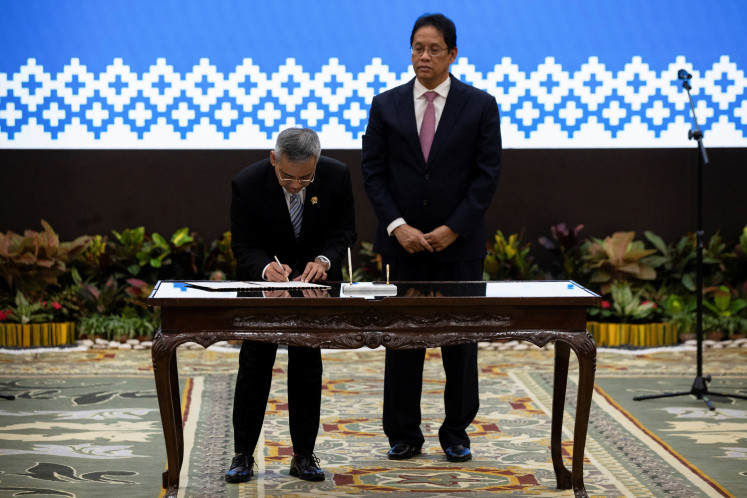
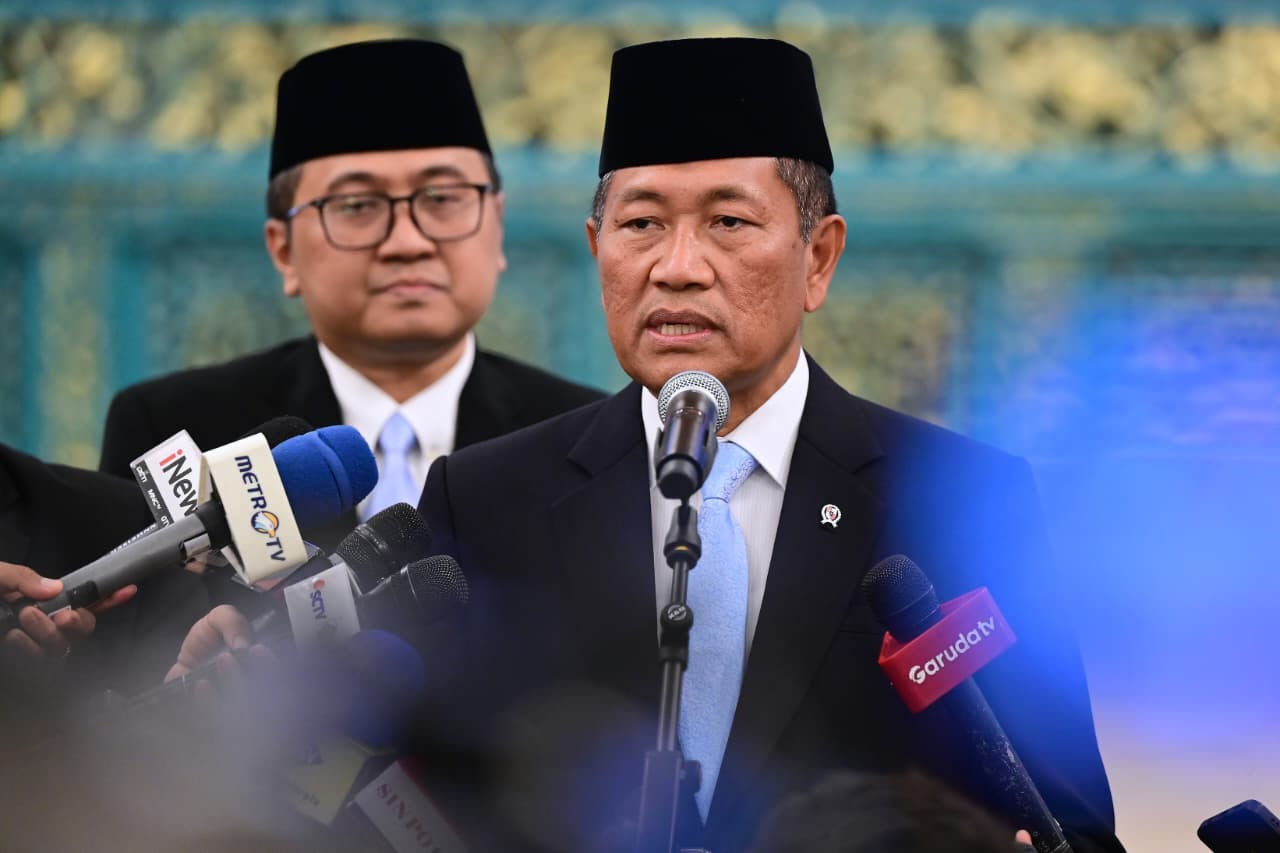 Deputy Defense Minister and newly inaugurated University of the Republic of Indonesia (URI) Governor Donny Ermawan Taufanto (right) talks to journalists on Wednesday as Bandung Institute of Technology (ITB) professor and URI Deputy Governor Yos Sunitiyoso looks on at the State Palace in Central Jakarta. ((Courtesy of Presidential Secretariat/Muchlis Jr)
P
resident Prabowo Subianto has once again taken what many observers describe as an impulsive policy step, raising eyebrows among academics and policy experts. This time, the controversy surrounds the establishment of the University of the Republic of Indonesia (URI), a project announced without any publicly available policy study or broad institutional consultation.
On July 22, the President appointed Deputy Defense Minister Donny Ermawan Taufanto as Governor of URI and Bandung Institute of Technology (ITB) professor Yos Sunitiyoso as Deputy Governor through Presidential Decree No. 80/P/2026. According to Donny, URI will integrate education from primary and secondary schools to higher education, while also incorporating existing government training institutions. The new institution is expected to oversee three institutions: the National Institute of Public Administration (LAN), together with two newly established agencies, the National Excellence Schools Management Agency and the Higher Education Management Agency.
The government also plans to establish 10 URI campuses to prepare future government officials and executives of state-owned enterprises (SOEs). Despite his new appointment, Donny said he would remain Deputy Defense Minister, arguing that both positions share the common objective of strengthening national defense and civic values.
A day later, Aris Marsudiyanto, head of the Agency for Development Control and Special Investigation (Bappisus) – another new institution directly under President Prabowo – added that URI would focus on science, technology, engineering and mathematics to support the development of Indonesia's abundant natural resources.
To date, however, the government has yet to release any official document explaining URI's institutional design or legal basis. As a result, the public has had to rely almost entirely on statements from government officials. In a televised debate on July 29, a government representative argued that URI did not violate any law, suggesting that its good intentions were sufficient justification for moving forward.
Those statements themselves indicate that the initiative remains at a very early stage. Higher Education, Science and Technology Minister Brian Yuliarto said the government was still studying plans to establish 10 URI campuses. Meanwhile, Finance Minister Purbaya Yudhi Sadewa acknowledged that the government had yet to determine URI's financing model, including whether it would be funded entirely through the state budget.

The legislature also appears to have been left out of the process. House of Representatives Commission X, which oversees education, said it had neither received an official explanation nor held discussions on URI's establishment. Commission chair Hetifah Sjaifudian said the proposal had never been formally discussed with the House, a statement echoed by deputy chair Lalu Hadrian Irfani.