The Jakarta Post
Please Update your browser
Your browser is out of date, and may not be compatible with our website. A list of the most popular web browsers can be found below.
Just click on the icons to get to the download page.


Popular Reads
Top Results
No results found. Please check your search term and try again
Can't find what you're looking for?
View all search results
Popular Reads
Top Results
No results found. Please check your search term and try again
Can't find what you're looking for?
View all search resultsForeign aid's next chapter: Better delivery, not retreat
This is a moment not to discard decades of progress in learning how to deliver aid but to reconsider priorities and demand greater accountability.
Change text size
Gift Premium Articles
to Anyone
Share the best of The Jakarta Post with friends, family, or colleagues. As a subscriber, you can gift 3 to 5 articles each month that anyone can read—no subscription needed!
 Set as preferred source
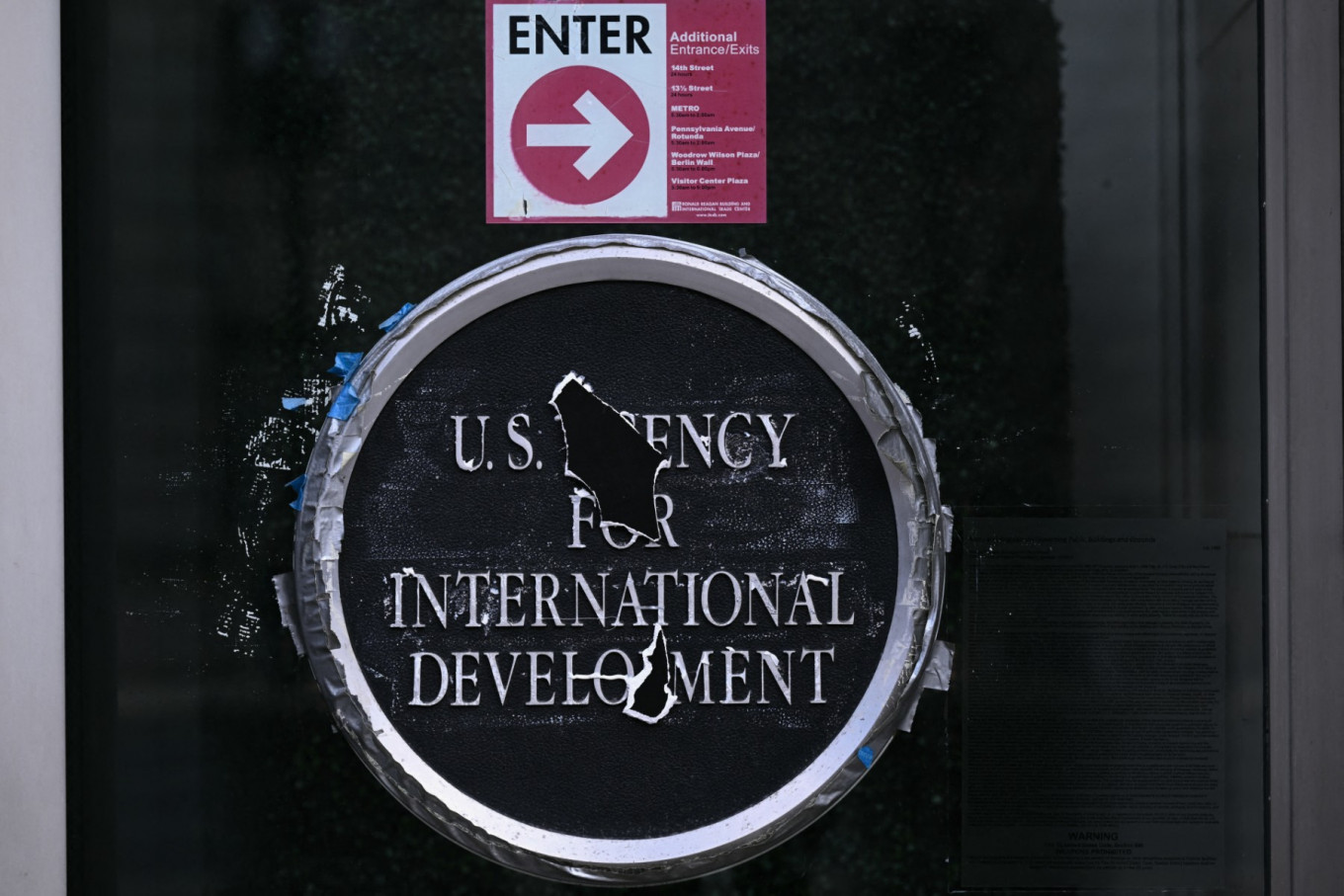 Remnants of signage for the United States Agency for International Development (USAID) are seen on Dec. 29, 2025, on the facade of the Ronald Reagan Building and International Trade Center building in Washington, DC. (AFP/Brendan Smialowski)
F
oreign aid is shrinking, but it is not disappearing. Even after the sharpest annual decline on record, Organisation for Economic Co-operation and Development (OECD) donors still provided US$174.3 billion in assistance in 2025. This includes $29 billion from the United States, despite the slashing of 83 percent of US Agency for International Development (USAID) programs by Donald Trump’s administration. Moreover, wars, epidemics, displacement and geopolitical competition will ensure that rich countries continue to spend money abroad, whether for humanitarian reasons or in pursuit of their own interests.
With the number of ongoing conflicts having reached a record high in 2025, and with 117.8 million people ending the year forcibly displaced, the question is not whether foreign aid will survive, but what sort of aid system will emerge from the current retrenchment. This is a moment not to discard decades of progress in learning how to deliver aid, but to reconsider priorities and demand greater accountability.
Aid has long drawn two basic complaints. The first is that it does not work: either the promised funds never reach the people who need them or the money arrives but fails to have the intended impact. The second is that aid is spent on the wrong things: even when it works, it may not serve the donor country’s interests or align with taxpayers’ priorities.
The recent cuts are ostensibly justified by this second argument. Since aid is public money, the argument goes, it should be redirected toward national-security objectives, commercial interests or other goals that command broad taxpayer support in donor countries. But while such debates are legitimate, poorly managed cuts risk worsening the problems that aid was supposed to address, and just when substantial progress has been made in improving aid delivery.
For most of its history, foreign aid focused on government-to-government transfers. Beginning in the early 2000s, however, the development community paid growing attention to the “last mile” between a donor’s disbursements and the person the aid is ultimately meant to help. Just as vaccines do not administer themselves, cash-transfer programs need registries, payment systems and grievance procedures. Maternal care depends on workers who know which women are pregnant, which families distrust clinics and which roads vanish in heavy rains.
For aid to work, funding must be converted into actual goods and services for people in remote villages and refugee camps. Focusing on last-mile delivery can increase efficacy and therefore boost the appeal - the soft power - of the donor. But when delivery fails on the last mile, even well-intentioned aid can cause harm.

Food aid is a good example. Aid workers have long warned that without stronger local infrastructure for delivery, food often ends up in the hands of militias instead of hungry families. Research shows that US food aid, despite the humanitarian intent behind it, tends to increase the incidence and duration of civil conflict in recipient locations. The problem arises when logistics, monitoring and local safeguards are treated as administrative add-ons, rather than as a central element of the intervention.