The Jakarta Post
Please Update your browser
Your browser is out of date, and may not be compatible with our website. A list of the most popular web browsers can be found below.
Just click on the icons to get to the download page.


Popular Reads
Top Results
No results found. Please check your search term and try again
Can't find what you're looking for?
View all search results
Popular Reads
Top Results
No results found. Please check your search term and try again
Can't find what you're looking for?
View all search resultsIndependence still eludes marginal farmers
The majority of our farmers are working plots so small they cannot generate a sustainable or dignified income.
Change text size
Gift Premium Articles
to Anyone
Share the best of The Jakarta Post with friends, family, or colleagues. As a subscriber, you can gift 3 to 5 articles each month that anyone can read—no subscription needed!
 Set as preferred source
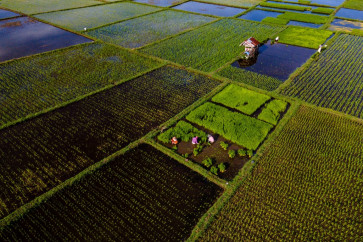
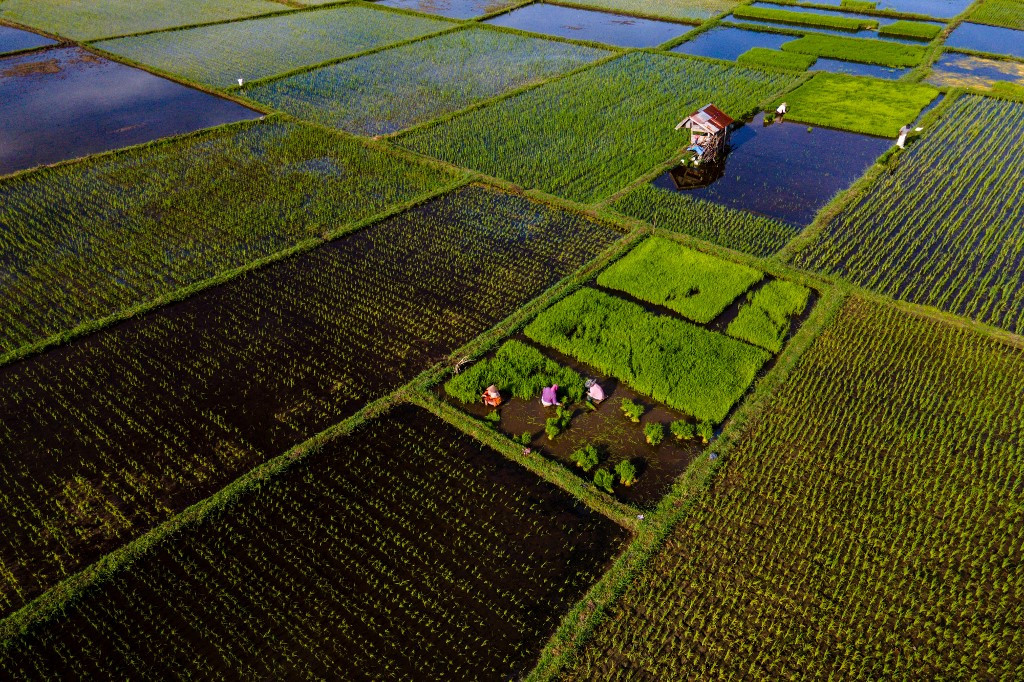 Farmers work on paddy fields on Nov. 20, 2025, in Lhoknga, Aceh. (AFP/Chaideer Mahyuddin)
E
very August, Indonesia celebrates its independence anniversary. The Red and White waves proudly across villages, competitions animate local communities and speeches about national progress resound once more. Yet beneath this festive atmosphere lies a question worth our collective reflection: what does independence truly signify for the 17.25 million marginal farmers who remain at the heart of Indonesia’s agricultural landscape?
Indonesia Statistics (BPS) defines marginal as those cultivating less than half a hectare of land, commonly known in Indonesia as petani gurem. They account for more than 62 percent of all agricultural land users nationwide. In other words, the majority of our farmers are working plots so small that they cannot generate a sustainable or dignified income.
Indonesia often calls itself an agrarian nation and even aspires to become a global food barn. Yet most of the people who produce food live with extremely limited productive assets. They toil from dawn until dusk, but their harvests are often just enough to keep them alive.
For a country that prides itself on being agrarian, there is no greater irony than seeing those who cultivate the land become the very group most vulnerable to poverty.
The plight of marginal farmers is not merely a matter of low productivity. The deeper problem lies in the scale of their operations, which is simply too small. No matter how hard they work, the narrow plots they cultivate impose a ceiling on how much they can produce. As land continues to fragment through inheritance and is increasingly converted to nonagricultural use, the possibility of raising incomes grows ever more remote.
The hardship grows sharper as production costs continue to climb. Fertilizer, seeds, pesticides and labor wages rise almost every planting season. Yet the prices of produce that farmers receive do not always keep pace with these escalating expenses. The gap between costs and earnings narrows to the point where many farmers are merely surviving rather than advancing.

In such circumstances, access to capital becomes the next pressing challenge. Not all farmers can easily secure loans from formal financial institutions. Complicated procedures and collateral requirements push many to turn instead to middlemen. This option may provide quick cash, but it also strips away their autonomy, since harvests must be sold to the lender at prices often well below the market rate.